
📋 At a Glance
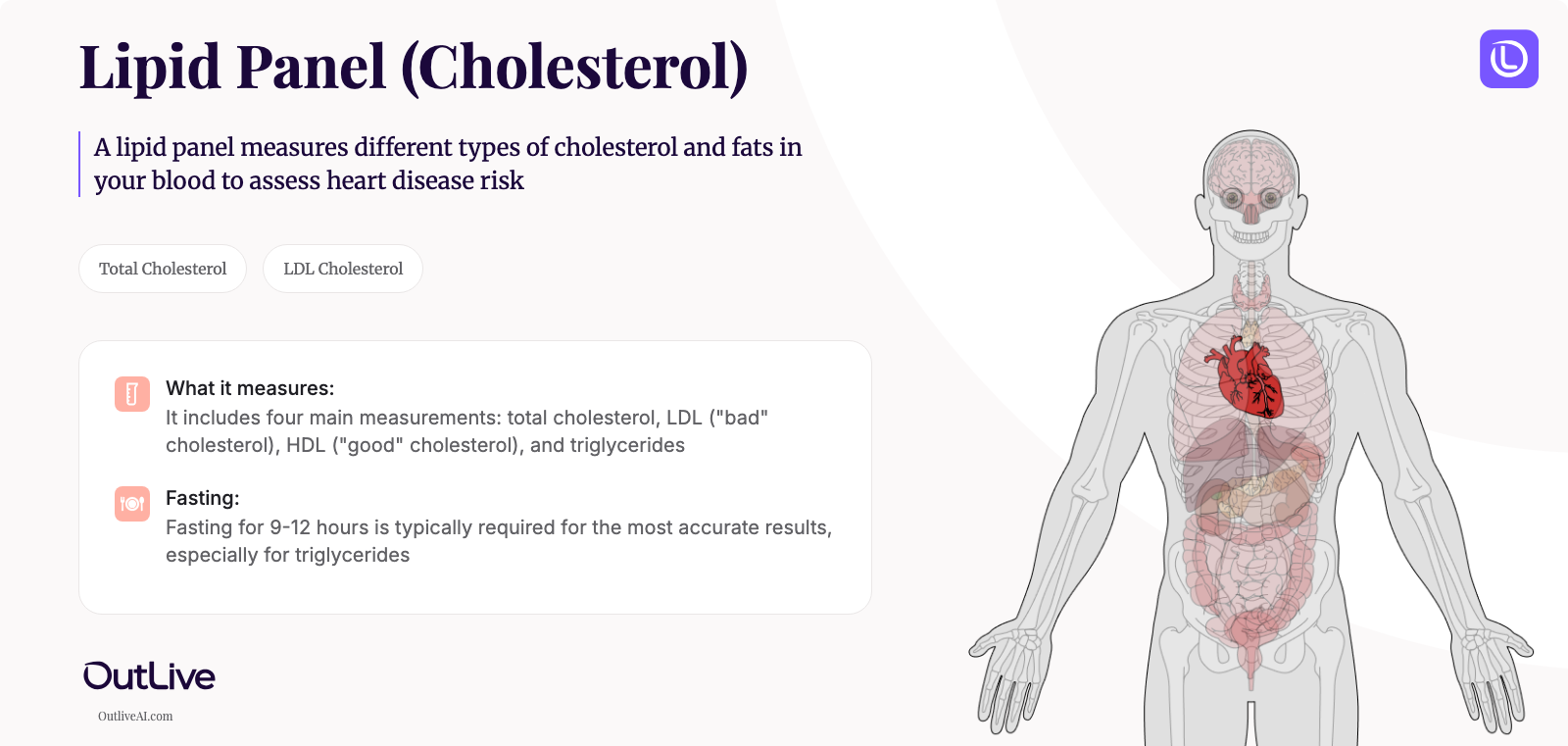
- A lipid panel measures different types of cholesterol and fats in your blood to assess heart disease risk
- It includes four main measurements: total cholesterol, LDL ("bad" cholesterol), HDL ("good" cholesterol), and triglycerides
- Fasting for 9-12 hours is typically required for the most accurate results, especially for triglycerides
If you're reading this, you've likely just had a Lipid Panel—also called a cholesterol test—and are looking at numbers that might be confusing or even concerning. Take a breath. You're in the right place. This guide will walk you through what a lipid panel is, what each of those numbers means for your heart health, and most importantly, what you should do next. Think of us as your translator—we're here to help you understand your results so you can have a more informed conversation with your healthcare provider.
Why Is a Lipid Panel Ordered?
Your doctor might order a lipid panel for several reasons. Think of it as a window into your cardiovascular health—like checking under the hood of your car to see if everything is running smoothly or if there's buildup that could cause problems down the road.
The most common reasons include:
Cardiovascular risk assessment: Starting at age 20, adults should have their cholesterol checked every 4-6 years. If you have risk factors like family history, diabetes, or high blood pressure, you'll need more frequent testing.
Routine health screening: A lipid panel is often part of your annual physical exam, especially as you get older. It helps catch potential problems before they lead to heart disease or stroke.
Monitoring treatment: If you're taking cholesterol-lowering medications like statins, regular lipid panels show how well the treatment is working and whether dosage adjustments are needed.
Family history concerns: If heart disease or high cholesterol runs in your family, your doctor may start screening earlier and more frequently to catch problems early.
Investigating symptoms or conditions: If you have chest pain, or conditions like diabetes or thyroid disease that affect cholesterol, a lipid panel helps assess your overall cardiovascular risk.
Lifestyle change evaluation: If you've made significant diet or exercise changes to improve your cholesterol, a lipid panel shows whether your efforts are paying off.
Remember, high cholesterol typically has no symptoms—the only way to know your levels is through testing.
How to Prepare for a Lipid Panel Test
Preparing for a lipid panel requires some advance planning to ensure accurate results:
Fasting requirements: Most doctors recommend fasting for 9-12 hours before your test. This means no food or drinks except water. Fasting is especially important for accurate triglyceride measurements, as eating can cause these levels to spike temporarily. Some newer guidelines allow non-fasting tests for certain situations, but check with your doctor.
Medication considerations: Continue taking your regular medications unless your doctor tells you otherwise. If you're on cholesterol medications, your doctor wants to see how well they're working, so don't skip them before the test.
Lifestyle factors: Avoid alcohol for 24 hours before the test, as it can affect triglyceride levels. Don't exercise vigorously the night before, as this can temporarily affect your results.
Timing tips: Schedule your test for early morning. That way, you fast overnight while sleeping and can eat breakfast right after. Bring a snack for afterward, especially if you have diabetes or tend to feel lightheaded when fasting.
The blood draw itself is quick and simple—usually taking less than 5 minutes. A healthcare professional will clean a small area on your arm, insert a tiny needle to collect blood (typically one or two small tubes), and bandage the site. You can return to your normal activities immediately.
Understanding the Components of Your Lipid Panel Report
Your lipid panel measures different types of fats and cholesterol in your blood. Think of cholesterol like packages being delivered through your bloodstream—some are helpful deliveries your body needs, while others can cause traffic jams (blockages) if there are too many.
What Do My Cholesterol Numbers Mean?
Cholesterol itself isn't bad—your body needs it to make hormones, vitamin D, and substances that help digest food. The key is having the right balance of different types:
Total Cholesterol: This is the sum of all cholesterol in your blood. While it gives an overall picture, it doesn't tell the whole story—you need to know what types of cholesterol make up this total.
LDL Cholesterol (Low-Density Lipoprotein): Often called "bad" cholesterol, though it's not entirely bad—your body needs some LDL. Think of LDL particles as delivery trucks that can drop off cholesterol in your arteries. Too many deliveries can create buildup (plaque) that narrows arteries and increases heart disease risk.
HDL Cholesterol (High-Density Lipoprotein): Known as "good" cholesterol, HDL acts like a cleanup crew. It picks up excess cholesterol from your arteries and tissues and takes it back to your liver for disposal. Higher HDL levels generally mean better heart protection.
Non-HDL Cholesterol: This is your total cholesterol minus HDL cholesterol. It includes all the potentially harmful cholesterol types and is increasingly used to assess cardiovascular risk, especially if you have high triglycerides./biomarkers/ldl-cholesterol)** (Low-Density Lipoprotein): Often called "bad" cholesterol, though it's not entirely bad—your body needs some LDL. Think of LDL particles as delivery trucks that can drop off cholesterol in your arteries. Too many deliveries can create buildup (plaque) that narrows arteries and increases heart disease risk.
HDL Cholesterol (High-Density Lipoprotein): Known as "good" cholesterol, HDL acts like a cleanup crew. It picks up excess cholesterol from your arteries and tissues and takes it back to your liver for disposal. Higher HDL levels generally mean better heart protection.
Non-HDL Cholesterol: This is your total cholesterol minus HDL cholesterol. It includes all the potentially harmful cholesterol types and is increasingly used to assess cardiovascular risk, especially if you have high triglycerides.
Here are the typical target ranges for cholesterol:
| Component | Abbreviation | Optimal/Desirable | Borderline High | High |
|---|---|---|---|---|
| Total Cholesterol | TC | \ <200mg/dL | 200-239 mg/dL | ≥240 mg/dL |
| LDL Cholesterol | LDL-C | \ <100mg/dL | 130-159 mg/dL | ≥160 mg/dL |
| HDL Cholesterol | HDL-C | ≥60 mg/dL (protective) <br/ >≥40 mg/dL (men) ≥50 mg/dL (women) | N/A | <40mg/dL (men) <br/ ><50 mg/dL (women) |
| Non-HDL Cholesterol | Non-HDL | \ <130mg/dL | 130-159 mg/dL | ≥160 mg/dL |
What Do My Triglyceride and Other Lipid Results Mean?
Beyond cholesterol, your lipid panel includes other important measurements:
Triglycerides: These are a type of fat (not cholesterol) that your body uses for energy. Think of them as your body's fuel reserves. When you eat more calories than you burn, especially from carbohydrates and alcohol, your body converts the excess to triglycerides and stores them in fat cells. High levels increase heart disease risk and can be a sign of metabolic syndrome.
VLDL Cholesterol (Very Low-Density Lipoprotein): Sometimes calculated (triglycerides ÷ 5), VLDL carries triglycerides through your bloodstream. Like LDL, it can contribute to artery plaque buildup.
Cholesterol Ratios: Your report might include calculated ratios that help assess risk:
- Total Cholesterol/HDL Ratio: Lower is better (ideally below 5:1, optimal below 3.5:1)
- LDL/HDL Ratio: Lower is better (ideally below 2.5:1)
Here are the typical target ranges for triglycerides and VLDL:
| Component | Abbreviation | Optimal/Normal | Borderline High | High | Very High |
|---|---|---|---|---|---|
| Triglycerides | TG | \ <150mg/dL | 150-199 mg/dL | 200-499 mg/dL | ≥500 mg/dL |
| VLDL Cholesterol | VLDL | \ <30mg/dL | N/A | \ >30mg/dL | N/A |
What Do Abnormal Results Mean? (A High-Level Guide)
Seeing results outside the optimal range can be concerning, but remember: cholesterol levels are just one piece of your overall health picture. Your doctor considers many factors when assessing your cardiovascular risk, including age, blood pressure, smoking status, diabetes, and family history.
Here are some general patterns your doctor might investigate:
High LDL cholesterol might be related to:
- Diet high in saturated and trans fats
- Genetic conditions ([familial hypercholesterolemia])
- Obesity or lack of physical activity
- Certain medications
- Thyroid problems
- Diabetes
Low HDL cholesterol might be related to:
- Smoking
- Lack of physical activity
- Obesity, especially abdominal obesity
- Type 2 diabetes
- Certain medications
- Genetic factors
High triglycerides might be related to:
- Diet high in carbohydrates or alcohol
- Obesity
- Uncontrolled diabetes
- Thyroid problems
- Kidney disease
- Certain medications
- Genetic conditions
What your results mean for treatment:
- Lifestyle changes first: For many people with borderline high levels, diet changes, exercise, and weight loss can significantly improve numbers
- Medication considerations: If levels are very high or don't improve with lifestyle changes, medications like statins may be recommended
- Risk calculation: Your doctor uses tools like the ASCVD Risk Calculator to determine your 10-year risk of heart disease and guide treatment decisions
- Individual targets: Your optimal levels depend on your other risk factors—someone with diabetes might need lower LDL targets than someone without risk factors
Important disclaimer: This list is not exhaustive, and cholesterol management is highly individualized. Only your healthcare provider can interpret your results in the context of your overall health, family history, and other risk factors. Never start or stop medications based on lab results alone.
Next Steps After Your Lipid Panel Test
So you've read through your results—what now? Here's your action plan:
1. Schedule a follow-up with your doctor: Discuss your results in the context of your overall cardiovascular risk. Your doctor will calculate your 10-year heart disease risk to guide treatment recommendations.
2. Prepare your questions: Not sure what to ask? We've created a helpful checklist of questions to bring to your appointment. [Download our Lipid Panel Doctor Questions Checklist](# to make sure you cover everything important.
3. Understand your personal targets: Your ideal cholesterol levels depend on your individual risk factors. What's acceptable for one person might be too high for another.
4. Create an action plan: Whether it's lifestyle changes, medication, or both, work with your doctor to create a specific plan with measurable goals and follow-up testing schedules.
5. Track your progress: Save your lipid panel results. Seeing how your numbers change over time is more valuable than any single test. Most people need retesting every 4-12 weeks after starting treatment, then every 3-12 months for monitoring.
🔬 Ready to Translate Your Full Report?
Understanding your lipid panel is just the beginning. Our free Lab Analyzer tool helps you:
- Track all your lab results in one place
- Spot important trends over time
- Generate personalized questions for your doctor
- Get plain-English explanations of every test
[Upload Your Lab Report for Free Analysis →]
Join 50,000+ people taking control of their health journey
Remember, knowledge is power when it comes to your health. Understanding your lipid panel results empowers you to make informed decisions about your cardiovascular health. You've already taken the first step by educating yourself—now use that knowledge to work with your healthcare provider toward better heart health.