
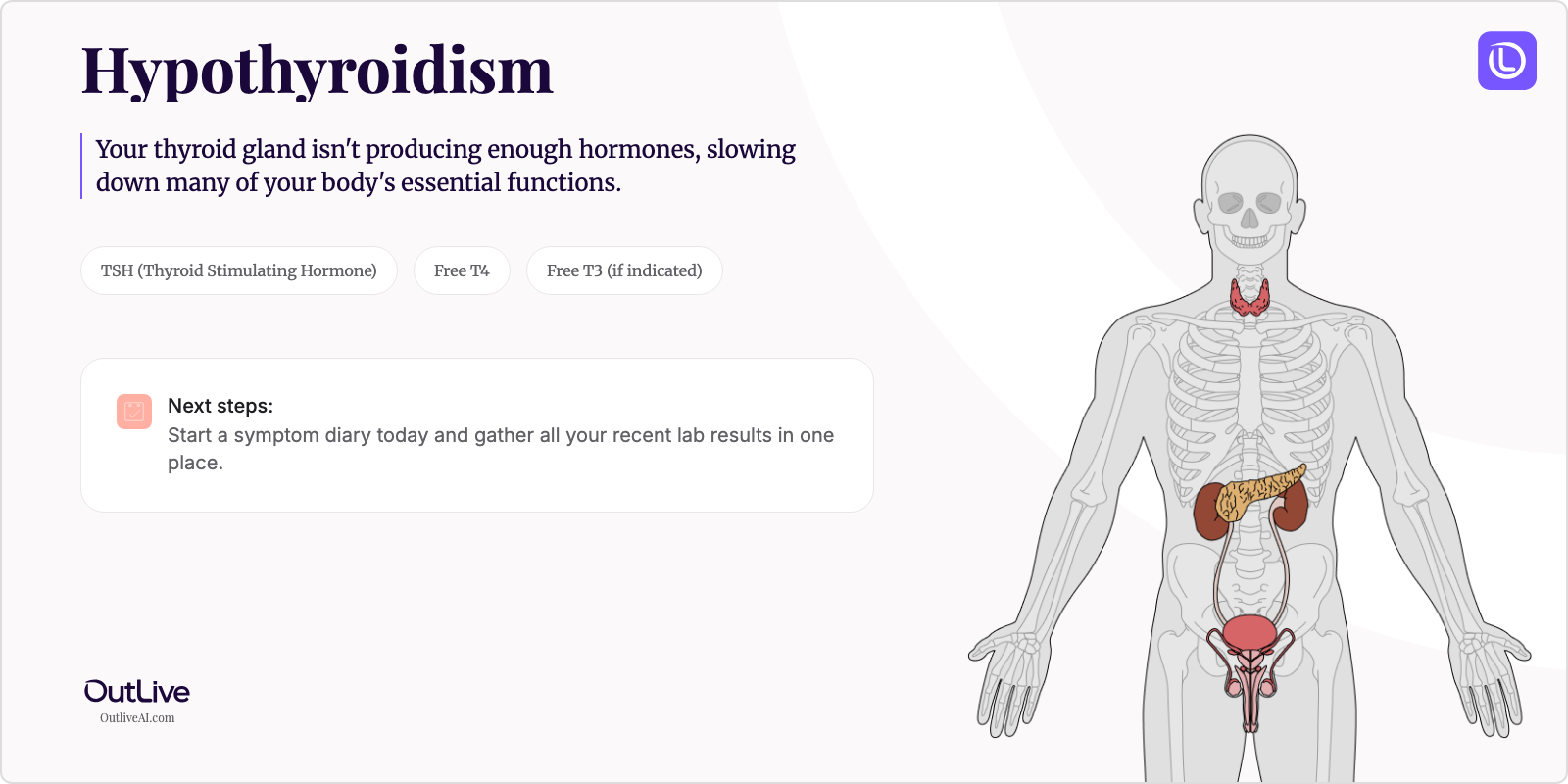
📋 At a Glance
- What it is: Your thyroid gland isn't producing enough hormones, slowing down many of your body's essential functions.
- Key lab tests: TSH (Thyroid Stimulating Hormone), Free T4, and sometimes Free T3
- Your first goal: Start a symptom diary today and gather all your recent lab results in one place.
Receiving a new diagnosis for Hypothyroidism can be overwhelming. You might be feeling anxious, confused, and unsure of what comes next. That's completely normal. This guide is here to help you understand your condition in simple terms, know which lab tests matter most, and feel prepared for your next steps.
First, Take a Breath: What is Hypothyroidism in Simple Terms?
Think of your thyroid as your body's thermostat and energy manager. It's a small, butterfly-shaped gland in your neck that produces hormones controlling how fast or slow your body runs. When you have hypothyroidism, this thermostat is set too low – your thyroid isn't making enough hormones, so everything in your body starts running in slow motion. Your metabolism slows down, you feel tired, cold, and foggy. The good news? Once we get your thyroid hormones back to the right level with medication, most people feel like themselves again. It's one of the most treatable conditions we see, and millions of people manage it successfully every day.
Understanding Your Diagnosis: The Key Lab Tests
This is the most important section. List the 2-4 most critical biomarkers used to diagnose and monitor Hypothyroidism. For each one, provide a one-sentence explanation and link to its full biomarker page.
Key Tests for Hypothyroidism:
- TSH (Thyroid Stimulating Hormone): This is your body's "alarm signal" – when TSH is high, it means your brain is shouting at your thyroid to work harder because hormone levels are too low.
- Free T4 (Thyroxine): This measures the actual thyroid hormone available for your body to use – in hypothyroidism, this number is typically low.
- Free T3 (Triiodothyronine): The active form of thyroid hormone that your cells actually use – sometimes checked to get a complete picture of your thyroid function.
- TPO Antibodies: These antibodies can tell us if your immune system is attacking your thyroid (Hashimoto's disease), which is the most common cause of hypothyroidism.
Your First Specialist Appointment: What to Ask
What to Expect: You'll likely see an endocrinologist – a hormone specialist who treats thyroid conditions every day. They'll review your lab results, examine your neck to feel your thyroid, discuss your symptoms in detail, and likely start you on thyroid hormone replacement medication. The appointment usually lasts 30-45 minutes, and they'll want to know how long you've had symptoms and how they're affecting your daily life.
Questions to Ask Your Doctor:
- "What's causing my hypothyroidism – is it autoimmune (Hashimoto's) or something else?"
- "How long will it take for the medication to start working, and what improvements should I notice first?"
- "How often will I need blood tests to monitor my thyroid levels, especially in the beginning?"
- "Are there any foods, supplements, or medications I should avoid or time differently with my thyroid medication?"
- "What symptoms indicate my dose needs adjusting, and how should I contact you if that happens?"
Download our [Checklist of Questions to Ask Your Hypothyroidism Specialist](# to feel prepared.
How to Track Your Journey
Tracking your Hypothyroidism journey is crucial for understanding how your treatment is working and spotting important trends. Here's what you should monitor:
Symptoms to Track:
- Energy levels and fatigue patterns throughout the day
- Changes in weight, appetite, and digestion
- Mood changes, brain fog, or memory issues
- Cold sensitivity and body temperature changes
- Hair loss, skin dryness, or nail brittleness
Lab Results to Monitor:
- TSH levels - Every 6-8 weeks initially, then every 6-12 months once stable
- Free T4 - With each TSH test to ensure proper hormone replacement
- Free T3 - If you're not feeling better despite normal TSH and T4
Why Tracking Matters: Your symptoms often improve before your lab numbers normalize, and tracking helps you and your doctor fine-tune your medication dose. Many patients find patterns – like feeling worse during stress or certain times of year – that help optimize their treatment. Plus, having a record helps you advocate for yourself if adjustments are needed.
Next Steps After Your Diagnosis
Immediate Actions (This Week):
- Fill your thyroid medication prescription and learn the best way to take it (empty stomach, 30-60 minutes before food)
- Set a daily alarm for your medication – consistency is key for stable levels
- Start a simple symptom diary, rating your energy, mood, and main symptoms daily
Short-term Goals (Next Month):
- Schedule your follow-up appointment and lab work for 6-8 weeks after starting medication
- Research and connect with a hypothyroidism support group, online or in-person
- Establish a morning routine that allows proper timing for your medication
Long-term Management:
- Build a relationship with your endocrinologist for ongoing care and monitoring
- Learn your personal "optimal" TSH range where you feel best (it varies by person)
- Develop healthy habits that support thyroid health: stress management, regular sleep, and balanced nutrition
Frequently Asked Questions
How quickly can I expect to feel better? Most people notice some improvement in energy and brain fog within 2-3 weeks of starting medication, but it typically takes 6-8 weeks for full effects. Complete symptom resolution can take 3-6 months as your body adjusts and your dose is optimized.
Will I need to change my diet? While no special diet is required, eating nutrient-rich foods helps support thyroid function. Some people benefit from avoiding excessive soy or raw cruciferous vegetables, and taking your medication away from calcium, iron, and coffee improves absorption.
How often will I need to see my doctor? Initially, you'll have appointments every 2-3 months until your levels stabilize. Once your dose is optimized and you're feeling well, most people only need check-ups every 6-12 months.
Can I still exercise/work/travel? Absolutely! Once your thyroid levels are properly managed, you can do everything you did before. In fact, regular exercise often helps with energy and mood. Just be patient with yourself during the adjustment period.
When to Seek Immediate Medical Attention
Contact your doctor immediately if you experience:
- Severe fatigue that prevents you from normal activities, or sudden worsening of symptoms
- Chest pain, rapid heartbeat, or significant shortness of breath
- Severe constipation lasting more than a week despite treatment
- Signs of myxedema (rare but serious): confusion, hypothermia, swelling of face and limbs
🔬 Ready to Organize Your Health Journey?
Understanding your condition is the first step. Our free Lab Analyzer tool helps you:
- Track all your lab results for Hypothyroidism in one place
- Spot important trends over time
- Generate personalized questions for your doctor
[Upload Your Lab Report for Free Analysis →]