
📋 At a Glance
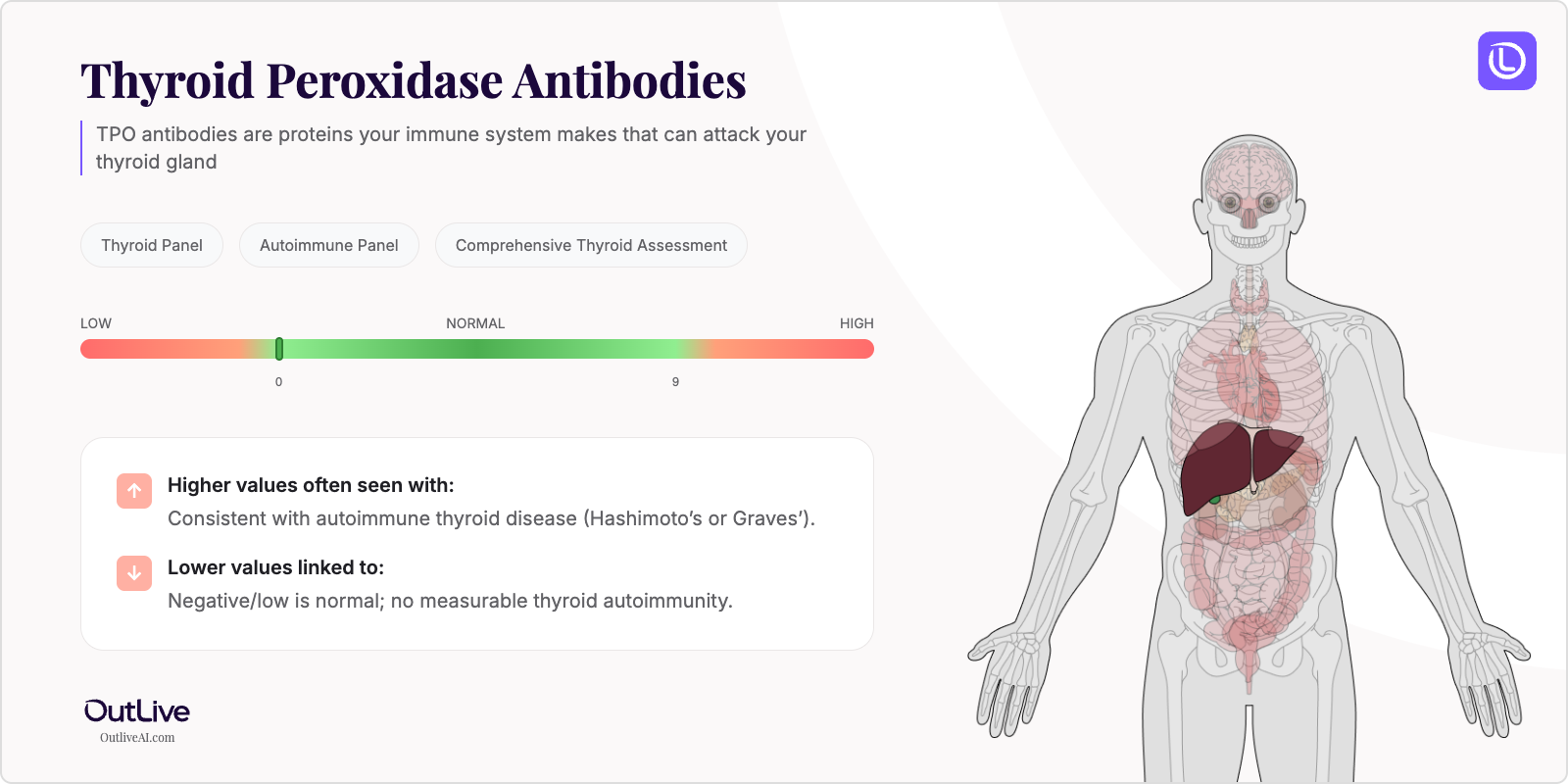
- What it is: TPO antibodies are proteins your immune system makes that can attack your thyroid gland
- Found in tests: Thyroid Panel, Autoimmune Panel, Comprehensive Thyroid Assessment
- Normal range: Less than 9 IU/mL (though some labs use <35 IU/mL)
If you're looking at your lab results and wondering what TPO antibodies mean, you're in the right place. Think of TPO antibodies as your body's misguided security guards – they're supposed to protect you, but instead they're attacking your thyroid, the butterfly-shaped gland in your neck that controls your metabolism. Let's break down what your numbers mean in plain English.
Why Is TPO Antibodies Tested?
Your doctor ordered this test because they want to understand if your immune system is causing problems with your thyroid. TPO stands for "thyroid peroxidase," an important enzyme your thyroid needs to make hormones. When your body makes antibodies against this enzyme, it's like having a case of mistaken identity – your immune system thinks this helpful enzyme is an invader.
This test is particularly important if you're experiencing symptoms like unexplained fatigue, weight changes, hair loss, or if you have a family history of thyroid problems. It's often ordered alongside other thyroid tests (TSH, Free T4, Free T3) to get a complete picture of your thyroid health. The TPO antibodies test is the most sensitive test for detecting autoimmune thyroid disease, catching problems that other tests might miss.
Doctors also use this test to monitor existing thyroid conditions, predict future thyroid problems, or understand why standard thyroid treatments aren't working as expected. If you're pregnant or planning to become pregnant, this test becomes even more important, as TPO antibodies can affect both you and your baby.
What Does TPO Antibodies Do in Your Body?
Under normal circumstances, the thyroid peroxidase enzyme is like a factory worker in your thyroid gland, helping to produce thyroid hormones that regulate everything from your heart rate to your body temperature. TPO antibodies, however, are like protesters blocking the factory entrance – they interfere with this crucial enzyme's work.
When TPO antibodies are present in high numbers, they cause inflammation in your thyroid gland. This can lead to two main scenarios: either your thyroid becomes underactive (hypothyroidism, most commonly seen in Hashimoto's disease) or temporarily overactive before burning out (as seen in some cases of thyroiditis). Think of it as your thyroid getting exhausted from constantly fighting off these antibodies.
These antibodies don't just affect your thyroid – they're a sign that your immune system is confused and overactive. This is why people with TPO antibodies often have other autoimmune conditions or are at higher risk of developing them. The presence of these antibodies tells us your immune system needs attention, not just your thyroid.
What Do My TPO Antibodies Results Mean?
Normal TPO Antibodies Ranges
| Population | Normal Range | Optimal Range |
|---|---|---|
| Adult Male | <9IU/mL (some labs <35 IU/mL) | <5 IU/mL |
| Adult Female | <9IU/mL (some labs <35 IU/mL) | <5 IU/mL |
| Children | <9IU/mL | <5 IU/mL |
| Pregnancy | <9IU/mL | <5 IU/mL (monitoring crucial) |
Note: Reference ranges may vary slightly between laboratories. Always compare your results to the range provided on your specific lab report.
What Does High TPO Antibodies Mean?
Common Causes:
- Hashimoto's thyroiditis - The most common cause, where your immune system gradually damages your thyroid
- Graves' disease - An autoimmune condition causing an overactive thyroid
- Postpartum thyroiditis - Thyroid inflammation after pregnancy, affecting 1 in 10 new mothers
- Subacute thyroiditis - Temporary thyroid inflammation, often following a viral infection
- Other autoimmune conditions - Including Type 1 diabetes, rheumatoid arthritis, or lupus
- Iodine imbalance - Both too much and too little iodine can trigger antibody production
- Chronic stress - Long-term stress can dysregulate your immune system
Possible Symptoms:
- Fatigue that doesn't improve with rest
- Unexplained weight gain or difficulty losing weight
- Feeling cold when others are comfortable
- Hair thinning or loss
- Dry skin and brittle nails
- Brain fog or difficulty concentrating
- Depression or mood changes
- Muscle aches and joint stiffness
- Irregular menstrual periods
When to Be Concerned: Elevated TPO antibodies themselves aren't a medical emergency, but very high levels (over 500 IU/mL) warrant prompt follow-up with your doctor. If you're experiencing severe fatigue, chest pain, extreme anxiety, or significant swelling in your neck, seek medical attention sooner. Pregnant women with elevated TPO antibodies need close monitoring as this increases the risk of miscarriage and postpartum thyroid problems.
What Does Low TPO Antibodies Mean?
Common Causes:
- Normal finding - Low or undetectable TPO antibodies is actually the ideal result
- Successful treatment - If previously elevated, low levels may indicate effective management
- Early disease stage - Rarely, antibodies may not yet be detectable in very early autoimmune thyroid disease
- Laboratory variation - Different testing methods may show varying sensitivity
Possible Symptoms:
- No symptoms - Low TPO antibodies don't cause symptoms
- If you have thyroid symptoms with low antibodies, other causes should be investigated
When to Be Concerned: Low TPO antibodies are not concerning – this is what we want to see! If you have thyroid symptoms despite low antibodies, your doctor will look for other causes like nutritional deficiencies, non-autoimmune thyroid problems, or other hormonal imbalances.
What Can Affect My TPO Antibodies Levels?
Factors That May Increase Levels:
- Medications: Lithium, interferon-alpha, amiodarone, certain cancer immunotherapies
- Lifestyle: Chronic stress, poor sleep, smoking, excessive alcohol consumption
- Conditions: Viral infections, pregnancy, other autoimmune diseases
- Supplements: Excessive iodine supplementation, kelp or seaweed supplements
Factors That May Decrease Levels:
- Medications: Immunosuppressive drugs, corticosteroids (though not typically used for this purpose)
- Lifestyle: Stress reduction, adequate sleep, anti-inflammatory diet, regular moderate exercise
- Conditions: Successful treatment of underlying thyroid condition
- Time of Day: Levels are relatively stable throughout the day, unlike some hormones
How TPO Antibodies Fit Into Your Health Picture
Think of your main thyroid tests (TSH and Free T4) as telling your doctor what is happening with your thyroid—whether it's overactive or underactive. The TPO antibody test helps them understand why.
TPO antibody results are almost never interpreted in isolation. They are a key part of a larger diagnostic story:
-
Part of a Thyroid Panel: This test is a crucial component of a Comprehensive Thyroid Panel. The combination of high TSH, low Free T4, and high TPO antibodies is the classic pattern for Hashimoto's thyroiditis.
-
The Autoimmune Connection: Because a positive TPO test confirms an autoimmune process, your doctor might also check for other related markers. For example, Thyroglobulin Antibodies (TgAb) are often elevated alongside TPO antibodies in Hashimoto's.
-
Guiding Follow-Up Tests: If your TPO antibodies are high, it gives your doctor a reason to investigate further. They may recommend a thyroid ultrasound to get a visual image of your gland and check for any nodules or inflammation. They might also screen for other common autoimmune conditions, especially if you have related symptoms.
Frequently Asked Questions
How often should TPO antibodies be tested? If your initial test is negative, retesting isn't usually necessary unless new symptoms develop. If your test is positive, the focus often shifts to monitoring your actual thyroid hormone levels (TSH and Free T4), as these are what guide treatment. Your doctor may recheck the antibody levels less frequently (e.g., annually) to monitor long-term trends.
Can I lower my TPO antibodies naturally? While there's no cure for autoimmune thyroid disease, many people focus on supporting their immune system to help manage antibody levels. Common strategies, which you should always discuss with your doctor, include:
- Optimizing Key Nutrients: Ensuring you have adequate levels of Selenium, Vitamin D, and B12.
- Adopting an Anti-inflammatory Diet: Focusing on whole foods, vegetables, and healthy fats while reducing processed foods and sugar.
- Managing Stress & Sleep: Prioritizing stress-reduction techniques and aiming for 7-9 hours of quality sleep per night.
Should I fast before a TPO antibodies test? No, fasting is not required. You can eat and drink normally before your blood draw unless other tests requiring fasting are being done at the same time.
How quickly can TPO antibody levels change? Antibody levels change very slowly over months or years, not days or weeks. They reflect long-term immune system activity, which is why your doctor will focus more on your faster-changing hormone levels (TSH and T4) for treatment adjustments.
Your Action Plan After a TPO Test
Understanding your TPO antibody result is a key step. Here is a simple plan for what to do next.
1. Discuss the "Why" With Your Doctor: Your TPO result helps explain the "why" behind your thyroid issues. Discuss how this autoimmune finding influences your overall treatment plan and what it means for your long-term health.
2. Ask About a Thyroid Ultrasound: If your antibodies are elevated, a thyroid ultrasound is often the logical next step. This provides a visual map of your thyroid gland, checking for the inflammation or nodules often associated with Hashimoto's.
3. Shift Focus to TSH and Free T4: Remember, doctors treat the effect of the antibodies (the hypothyroidism or hyperthyroidism), not the antibody number itself. Your ongoing lab monitoring will focus more on your TSH and Free T4 levels to ensure your medication is working correctly.
4. Prepare for Your Follow-Up: Walking into your appointment with clear questions is the best way to feel in control. We've created a tool to help you prepare.
- **Download our [TPO Antibodies Doctor Questions Checklist](#
Download our TPO Antibodies Doctor Questions Checklist
🔬 Ready to Track Your TPO Antibodies Over Time?
Understanding a single TPO antibodies result is just the beginning. Our free Lab Analyzer tool helps you:
- Track how your TPO antibodies change over time
- See how it relates to your other thyroid values
- Identify patterns your doctor might miss
- Get personalized insights based on your trends
[Upload Your Lab Report for Free Analysis →]