
📋 At a Glance
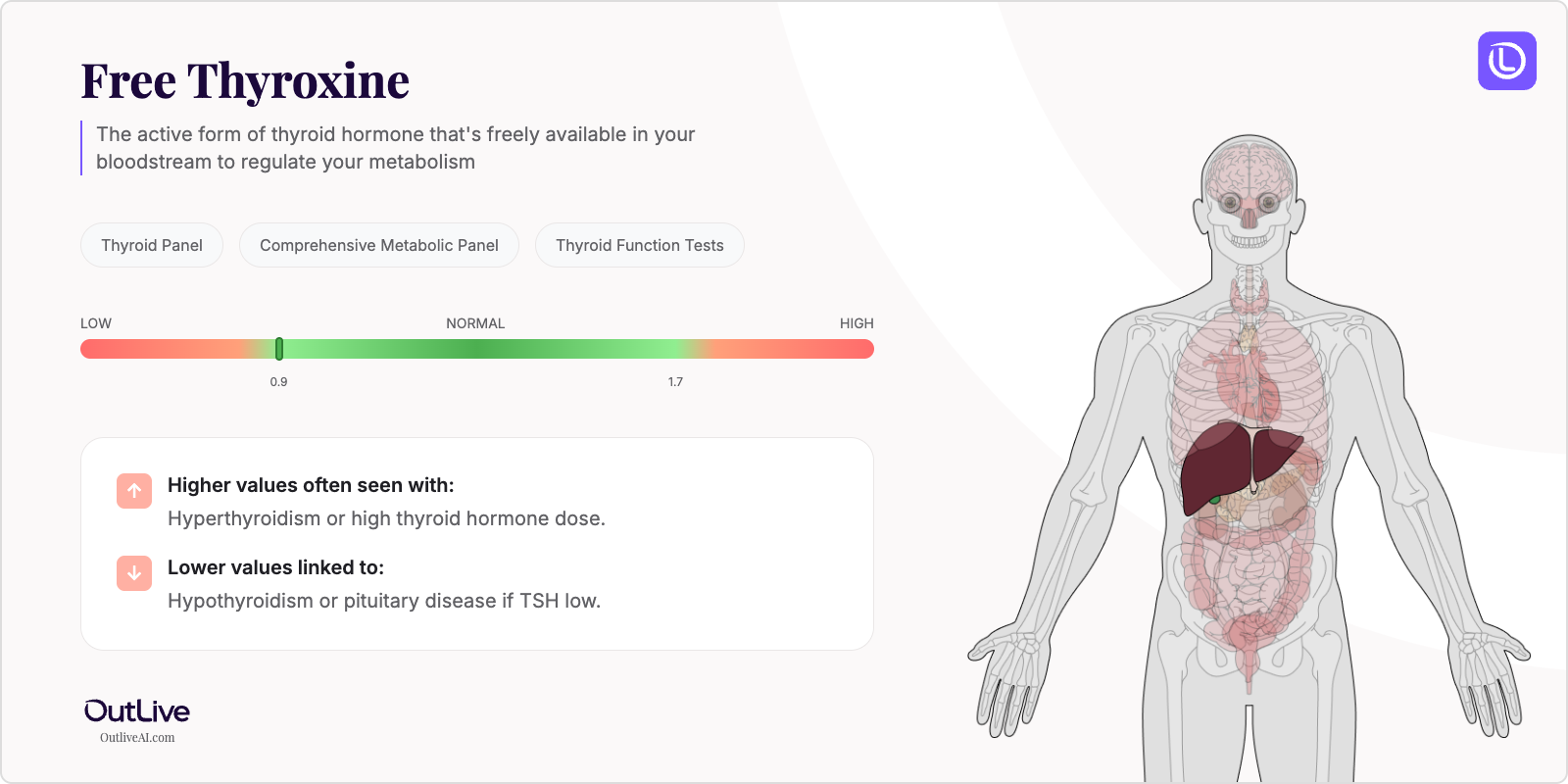
- What it is: The active form of thyroid hormone that's freely available in your bloodstream to regulate your metabolism
- Found in tests: Thyroid Panel, Comprehensive Metabolic Panel, Thyroid Function Tests
- Normal range: 0.9-1.7 ng/dL (may vary slightly by lab and age)
If you're looking at your lab results and wondering what Free T4 means, you're in the right place. Think of Free T4 as your body's metabolic thermostat setting – it's the hormone that tells your cells how fast or slow to run. Unlike the total T4 in your blood (which includes hormone that's "tied up" and unavailable), Free T4 measures only the active hormone that's ready to work. Let's break down what your numbers mean in plain English.
Why Is Free T4 Tested?
Your doctor orders a Free T4 test to get a clear picture of how well your thyroid gland is functioning. This small, butterfly-shaped gland in your neck produces hormones that control virtually every cell in your body – from how fast your heart beats to how quickly you burn calories.
Free T4 is typically measured as part of a thyroid panel when you're experiencing symptoms like unexplained weight changes, fatigue, hair loss, or mood changes. It's also routinely checked if you have a family history of thyroid problems, during pregnancy, or if you're taking medications that can affect thyroid function.
This test is particularly valuable because it gives a more accurate picture than total T4 alone. Since only the "free" hormone can enter your cells and do its job, measuring Free T4 tells your doctor exactly how much active thyroid hormone is available to keep your body running properly.
What Does Free T4 Do in Your Body?
Free T4 (thyroxine) acts like a master key that unlocks energy production in nearly every cell of your body. Once released from your thyroid gland, it travels through your bloodstream and enters your cells, where it's converted to T3 – the most active form of thyroid hormone.
This hormone regulates your metabolic rate – essentially how fast your body's engine runs. It influences your heart rate, body temperature, digestion, muscle function, brain development, and even your mood. When Free T4 levels are balanced, you feel energetic, think clearly, and maintain a healthy weight more easily.
Your pituitary gland (the body's hormone control center) constantly monitors Free T4 levels and adjusts production by releasing TSH (thyroid-stimulating hormone). It's like a thermostat that turns the heat up or down – when Free T4 drops too low, more TSH is released to boost production, and when it's too high, TSH production slows down.
What Do My Free T4 Results Mean?
Normal Free T4 Ranges
| Population | Normal Range | Optimal Range |
|---|---|---|
| Adult Male | 0.9-1.7 ng/dL | 1.0-1.5 ng/dL |
| Adult Female | 0.9-1.7 ng/dL | 1.0-1.5 ng/dL |
| Children (1-5 years) | 0.8-1.8 ng/dL | Not established |
| Children (6-10 years) | 0.9-1.7 ng/dL | Not established |
| Pregnancy (1st trimester) | 0.9-1.5 ng/dL | Varies by trimester |
| Pregnancy (2nd/3rd trimester) | 0.7-1.2 ng/dL | Varies by trimester |
Note: Reference ranges may vary slightly between laboratories. Always compare your results to the range provided on your specific lab report.
What Does High Free T4 Mean?
Common Causes:
- Hyperthyroidism (Graves' disease): Your thyroid produces too much hormone, like a thermostat stuck on high
- Thyroid nodules: "Hot" nodules that independently produce excess hormone
- Thyroiditis: Inflammation causing stored hormone to leak into your bloodstream
- Excessive thyroid medication: Taking too high a dose of levothyroxine or similar medications
- Pituitary adenoma: Rare tumors that overstimulate thyroid hormone production
- High iodine intake: From supplements, medications, or contrast dyes used in medical imaging
- Pregnancy (hCG effect): Early pregnancy hormones can temporarily boost thyroid function
Possible Symptoms:
- Rapid or irregular heartbeat
- Unexplained weight loss despite good appetite
- Anxiety, nervousness, or irritability
- Trembling hands
- Excessive sweating and heat intolerance
- Frequent bowel movements
- Difficulty sleeping
When to Be Concerned: If your Free T4 is significantly elevated (above 2.0 ng/dL) and you're experiencing rapid heartbeat, chest pain, or severe anxiety, contact your healthcare provider promptly. Very high levels can lead to a thyroid storm, which requires immediate medical attention.
What Does Low Free T4 Mean?
Common Causes:
- Hypothyroidism (Hashimoto's disease): Your immune system attacks the thyroid, reducing hormone production
- Iodine deficiency: Your thyroid needs iodine to make hormones (rare in developed countries)
- Pituitary problems: The control center isn't sending proper signals to your thyroid
- Thyroid surgery or radiation: Previous treatment has reduced thyroid tissue
- Certain medications: Lithium, amiodarone, or anti-thyroid drugs
- Severe illness: Non-thyroid illnesses can temporarily suppress thyroid function
- Congenital hypothyroidism: Born with an underactive or absent thyroid gland
Possible Symptoms:
- Persistent fatigue and weakness
- Weight gain or difficulty losing weight
- Cold intolerance
- Dry skin and hair
- Constipation
- Depression or mental fog
- Muscle aches and stiffness
When to Be Concerned: If your Free T4 is below 0.7 ng/dL and you're experiencing severe fatigue, confusion, or swelling (especially around the eyes), see your doctor soon. Very low levels over time can affect heart function and mental clarity.
What Can Affect My Free T4 Levels?
Factors That May Increase Levels:
- Medications: Amiodarone, interferon-alpha, lithium (paradoxically in some cases)
- Lifestyle: High-iodine diet, recent iodine contrast for imaging studies
- Conditions: Acute psychiatric illness, hyperemesis gravidarum (severe morning sickness)
- Supplements: Kelp, iodine supplements, biotin (can interfere with test accuracy)
Factors That May Decrease Levels:
- Medications: Anti-seizure drugs (phenytoin, carbamazepine), steroids, beta-blockers
- Lifestyle: Severe calorie restriction, excessive soy consumption
- Conditions: Chronic kidney or liver disease, severe infections
- Time of Day: Slight variations throughout the day (usually tested in morning for consistency)
How Is Free T4 Related to Other Tests?
Free T4 is rarely interpreted alone – it's like one instrument in an orchestra that needs to be heard with the others to understand the full melody.
Often tested alongside: TSH (thyroid-stimulating hormone), Free T3, Total T4, thyroid antibodies Part of: Thyroid Panel, Comprehensive Metabolic Panel Ratio calculations: Free T3/Free T4 ratio can indicate conversion problems Follow-up tests: If abnormal, your doctor may order thyroid antibodies (TPO, thyroglobulin), thyroid ultrasound, or radioactive iodine uptake test
Frequently Asked Questions
How often should Free T4 be tested? If you're being treated for thyroid disease, typically every 6-8 weeks initially, then every 6-12 months once stable. For screening, your doctor will determine frequency based on your risk factors and symptoms.
Can I improve my Free T4 levels naturally? While you can't cure thyroid disease naturally, you can support thyroid health by ensuring adequate iodine and selenium intake, managing stress, getting quality sleep, and avoiding excessive soy products if you have thyroid issues.
Should I fast before a Free T4 test? No fasting is required for Free T4 testing. However, take any thyroid medication after your blood draw for the most accurate results.
How quickly can Free T4 levels change? If you start thyroid medication, levels begin changing within days but typically take 4-6 weeks to stabilize. Natural fluctuations due to illness or stress can occur within days to weeks.
Next Steps After Your Free T4 Test
Questions to Ask Your Doctor:
- What do my Free T4 results mean in combination with my TSH levels?
- Are my symptoms consistent with my thyroid hormone levels?
- Should we test for thyroid antibodies to check for autoimmune disease?
- If treatment is needed, what are my options?
- How often should we monitor my thyroid function going forward?
Download our Free T4 Doctor Questions Checklist
🔬 Ready to Track Your Free T4 Over Time?
Understanding a single Free T4 result is just the beginning. Our free Lab Analyzer tool helps you:
- Track how your Free T4 changes over time
- See how it relates to your TSH and other thyroid values
- Identify patterns your doctor might miss
- Get personalized insights based on your trends
[Upload Your Lab Report for Free Analysis →]