
📋 At a Glance
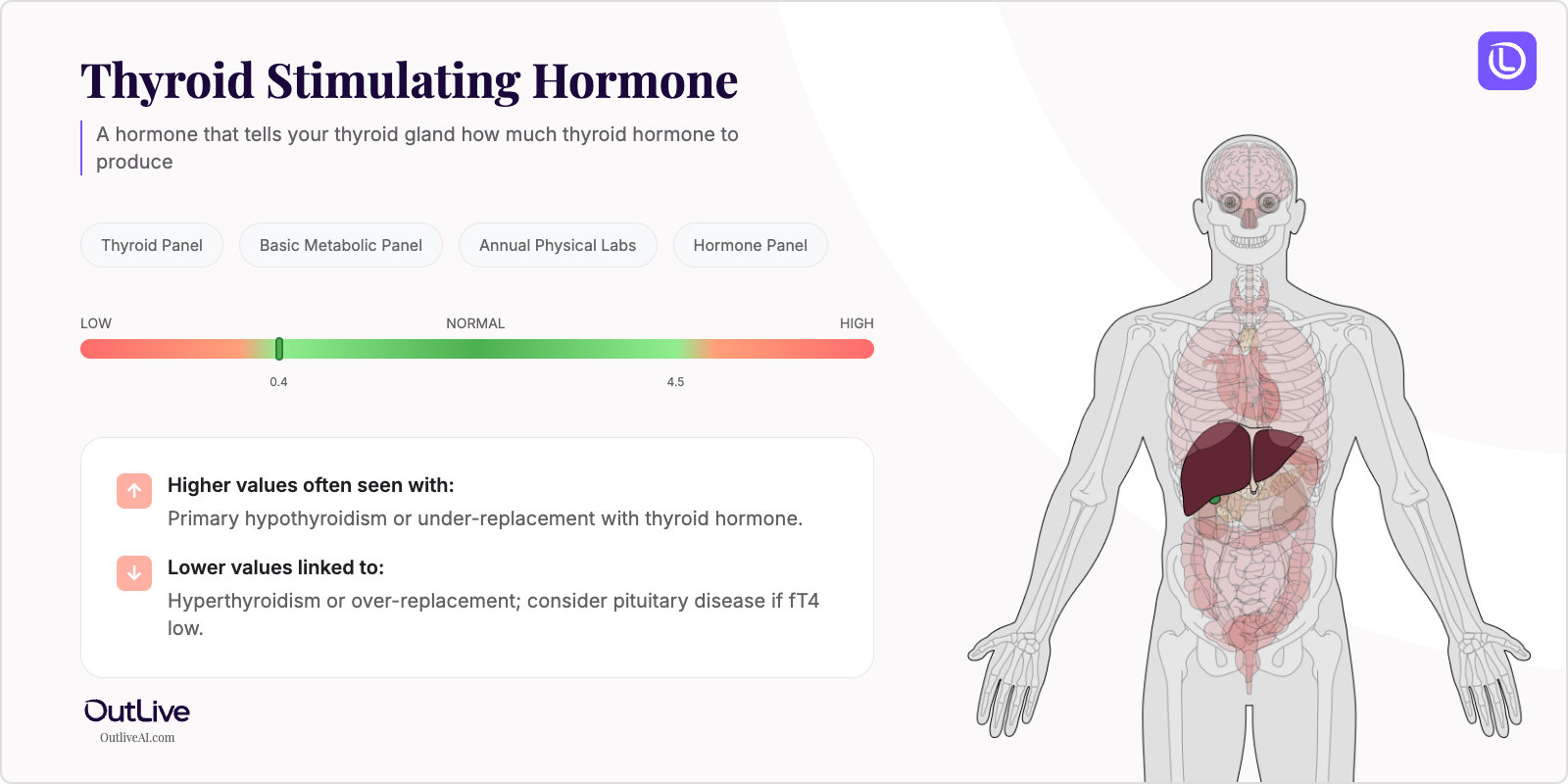
- What it is: A hormone that tells your thyroid gland how much thyroid hormone to produce
- Found in tests: Thyroid Panel, Basic Metabolic Panel, Annual Physical Labs, Hormone Panel
- Normal range: 0.4-4.5 mIU/L (may vary slightly by lab and age)
If you're looking at your lab results and wondering what TSH means, you're in the right place. Think of TSH as your thyroid's "thermostat controller" - just like your home thermostat tells your furnace when to turn on and off, TSH tells your thyroid gland when to produce more or less thyroid hormone. Let's break down what your numbers mean in plain English, so you can walk into your next doctor's appointment feeling informed and confident.
Why Is TSH Tested?
TSH is one of the most commonly ordered blood tests because your thyroid affects nearly every system in your body - from your heart rate to your metabolism, energy levels, and even your mood. Doctors typically order this test as part of routine health screenings, especially if you're experiencing unexplained fatigue, weight changes, or mood swings.
This test is particularly important if you have a family history of thyroid problems, are taking medications that can affect thyroid function, or if you're a woman over 35 (thyroid issues are five to eight times more common in women). It's also routinely checked during pregnancy, as proper thyroid function is crucial for both mother and baby's health.
Your doctor might order a TSH test to diagnose conditions like hypothyroidism (underactive thyroid) or hyperthyroidism (overactive thyroid), monitor existing thyroid conditions, or check if your thyroid medication dose needs adjustment. It's often the first test ordered when thyroid problems are suspected because it's incredibly sensitive - it can detect thyroid issues even before you notice symptoms.
What Does TSH Do in Your Body?
TSH, or thyroid-stimulating hormone, is produced by your pituitary gland - a pea-sized gland at the base of your brain that acts like your body's master control center. When your thyroid hormone levels drop, your pituitary releases more TSH to stimulate your thyroid to work harder. When thyroid hormone levels are high, your pituitary reduces TSH production, telling your thyroid to slow down.
This feedback loop is remarkably precise. Your thyroid hormones (T3 and T4) regulate your metabolism - the speed at which your body converts food into energy. They affect your heart rate, body temperature, weight, energy levels, skin health, hair growth, and even your mental clarity. TSH ensures these hormones stay in perfect balance.
Think of it like cruise control in your car. TSH constantly monitors and adjusts to keep your metabolism running at just the right speed. Too much TSH usually means your thyroid isn't producing enough hormone (like pressing harder on the gas pedal when going uphill), while too little TSH often means your thyroid is overproducing (like easing off the gas when going downhill).
What Do My TSH Results Mean?
Normal TSH Ranges
| Population | Normal Range | Optimal Range |
|---|---|---|
| Adult Male | 0.4-4.5 mIU/L | 1.0-2.5 mIU/L |
| Adult Female | 0.4-4.5 mIU/L | 1.0-2.5 mIU/L |
| Children (1-5 years) | 0.7-6.0 mIU/L | N/A |
| Children (6-10 years) | 0.6-4.8 mIU/L | N/A |
| Pregnancy (1st trimester) | 0.1-2.5 mIU/L | 0.1-2.5 mIU/L |
| Pregnancy (2nd trimester) | 0.2-3.0 mIU/L | 0.2-3.0 mIU/L |
| Pregnancy (3rd trimester) | 0.3-3.0 mIU/L | 0.3-3.0 mIU/L |
| Adults over 70 | 0.4-5.5 mIU/L | 1.0-4.0 mIU/L |
Note: Reference ranges may vary slightly between laboratories. Always compare your results to the range provided on your specific lab report.
What Does High TSH Mean?
Common Causes:
- Hypothyroidism (underactive thyroid): Your thyroid isn't producing enough hormone, so your pituitary is working overtime trying to stimulate it
- Hashimoto's thyroiditis: An autoimmune condition where your immune system attacks your thyroid
- Iodine deficiency: Your thyroid needs iodine to make hormones - without enough, TSH rises
- Certain medications: Lithium, amiodarone, and some cancer treatments can elevate TSH
- Pituitary tumor: Rarely, a benign tumor can cause excess TSH production
- Thyroid hormone resistance: Your body doesn't respond properly to thyroid hormones
- Recovery from illness: TSH can temporarily rise after severe illness or surgery
Possible Symptoms:
- Fatigue and weakness
- Weight gain despite normal eating
- Cold sensitivity
- Dry skin and hair
- Constipation
- Depression or mood changes
- Muscle aches and stiffness
- Heavy or irregular periods
- Puffy face
- Slow heart rate
When to Be Concerned: TSH levels above 10 mIU/L typically require treatment, even without symptoms. Levels between 4.5-10 mIU/L may be monitored or treated depending on your symptoms and other factors. If you have severe fatigue, chest pain, or extreme cold intolerance with high TSH, contact your doctor promptly.
What Does Low TSH Mean?
Common Causes:
- Hyperthyroidism (overactive thyroid): Your thyroid is producing too much hormone, so your pituitary reduces TSH
- Graves' disease: An autoimmune condition causing thyroid overactivity
- Toxic nodular goiter: Thyroid nodules producing excess hormone
- Too much thyroid medication: If you're on thyroid replacement, your dose may be too high
- Thyroiditis: Inflammation releasing stored thyroid hormone
- Excessive iodine intake: From supplements or certain medications
- Pituitary problems: Damage to the pituitary gland reducing TSH production
Possible Symptoms:
- Rapid or irregular heartbeat
- Unexplained weight loss
- Increased appetite
- Nervousness or anxiety
- Trembling hands
- Excessive sweating
- Heat intolerance
- Frequent bowel movements
- Difficulty sleeping
- Bulging eyes (in Graves' disease)
When to Be Concerned: TSH below 0.1 mIU/L with symptoms like rapid heartbeat, chest pain, or severe anxiety requires prompt medical attention. This could indicate thyroid storm, a rare but serious condition. Even without severe symptoms, very low TSH should be evaluated quickly to prevent complications.
What Can Affect My TSH Levels?
Factors That May Increase Levels:
- Medications: Lithium, amiodarone, interferon alpha, dopamine antagonists
- Lifestyle: Chronic stress, extreme dieting, excessive soy consumption
- Conditions: Recent illness, recovery from hyperthyroidism, kidney disease
- Supplements: Biotin deficiency, iron deficiency
Factors That May Decrease Levels:
- Medications: Steroids, dopamine, opioids, metformin
- Lifestyle: Excessive caffeine, smoking, extreme exercise
- Conditions: First trimester pregnancy, recent CT scan with contrast
- Time of Day: TSH is highest in early morning, lowest in afternoon
How Is TSH Related to Other Tests?
TSH is rarely evaluated alone. It's the screening test that determines if further thyroid testing is needed.
Often tested alongside: Free T4, Free T3, Thyroid Antibodies (TPO, Anti-thyroglobulin) Part of: Thyroid Panel, Hormone Panel Ratio calculations: TSH/Free T4 ratio can help determine thyroid hormone resistance Follow-up tests: If TSH is abnormal, your doctor may order Free T4, thyroid antibodies, or thyroid ultrasound
Frequently Asked Questions
How often should TSH be tested? For healthy adults, every 5 years after age 35 is reasonable. If you have thyroid disease or take thyroid medication, testing may be needed every 6-12 weeks when adjusting doses, then annually once stable.
Can I improve my TSH levels naturally? Mild elevations may improve with adequate iodine intake, stress reduction, regular sleep, and avoiding extreme diets. However, significant abnormalities typically require medical treatment.
Should I fast before a TSH test? Fasting isn't required for TSH testing, but consistency helps - if you usually test in the morning before eating, continue that pattern for accurate comparisons.
How quickly can TSH levels change? TSH can fluctuate within hours but meaningful changes typically take 4-6 weeks. That's why doctors wait 6-8 weeks after medication changes before retesting.
Next Steps After Your TSH Test
Questions to Ask Your Doctor:
- What do my TSH results mean for my overall health?
- Are my levels related to my current symptoms?
- Do I need additional thyroid testing?
- Should we monitor this over time or start treatment?
- Are there lifestyle changes that could help optimize my thyroid function?
Download our TSH Doctor Questions Checklist
🔬 Ready to Track Your TSH Over Time?
Understanding a single TSH result is just the beginning. Our free Lab Analyzer tool helps you:
- Track how your TSH changes over time
- See how it relates to your other lab values
- Identify patterns your doctor might miss
- Get personalized insights based on your trends
[Upload Your Lab Report for Free Analysis →]