
📋 At a Glance
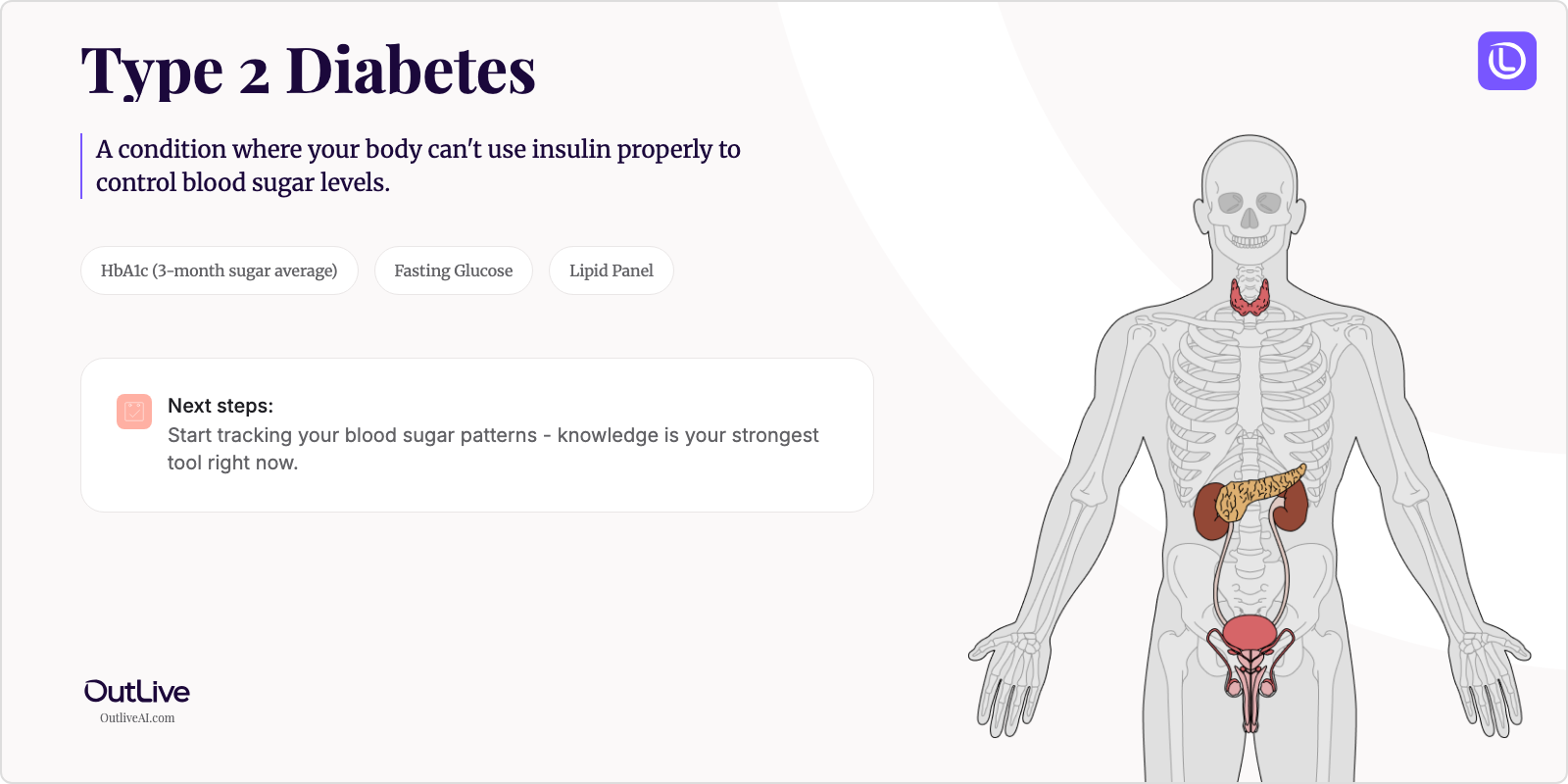
- What it is: A condition where your body can't use insulin properly to control blood sugar levels.
- Key lab tests: HbA1c (3-month sugar average), Fasting Glucose, and Lipid Panel
- Your first goal: Start tracking your blood sugar patterns - knowledge is your strongest tool right now.
Receiving a new diagnosis for Type 2 Diabetes can be overwhelming. You might be feeling anxious, confused, and unsure of what comes next. That's completely normal. This guide is here to help you understand your condition in simple terms, know which lab tests matter most, and feel prepared for your next steps.
First, Take a Breath: What is Type 2 Diabetes in Simple Terms?
Think of insulin as a key that unlocks your cells' doors to let sugar (glucose) in for energy. In Type 2 Diabetes, your cells have changed their locks - they don't respond well to insulin anymore. This is called "insulin resistance." Meanwhile, sugar builds up in your bloodstream like packages piling up outside a locked door. Your pancreas tries to make more keys (insulin) to compensate, but over time, it can't keep up. The good news? With the right approach, you can help your body use insulin better again and keep your blood sugar in a healthy range.
Understanding Your Diagnosis: The Key Lab Tests
This is the most important section. These are the tests your doctor uses to diagnose and monitor your diabetes - understanding them gives you power over your health journey.
Key Tests for Type 2 Diabetes:
- Hemoglobin A1c (HbA1c): This test shows your average blood sugar over the past 3 months - think of it as your blood sugar "report card" that tells you how well your management plan is working.
- Fasting Glucose: This measures your blood sugar after not eating for 8-12 hours, showing how well your body controls sugar levels without food influence.
- Lipid Panel: This checks your cholesterol and triglycerides, which often need attention in diabetes since high blood sugar can affect your heart health.
- Kidney Function Tests (eGFR/Creatinine): These monitor how well your kidneys are working, as diabetes can affect kidney health over time.
Your First Specialist Appointment: What to Ask
You'll likely see an endocrinologist - a hormone specialist who focuses on diabetes. Some patients work with their primary care doctor initially. Either way, this first appointment is about creating your personalized management plan.
What to Expect: Your doctor will review your lab results, discuss your health history, examine you for any diabetes-related complications, and work with you to create a treatment plan. They may also refer you to a diabetes educator or nutritionist. The appointment typically lasts 30-60 minutes, and you'll leave with clear next steps.
Questions to Ask Your Doctor:
- "What is my HbA1c goal, and how quickly should I expect to reach it?"
- "Should I be checking my blood sugar at home, and if so, when and how often?"
- "What lifestyle changes will have the biggest impact on my blood sugar?"
- "Are there any diabetes complications I should be screened for now?"
- "When should I come back for follow-up, and what tests will we repeat?"
Download our [Checklist of Questions to Ask Your Type 2 Diabetes Specialist](# to feel prepared.
How to Track Your Journey
Tracking your Type 2 Diabetes journey is crucial for understanding how your treatment is working and spotting important trends. Here's what you should monitor:
Symptoms to Track:
- Energy levels throughout the day (especially after meals)
- Excessive thirst or frequent urination
- Blurry vision or vision changes
- Slow-healing cuts or frequent infections
- Tingling or numbness in hands or feet
Lab Results to Monitor:
- HbA1c - Every 3 months initially, then every 6 months when stable
- Fasting glucose - As directed by your doctor (often monthly at first)
- Lipid panel - Annually or as recommended
- Kidney function - Annually or more frequently if concerns arise
Why Tracking Matters: Patterns in your numbers and symptoms help your doctor fine-tune your treatment. For example, if your blood sugar spikes after certain meals, you'll discover which foods to modify. Tracking also shows you progress - even small improvements are victories worth celebrating!
Next Steps After Your Diagnosis
Immediate Actions (This Week):
- Schedule your follow-up appointment with your doctor or specialist
- Fill any prescribed medications and understand how to take them
- Start a simple food diary to understand how different foods affect you
- Find a blood glucose meter if recommended and learn how to use it
Short-term Goals (Next Month):
- Meet with a diabetes educator or nutritionist if referred
- Establish a regular eating schedule with balanced meals
- Begin gentle exercise like walking for 15-20 minutes daily
- Join a diabetes support group (online or in-person)
Long-term Management:
- Build a healthcare team including your primary doctor, eye doctor, and possibly a podiatrist
- Create sustainable lifestyle habits rather than drastic temporary changes
- Learn to read food labels and understand carbohydrate counting
- Develop a sick-day plan for managing diabetes when you're ill
Frequently Asked Questions
How quickly can I expect to feel better? Many people notice improved energy within 2-4 weeks of starting treatment and making lifestyle changes. Your HbA1c typically shows meaningful improvement after 3 months. Remember, diabetes management is a marathon, not a sprint.
Will I need to change my diet? You don't need a special "diabetic diet," but you'll benefit from consistent meal timing, portion awareness, and choosing complex carbohydrates over simple sugars. Think of it as eating for steady energy rather than roller-coaster spikes.
How often will I need to see my doctor? Initially, expect visits every 3 months to adjust your treatment plan. Once your blood sugar is stable, you'll typically have check-ups every 6 months, with annual comprehensive exams.
Can I still exercise/work/travel? Absolutely! Exercise actually helps your body use insulin better. Most people with well-managed diabetes live full, active lives. You'll just need to plan ahead - pack snacks, medications, and supplies when traveling.
When to Seek Immediate Medical Attention
Contact your doctor immediately if you experience:
- Blood sugar over 300 mg/dL that won't come down
- Persistent vomiting or inability to keep fluids down
- Confusion, extreme fatigue, or difficulty staying awake
- Fruity-smelling breath with high blood sugar
- Signs of infection that won't heal (especially on feet)
- Chest pain or difficulty breathing
🔬 Ready to Organize Your Health Journey?
Understanding your condition is the first step. Our free Lab Analyzer tool helps you:
- Track all your lab results for Type 2 Diabetes in one place
- Spot important trends over time
- Generate personalized questions for your doctor
[Upload Your Lab Report for Free Analysis →]