
📋 At a Glance
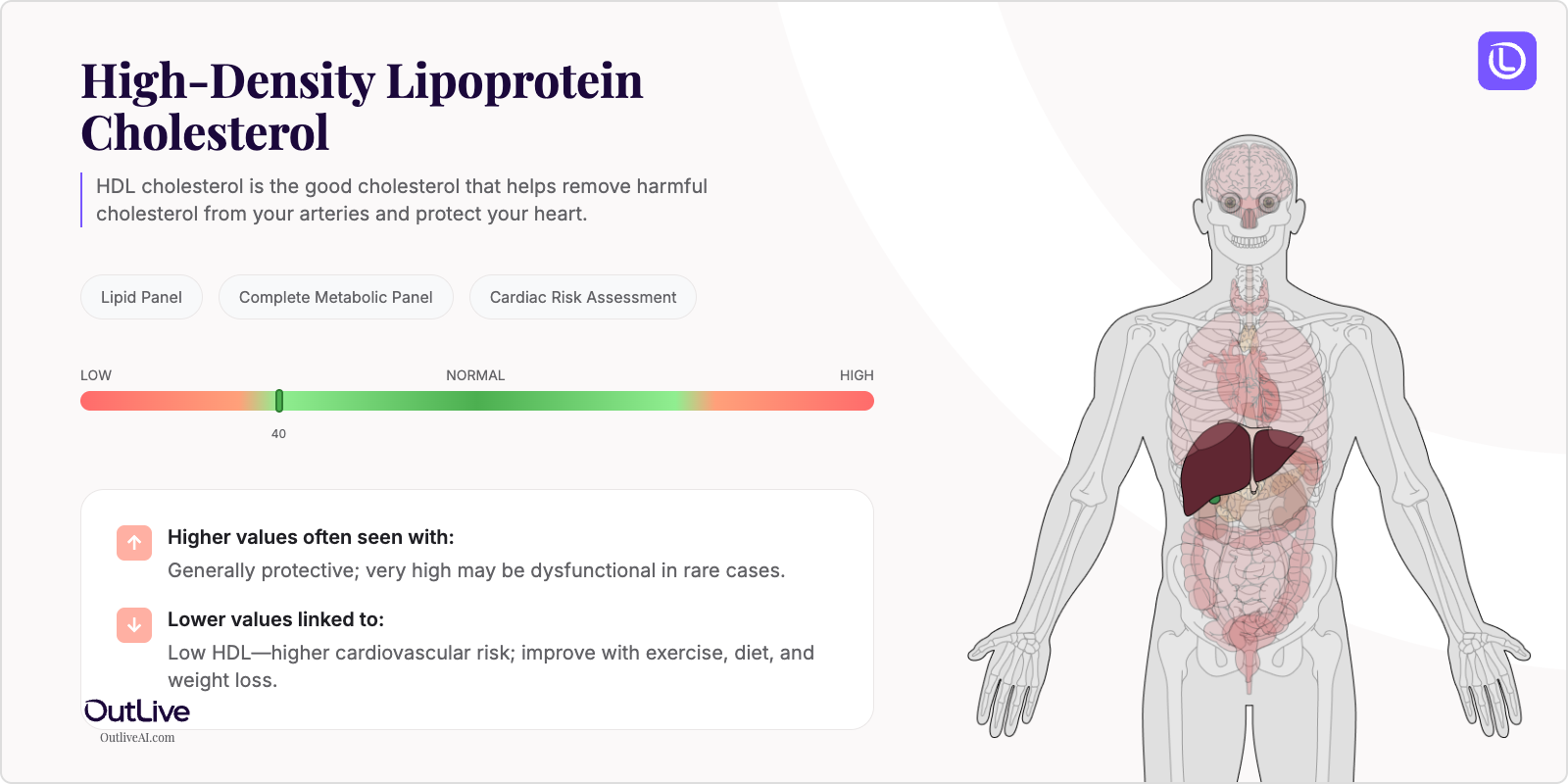
- What it is: HDL cholesterol is the "good" cholesterol that helps remove harmful cholesterol from your arteries and protect your heart.
- Found in tests: Lipid Panel, Complete Metabolic Panel, Cardiac Risk Assessment, Annual Physical Blood Work
- Normal range: 40+ mg/dL for men, 50+ mg/dL for women (higher is better)
If you're looking at your lab results and wondering what HDL cholesterol means, you're in the right place. Think of HDL as your body's cleanup crew – like tiny garbage trucks that cruise through your bloodstream, picking up excess cholesterol and hauling it away to your liver for disposal. Let's break down what your numbers mean in plain English.
Why Is HDL Cholesterol Tested?
Your doctor orders an HDL cholesterol test as part of your routine lipid panel, typically during annual check-ups or when assessing your heart disease risk. This simple blood test gives us crucial information about how well your body is managing cholesterol and protecting your cardiovascular system.
HDL testing becomes especially important if you have risk factors for heart disease, such as family history, diabetes, high blood pressure, or if you're over 40. Your doctor may also order this test if you're experiencing chest pain, shortness of breath, or if you've had a stroke or heart attack. It helps monitor how well lifestyle changes or medications are working to improve your cholesterol profile.
The beauty of HDL testing is that it's not just about finding problems – it's about understanding your body's natural defense system against heart disease. When we measure your HDL alongside other cholesterol markers, we get a complete picture of your cardiovascular health that helps guide prevention and treatment strategies.
What Does HDL Cholesterol Do in Your Body?
HDL cholesterol acts as your cardiovascular system's maintenance team. These special particles travel through your bloodstream like molecular vacuum cleaners, collecting excess cholesterol from your artery walls and other tissues. Once HDL picks up this cholesterol, it transports it back to your liver, where it's broken down and removed from your body through bile.
This process, called reverse cholesterol transport, is why HDL is often called "good" cholesterol. While LDL cholesterol can build up in your arteries like rust in old pipes, HDL actively works to keep those pipes clean. Your liver produces most of your HDL, but your intestines also contribute to its production.
Beyond just removing cholesterol, HDL particles have anti-inflammatory and antioxidant properties that protect your blood vessels from damage. They help maintain the health of your arterial walls and can even repair minor damage before it becomes a bigger problem. This is why having higher HDL levels is associated with lower risk of heart attacks and strokes.
What Do My HDL Results Mean?
Normal HDL Ranges
| Population | Normal Range | Optimal Range |
|---|---|---|
| Adult Male | 40-59 mg/dL | 60+ mg/dL |
| Adult Female | 50-59 mg/dL | 60+ mg/dL |
| Children (2-19 years) | 40+ mg/dL | 45+ mg/dL |
| Pregnancy | May increase 20-30% | 60+ mg/dL |
Note: Reference ranges may vary slightly between laboratories. Always compare your results to the range provided on your specific lab report.
What Does High HDL Mean?
Common Causes:
- Regular aerobic exercise (your body's reward for staying active)
- Moderate alcohol consumption (particularly red wine in moderation)
- Genetic factors (some families naturally have higher HDL)
- Certain medications like niacin or fibrates
- Healthy Mediterranean-style diet rich in olive oil and fish
- Being female (estrogen naturally raises HDL)
- Recent weight loss or maintaining a healthy weight
Possible Symptoms:
- Usually no symptoms (high HDL is protective)
- May indicate good cardiovascular health
- Associated with lower inflammation markers
When to Be Concerned: While high HDL is generally protective, extremely high levels (above 100 mg/dL) may occasionally indicate genetic conditions or liver issues. Your doctor will evaluate this in context with your other lab results and health history. In most cases, high HDL is a sign your cardiovascular system is well-protected.
What Does Low HDL Mean?
Common Causes:
- Sedentary lifestyle (lack of regular exercise)
- Smoking or tobacco use (significantly lowers HDL)
- Type 2 diabetes or metabolic syndrome
- Being overweight, especially with excess belly fat
- Diet high in refined carbohydrates and trans fats
- Certain medications like beta-blockers or anabolic steroids
- Genetic factors (familial low HDL)
Possible Symptoms:
- Usually no direct symptoms from low HDL itself
- May experience fatigue or poor exercise tolerance
- Increased risk of chest pain or shortness of breath over time
When to Be Concerned: HDL levels below 40 mg/dL in men or 50 mg/dL in women significantly increase your risk for heart disease. If your HDL is below 30 mg/dL, this warrants immediate discussion with your doctor about aggressive lifestyle changes and possible medication. Low HDL combined with high LDL or triglycerides creates a particularly dangerous situation for your heart.
What Can Affect My HDL Levels?
Factors That May Increase Levels:
- Medications: Niacin, fibrates (gemfibrozil), statins (modest increase)
- Lifestyle: Regular aerobic exercise (30+ minutes, 5 days/week), moderate alcohol consumption (1-2 drinks/day maximum)
- Conditions: Recent weight loss, pregnancy, hyperthyroidism
- Supplements: Omega-3 fatty acids, niacin supplements, soluble fiber
Factors That May Decrease Levels:
- Medications: Beta-blockers, anabolic steroids, progestins, thiazide diuretics
- Lifestyle: Smoking, sedentary behavior, high-sugar diet, trans fat consumption
- Conditions: Obesity, metabolic syndrome, uncontrolled diabetes, chronic inflammation
- Time of Day: HDL can vary slightly throughout the day but is generally stable
How Is HDL Cholesterol Related to Other Tests?
HDL cholesterol never travels alone in your lab work – it's part of a team of measurements that paint your complete cardiovascular picture. Your doctor looks at HDL alongside LDL cholesterol, total cholesterol, and triglycerides to calculate important ratios like your total cholesterol to HDL ratio (ideally below 5:1).
Often tested alongside: LDL cholesterol, triglycerides, total cholesterol, VLDL cholesterol Part of: Lipid Panel, Comprehensive Metabolic Panel Ratio calculations: Total cholesterol/HDL ratio, LDL/HDL ratio Follow-up tests: Advanced lipid testing, apolipoprotein B, hs-CRP, hemoglobin A1c
Frequently Asked Questions
How often should HDL be tested? For healthy adults, every 4-6 years is typically sufficient. If you have risk factors for heart disease or are on cholesterol medications, your doctor may recommend testing every year or even more frequently when adjusting treatments.
Can I improve my HDL levels naturally? Absolutely! Regular aerobic exercise can increase HDL by 5-10%. Losing excess weight, quitting smoking, choosing healthy fats (olive oil, nuts, avocados), and eating fatty fish twice weekly can all boost your HDL levels within 6-8 weeks.
Should I fast before an HDL test? Traditionally, a 9-12 hour fast was required, but recent guidelines suggest HDL can be accurately measured without fasting. Check with your doctor or lab about their specific requirements, especially if other tests are being done simultaneously.
How quickly can HDL levels change? With lifestyle changes, you may see improvements in 6-8 weeks. Exercise can boost HDL within 2-3 months. Quitting smoking can improve levels within weeks. Medication effects are usually seen within 4-6 weeks.
Next Steps After Your HDL Test
Questions to Ask Your Doctor:
- What do my HDL results mean for my overall heart disease risk?
- Are my HDL levels related to my current symptoms or health conditions?
- Do I need additional cardiovascular testing based on these results?
- Should we monitor my HDL more frequently given my risk factors?
- What specific lifestyle changes would be most effective for raising my HDL?
Download our HDL Cholesterol Doctor Questions Checklist
🔬 Ready to Track Your HDL Cholesterol Over Time?
Understanding a single HDL result is just the beginning. Our free Lab Analyzer tool helps you:
- Track how your HDL changes over time
- See how it relates to your other lab values
- Identify patterns your doctor might miss
- Get personalized insights based on your trends
[Upload Your Lab Report for Free Analysis →]