
📋 At a Glance
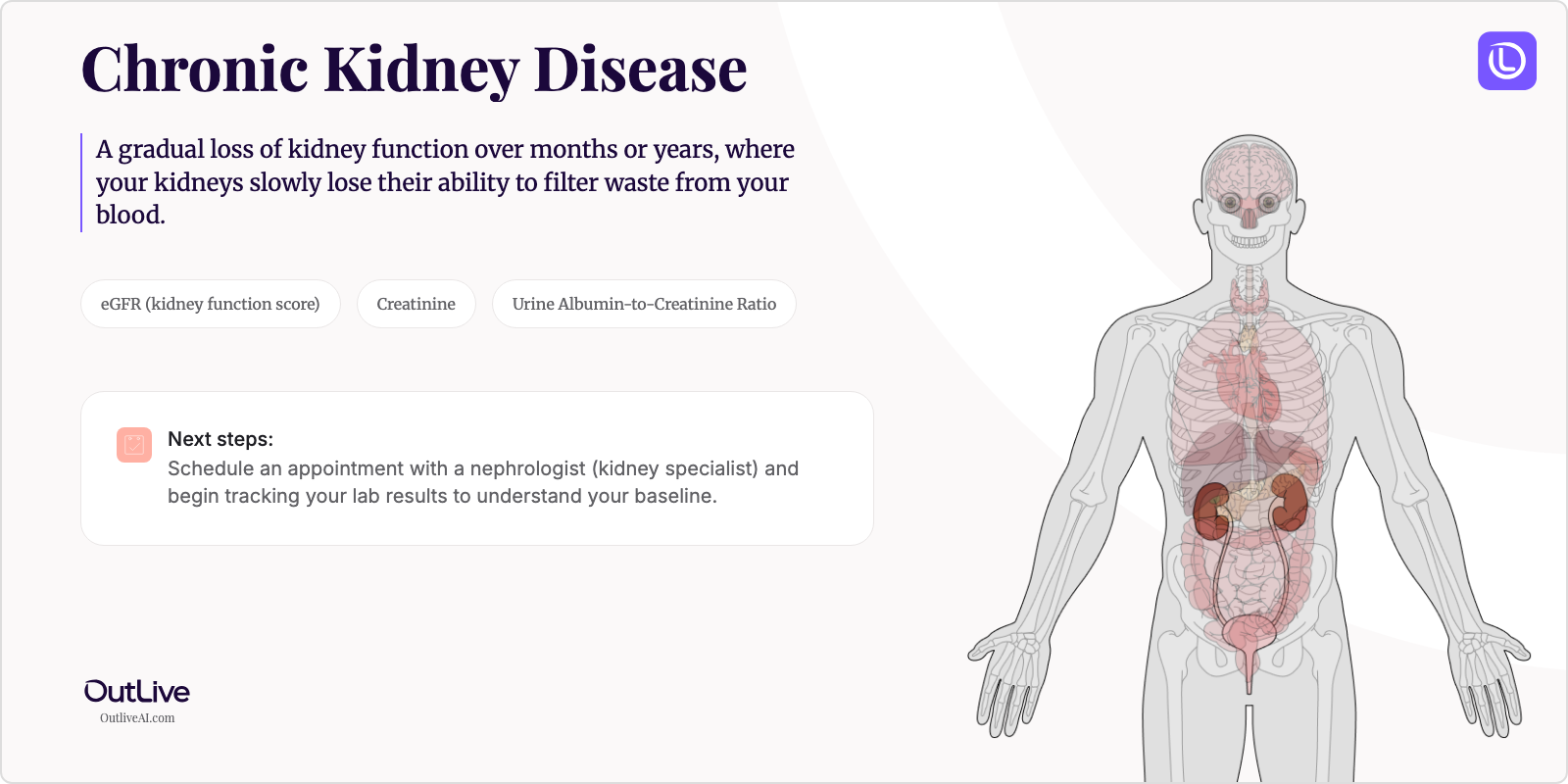
- What it is: A gradual loss of kidney function over months or years, where your kidneys slowly lose their ability to filter waste from your blood.
- Key lab tests: eGFR (kidney function score), Creatinine, and Urine Albumin-to-Creatinine Ratio
- Your first goal: Schedule an appointment with a nephrologist (kidney specialist) and begin tracking your lab results to understand your baseline.
Receiving a new diagnosis for Chronic Kidney Disease can be overwhelming. You might be feeling anxious, confused, and unsure of what comes next. That's completely normal. This guide is here to help you understand your condition in simple terms, know which lab tests matter most, and feel prepared for your next steps.
First, Take a Breath: What is Chronic Kidney Disease in Simple Terms?
Think of your kidneys as your body's sophisticated filtering system - like a water treatment plant that works 24/7. In a healthy person, these bean-shaped organs filter about 50 gallons of blood daily, removing waste products and extra water to make urine. When you have Chronic Kidney Disease (CKD), this filtering system gradually becomes less efficient over time. It's like having a coffee filter that's slowly getting clogged - it still works, but not as well as it should. The good news? With proper management, many people with CKD live full, active lives for decades. Your kidneys have remarkable reserve capacity, and even functioning at 50% can keep you feeling relatively normal.
Understanding Your Diagnosis: The Key Lab Tests
This is the most important section. These are the critical biomarkers used to diagnose and monitor Chronic Kidney Disease. Understanding these numbers gives you power over your health journey.
Key Tests for Chronic Kidney Disease:
- eGFR (Estimated Glomerular Filtration Rate): This is your kidney function "score" - it tells you what percentage of normal kidney function you have, with normal being above 90.
- Creatinine: A waste product your muscles make daily that healthy kidneys filter out - when kidneys struggle, this number rises in your blood.
- Urine Albumin-to-Creatinine Ratio (UACR): This test checks if protein is leaking into your urine, which is like finding out if your kidney's filter has tiny holes in it.
- Blood Urea Nitrogen (BUN): Another waste product that builds up when kidneys aren't filtering properly - think of it as checking how much "trash" is accumulating in your blood.
Your First Specialist Appointment: What to Ask
Your journey with CKD management truly begins with your nephrologist - a doctor who specializes in kidney health. This isn't just another doctor's appointment; it's your opportunity to become an active partner in your care.
What to Expect: You'll likely see a nephrologist (kidney specialist) who will review your lab results, perform a physical exam, and discuss your medical history in detail. The appointment typically lasts 30-45 minutes, and they'll want to understand what led to your diagnosis, any symptoms you've noticed, and your current medications. Bring all your recent lab reports and a list of your medications, including supplements.
Questions to Ask Your Doctor:
- "What stage is my CKD, and what does that mean for my daily life?"
- "What likely caused my kidney disease, and can we slow or stop its progression?"
- "Are there specific foods I should avoid or eat more of to protect my kidneys?"
- "How often will I need lab work, and which numbers should I pay closest attention to?"
- "What symptoms should prompt me to call you between appointments?"
Download our [Checklist of Questions to Ask Your Chronic Kidney Disease Specialist](# to feel prepared.
How to Track Your Journey
Think of tracking your CKD like monitoring your car's dashboard - you want to catch small changes before they become big problems. Regular monitoring helps you and your doctor make informed decisions about your treatment.
Symptoms to Track:
- Swelling in your feet, ankles, or hands (especially if your shoes feel tighter)
- Changes in urination (frequency, color, or amount)
- Fatigue levels and when you feel most tired during the day
- Blood pressure readings (morning and evening if possible)
- Any new shortness of breath or difficulty breathing when lying flat
Lab Results to Monitor:
- eGFR and Creatinine - Every 3-6 months (or as your doctor recommends)
- Urine protein levels - Every 3-6 months
- Electrolytes (potassium, phosphorus, calcium) - Every 3-6 months
- Hemoglobin (for anemia) - Every 3-6 months
Why Tracking Matters: Your kidney function can fluctuate based on many factors - medications, hydration, blood pressure control, and diet. By tracking trends over time rather than focusing on single results, you'll see the bigger picture of your kidney health. This helps your doctor adjust treatments proactively rather than reactively, potentially slowing disease progression.
Next Steps After Your Diagnosis
Immediate Actions (This Week):
- Schedule an appointment with a nephrologist if you haven't already
- Start a simple health journal to track how you feel each day
- Review all your current medications with your pharmacist to identify any that might affect your kidneys
Short-term Goals (Next Month):
- Establish care with a renal dietitian to create a kidney-friendly meal plan
- Set up a blood pressure monitoring routine at home
- Join a CKD support group (online or in-person) to connect with others on similar journeys
Long-term Management:
- Build a comprehensive care team including your nephrologist, primary care doctor, and dietitian
- Create sustainable lifestyle changes rather than drastic overhauls
- Plan for regular monitoring and adjust your routine as your needs change
Frequently Asked Questions
How quickly can I expect to feel better? Many people with early-stage CKD don't feel sick at all. If you're experiencing symptoms, improvements often come gradually over weeks to months as you manage blood pressure, adjust your diet, and address anemia if present. Energy levels typically improve first, followed by reduced swelling.
Will I need to change my diet? Yes, but it's not as restrictive as you might fear. Most people with CKD benefit from limiting sodium, managing protein intake (not too much, not too little), and watching phosphorus and potassium in later stages. A renal dietitian will personalize recommendations based on your stage and lab results.
How often will I need to see my doctor? Initially, you'll likely see your nephrologist every 3-4 months. As your condition stabilizes, visits may stretch to every 6 months. You'll need lab work before each visit, typically 1-2 weeks prior, so your doctor has current results to review.
Can I still exercise/work/travel? Absolutely! Exercise is actually encouraged as it helps control blood pressure and maintains overall health. Most people with CKD continue working normally. Travel is fine too - just plan ahead for medical care at your destination and stay hydrated during flights.
When to Seek Immediate Medical Attention
Contact your doctor immediately if you experience:
- Sudden, significant swelling in your legs, feet, or around your eyes
- Chest pain, severe shortness of breath, or difficulty breathing when lying down
- Confusion, extreme fatigue, or difficulty staying awake
- Little to no urine output for 12+ hours
- Persistent nausea and vomiting that prevents you from keeping fluids down
- Severe muscle cramps or weakness, especially with heart palpitations
🔬 Ready to Organize Your Health Journey?
Understanding your condition is the first step. Our free Lab Analyzer tool helps you:
- Track all your lab results for Chronic Kidney Disease in one place
- Spot important trends over time
- Generate personalized questions for your doctor
[Upload Your Lab Report for Free Analysis →]