
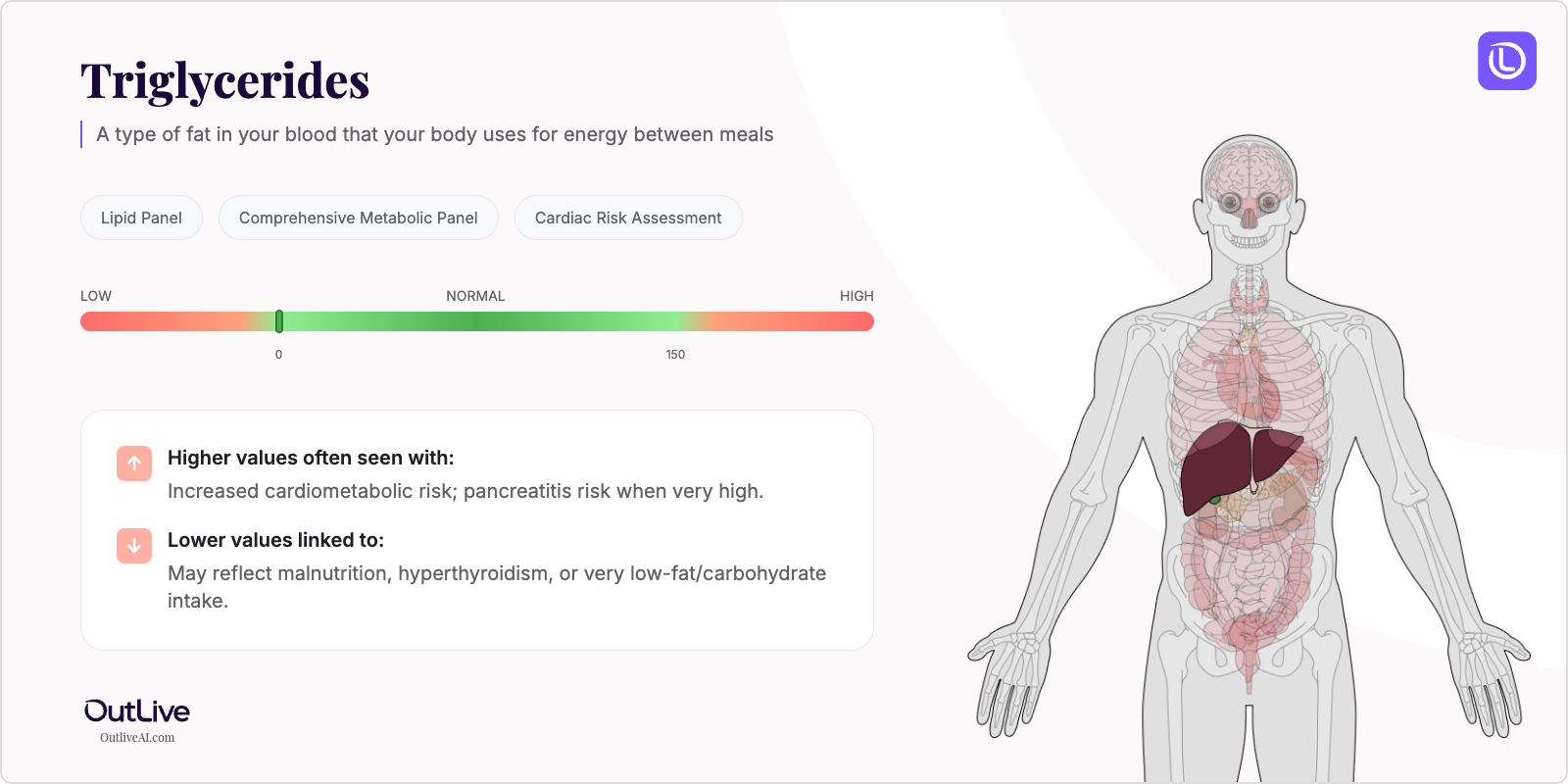
📋 At a Glance
- What it is: A type of fat in your blood that your body uses for energy between meals
- Found in tests: Lipid Panel, Comprehensive Metabolic Panel, Cardiac Risk Assessment
- Normal range: Less than 150 mg/dL (after fasting)
If you're looking at your lab results and wondering what triglycerides means, you're in the right place. Think of triglycerides as your body's energy storage units – like having cash in your wallet for immediate use and a savings account for later. When you eat more calories than you need right away, your body converts those extra calories into triglycerides and stores them in fat cells. Let's break down what your numbers mean in plain English.
Why Is Triglycerides Tested?
Your doctor orders a triglycerides test as part of routine health screening, typically included in a lipid panel alongside cholesterol measurements. This test becomes especially important if you're over 20 years old, as guidelines recommend checking lipid levels every 4-6 years for healthy adults. If you have risk factors for heart disease – like diabetes, high blood pressure, or a family history of heart problems – your doctor may check your triglycerides more frequently.
Triglycerides testing helps assess your risk for heart disease and stroke. High levels can contribute to hardening of the arteries (atherosclerosis), which increases your chances of heart attack and stroke. The test also helps diagnose metabolic syndrome – a cluster of conditions that increase heart disease risk – and can reveal how well you're managing diabetes or responding to cholesterol-lowering treatments.
Your doctor might also order this test if you're experiencing symptoms of pancreatitis, such as severe abdominal pain, as extremely high triglycerides can trigger this serious condition. Regular monitoring helps track whether lifestyle changes or medications are effectively managing your levels.
What Does Triglycerides Do in Your Body?
Triglycerides serve as your body's main form of stored energy. When you eat, your body converts any calories it doesn't need immediately into triglycerides. These fat molecules travel through your bloodstream to be stored in fat cells throughout your body. Between meals, hormones signal the release of triglycerides to provide energy for your cells – it's like your body's backup generator kicking in when needed.
Your liver plays a central role in triglyceride metabolism, producing them from excess carbohydrates and releasing them into your bloodstream. This is why eating lots of sugary or starchy foods can raise your triglyceride levels – your liver converts that extra sugar into fat for storage. Your intestines also package dietary fats into triglycerides after you eat.
While triglycerides are essential for normal body function, the key is balance. You need some for energy storage and insulation, but too much circulating in your blood can damage your blood vessels and organs. Think of it like oil in your car – you need the right amount for everything to run smoothly, but too much can gum up the works.
What Do My Triglycerides Results Mean?
Normal Triglycerides Ranges
| Population | Normal Range | Optimal Range |
|---|---|---|
| Adult Male | Less than 150 mg/dL | Less than 100 mg/dL |
| Adult Female | Less than 150 mg/dL | Less than 100 mg/dL |
| Children (10-19 years) | Less than 90 mg/dL | Less than 75 mg/dL |
| Pregnancy | May increase 2-3x normal | Varies by trimester |
Note: Reference ranges may vary slightly between laboratories. Always compare your results to the range provided on your specific lab report.
What Does High Triglycerides Mean?
Common Causes:
- Poor diet: Eating too many refined carbohydrates, sugary foods, and alcohol
- Obesity: Excess weight, especially around the waistline, increases triglyceride production
- Diabetes or prediabetes: Poor blood sugar control leads to higher triglyceride levels
- Hypothyroidism: An underactive thyroid slows metabolism and raises triglycerides
- Kidney disease: Impaired kidney function affects how your body processes fats
- Certain medications: Beta-blockers, diuretics, steroids, and some birth control pills
- Genetic conditions: Familial hypertriglyceridemia runs in families
Possible Symptoms:
- Usually no symptoms until levels are very high
- Fatty deposits under the skin (xanthomas) when extremely elevated
- Milky or creamy appearance of blood
- Abdominal pain if levels exceed 500 mg/dL (pancreatitis risk)
When to Be Concerned: Levels between 150-199 mg/dL are borderline high and warrant lifestyle changes. Levels of 200-499 mg/dL are high and may require medication. Levels above 500 mg/dL are very high and pose an immediate risk for pancreatitis – this requires urgent medical attention. If your levels exceed 1,000 mg/dL, you need immediate treatment to prevent life-threatening complications.
What Does Low Triglycerides Mean?
Common Causes:
- Malnutrition: Not eating enough calories or fats
- Hyperthyroidism: An overactive thyroid speeds up metabolism excessively
- Malabsorption disorders: Conditions like celiac disease prevent proper fat absorption
- Very low-fat diet: Extremely restrictive eating patterns
- Certain medications: Some cholesterol-lowering drugs can lower triglycerides too much
- Liver disease: Advanced liver damage affects triglyceride production
- Genetic conditions: Rare disorders like abetalipoproteinemia
Possible Symptoms:
- Fatigue and low energy
- Difficulty absorbing fat-soluble vitamins (A, D, E, K)
- Dry skin and hair
- Poor wound healing
When to Be Concerned: While low triglycerides (below 40 mg/dL) are less common and generally less concerning than high levels, very low levels might indicate an underlying health issue that needs investigation. If your levels are persistently below 40 mg/dL, discuss with your doctor whether additional testing is needed to rule out malabsorption or nutritional deficiencies.
What Can Affect My Triglycerides Levels?
Factors That May Increase Levels:
- Medications: Corticosteroids, beta-blockers, thiazide diuretics, estrogen, tamoxifen, immunosuppressants
- Lifestyle: Excessive alcohol consumption, sedentary behavior, smoking, high-sugar diet, overeating
- Conditions: Recent illness, acute stress, pregnancy, uncontrolled diabetes
- Supplements: High-dose fish oil (paradoxically, in some people), certain protein supplements
Factors That May Decrease Levels:
- Medications: Statins, fibrates, niacin, omega-3 fatty acids (prescription strength)
- Lifestyle: Regular exercise, weight loss, low-carb diet, limiting alcohol
- Conditions: Hyperthyroidism, malnutrition, recent weight loss
- Time of Day: Levels are typically lowest in the morning after fasting
How Is Triglycerides Related to Other Tests?
Triglycerides are rarely tested alone – they're part of a bigger picture of your cardiovascular health. They're routinely measured alongside total cholesterol, LDL cholesterol, and HDL cholesterol in a lipid panel. Your doctor may calculate your non-HDL cholesterol (total cholesterol minus HDL), which includes triglyceride-rich particles and provides additional risk information.
Often tested alongside: HDL cholesterol, LDL cholesterol, Total cholesterol, Glucose Part of: Lipid Panel, Comprehensive Metabolic Panel Ratio calculations: Triglyceride/HDL ratio (should be less than 2.0) Follow-up tests: If elevated, your doctor may order thyroid function tests, liver enzymes, or hemoglobin A1c
Frequently Asked Questions
How often should triglycerides be tested? For healthy adults, every 4-6 years starting at age 20. If you have risk factors or are on treatment, your doctor may recommend testing every 3-12 months until levels are controlled, then annually for monitoring.
Can I improve my triglycerides levels naturally? Absolutely! Losing 5-10% of body weight, exercising 30 minutes most days, limiting sugar and refined carbs, choosing healthy fats, and reducing alcohol can significantly lower triglycerides within weeks to months.
Should I fast before a triglycerides test? Yes, typically you should fast for 9-12 hours before testing, drinking only water. Recent meals can temporarily spike triglycerides by 20-30%, giving falsely high readings. Some doctors now use non-fasting tests, but fasting provides the most accurate baseline.
How quickly can triglycerides levels change? Triglycerides can change rapidly – even day to day based on what you eat. Meaningful improvements from lifestyle changes typically appear within 2-4 weeks, while medication effects may be seen within 4-8 weeks.
Next Steps After Your Triglycerides Test
Questions to Ask Your Doctor:
- What do my triglycerides results mean for my overall heart disease risk?
- Are my levels related to my other health conditions or medications?
- Do I need additional testing to find the cause of abnormal levels?
- Should we monitor this more frequently given my results?
- What specific dietary changes would be most helpful for my situation?
Download our Triglycerides Doctor Questions Checklist
🔬 Ready to Track Your Triglycerides Over Time?
Understanding a single triglycerides result is just the beginning. Our free Lab Analyzer tool helps you:
- Track how your triglycerides changes over time
- See how it relates to your other lab values
- Identify patterns your doctor might miss
- Get personalized insights based on your trends
[Upload Your Lab Report for Free Analysis →]