
📋 At a Glance
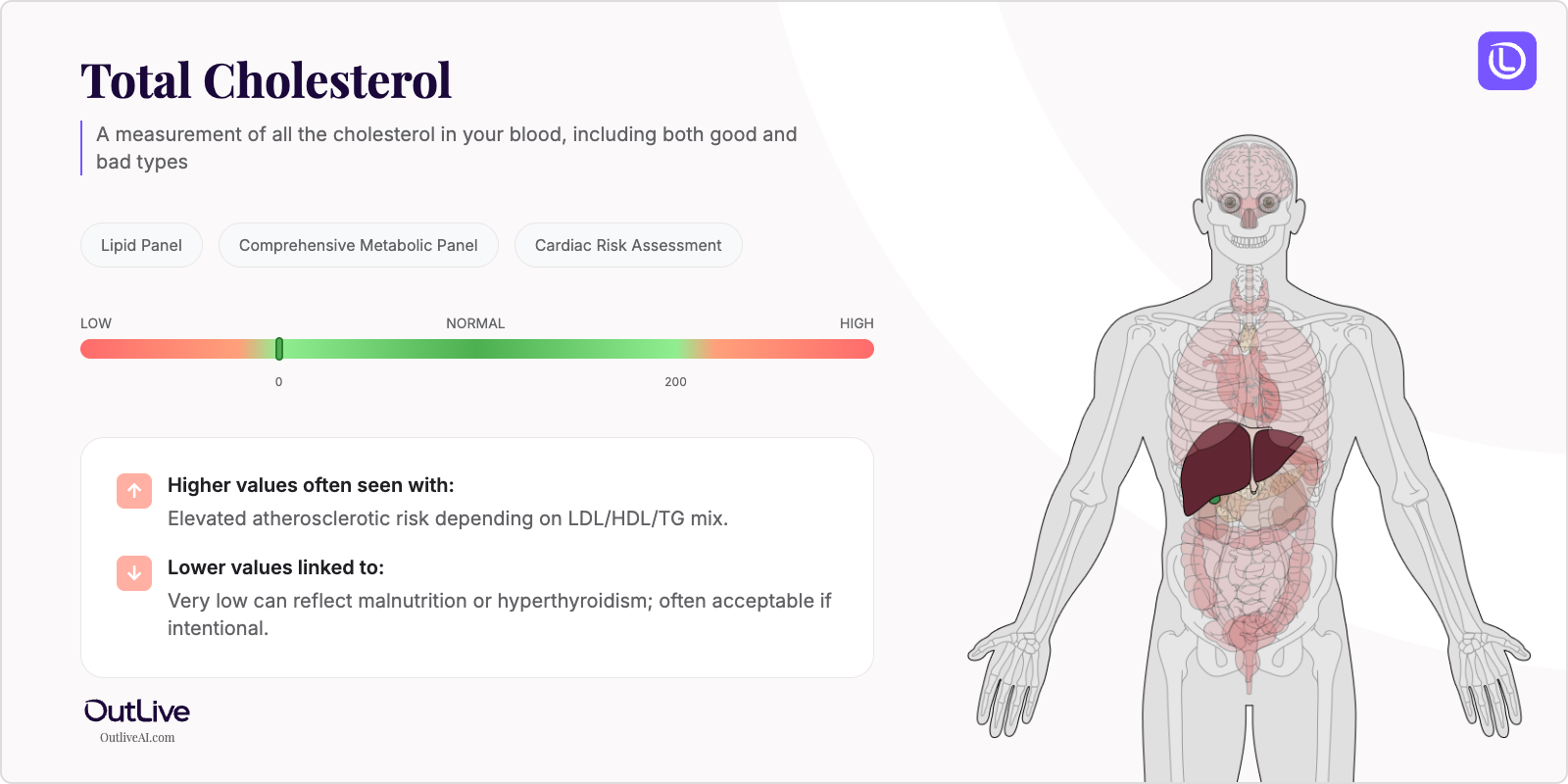
- What it is: A measurement of all the cholesterol in your blood, including both "good" and "bad" types
- Found in tests: Lipid Panel, Comprehensive Metabolic Panel, Cardiac Risk Assessment, Annual Physical Blood Work
- Normal range: Less than 200 mg/dL is desirable for adults
If you're looking at your lab results and wondering what total cholesterol means, you're in the right place. Think of total cholesterol as the overall amount of waxy, fat-like substance floating in your bloodstream – like oil in water. While your body needs some cholesterol to function properly (it's like the building blocks for important hormones and cell walls), too much can create problems. Let's break down what your numbers mean in plain English.
Why Is Total Cholesterol Tested?
Your doctor orders a total cholesterol test as part of routine health screening, typically starting at age 20 and repeated every 4-6 years if your levels are normal. It's one of the most common blood tests because it gives us a quick snapshot of your heart disease risk – think of it as checking the oil level in your car's engine.
This test becomes especially important if you have risk factors for heart disease, such as family history, diabetes, high blood pressure, or if you smoke. Your doctor might also order it more frequently if you're taking cholesterol medications to see how well they're working, or if you've made lifestyle changes and want to track your progress.
The total cholesterol test is typically part of a lipid panel, which gives us the complete picture by breaking down the different types of cholesterol. It helps identify your risk for developing heart disease, stroke, and other cardiovascular problems before symptoms appear – which is why it's such a valuable preventive tool.
What Does Total Cholesterol Do in Your Body?
Despite its bad reputation, cholesterol is actually essential for life. Your liver makes about 75% of the cholesterol in your body, while the rest comes from the foods you eat. This waxy substance travels through your bloodstream in little packages called lipoproteins – imagine tiny submarines carrying cargo through your blood vessels.
Cholesterol helps build the structure of every cell in your body, acting like the mortar between bricks. It's also the raw material for making vitamin D, certain hormones like estrogen and testosterone, and bile acids that help you digest fats. Your brain, which is about 60% fat, relies heavily on cholesterol to function properly.
The key is balance. When total cholesterol levels get too high, the excess can stick to your artery walls like soap scum in pipes, gradually building up and narrowing the space for blood to flow. This process, called atherosclerosis, is why maintaining healthy cholesterol levels is so important for your long-term health.
What Do My Total Cholesterol Results Mean?
Normal Total Cholesterol Ranges
| Population | Normal Range | Optimal Range |
|---|---|---|
| Adult Male | Less than 200 mg/dL | Less than 170 mg/dL |
| Adult Female | Less than 200 mg/dL | Less than 170 mg/dL |
| Children (2-19 years) | Less than 170 mg/dL | Less than 150 mg/dL |
| Pregnancy | May increase 25-50% | Consult your OB/GYN |
Note: Reference ranges may vary slightly between laboratories. Always compare your results to the range provided on your specific lab report.
What Does High Total Cholesterol Mean?
Common Causes:
- Diet high in saturated fats: Red meat, full-fat dairy, fried foods, and processed snacks can raise cholesterol
- Genetic conditions: Familial hypercholesterolemia runs in families and causes very high cholesterol from birth
- Lack of physical activity: Sitting too much reduces your body's ability to clear cholesterol
- Obesity: Extra weight changes how your body produces and processes cholesterol
- Diabetes: High blood sugar damages blood vessels and affects cholesterol metabolism
- Hypothyroidism: An underactive thyroid slows down cholesterol clearance
- Medications: Some blood pressure pills, steroids, and HIV medications can raise levels
Possible Symptoms:
- Usually no symptoms (which is why testing is important)
- Yellowish patches around eyes (xanthelasma) in severe cases
- Yellowish bumps on tendons (xanthomas) in genetic conditions
- Chest pain or shortness of breath if arteries are already affected
When to Be Concerned: Total cholesterol above 240 mg/dL is considered high and requires attention. Levels above 300 mg/dL need immediate medical evaluation, especially if you have other risk factors. Remember, high cholesterol is a silent condition – you won't feel it happening, which is why regular testing matters.
What Does Low Total Cholesterol Mean?
Common Causes:
- Hyperthyroidism: An overactive thyroid speeds up cholesterol metabolism
- Liver disease: Your liver makes cholesterol, so damage affects production
- Malnutrition or malabsorption: Not getting or absorbing enough nutrients
- Certain cancers: Some cancers use up cholesterol rapidly
- Severe infections or inflammation: Your body uses cholesterol to fight illness
- Genetic conditions: Rare disorders like abetalipoproteinemia
- Mental health conditions: Depression and anxiety can sometimes lower cholesterol
Possible Symptoms:
- Fatigue or weakness
- Depression or mood changes
- Poor memory or concentration
- Digestive problems
- Frequent infections
When to Be Concerned: While we often focus on high cholesterol, levels below 120 mg/dL may signal an underlying health issue. Very low cholesterol (under 100 mg/dL) has been linked to increased risk of depression, anxiety, and hemorrhagic stroke. If your levels are unexpectedly low, your doctor will likely investigate further.
What Can Affect My Total Cholesterol Levels?
Factors That May Increase Levels:
- Medications: Beta-blockers, thiazide diuretics, anabolic steroids, progestins, retinoids
- Lifestyle: Smoking, excessive alcohol, stress, lack of sleep, winter months
- Conditions: Recent heart attack, acute illness, pregnancy, recent surgery
- Supplements: High doses of vitamin D, fish oil (temporarily), weight gain supplements
Factors That May Decrease Levels:
- Medications: Statins, fibrates, niacin, cholesterol absorption inhibitors
- Lifestyle: Regular exercise, weight loss, plant-based diet, moderate alcohol
- Conditions: Hyperthyroidism, severe illness, recent major weight loss
- Time of Day: Levels can be 5-10% lower in the afternoon versus morning
How Is Total Cholesterol Related to Other Tests?
Total cholesterol is like the headline of a news story – it gives you the main idea, but you need the details for the full picture. That's why it's usually tested alongside LDL ("bad" cholesterol), HDL ("good" cholesterol), and triglycerides in a complete lipid panel.
Often tested alongside: HDL cholesterol, LDL cholesterol, triglycerides, apolipoprotein B, lipoprotein(a) Part of: Lipid Panel, Cardiac Risk Assessment Ratio calculations: Total cholesterol/HDL ratio (should be below 5:1, ideally below 3.5:1) Follow-up tests: If abnormal, your doctor may order thyroid tests, liver function tests, or diabetes screening
Frequently Asked Questions
How often should total cholesterol be tested? Adults should get tested every 4-6 years starting at age 20. If you have risk factors or take cholesterol medication, your doctor may recommend testing every year or even more frequently when starting new treatments.
Can I improve my total cholesterol levels naturally? Absolutely! Losing just 5-10% of body weight, exercising 30 minutes most days, choosing healthy fats (olive oil, nuts, avocados), eating more fiber, and quitting smoking can significantly improve your levels within 6-12 weeks.
Should I fast before a total cholesterol test? Traditionally, 9-12 hours of fasting was required, but many doctors now accept non-fasting tests for screening. Ask your doctor what they prefer, as fasting gives the most accurate LDL calculation.
How quickly can total cholesterol levels change? Diet changes can affect levels within 2-3 weeks, while the full effect of lifestyle modifications takes 6-12 weeks. Cholesterol medications typically show results within 4-6 weeks.
Next Steps After Your Total Cholesterol Test
Questions to Ask Your Doctor:
- What do my total cholesterol results mean for my overall heart disease risk?
- Should we look at my cholesterol breakdown (HDL, LDL, triglycerides)?
- Do I need additional testing based on these results?
- How often should I have my cholesterol checked going forward?
- What lifestyle changes would have the biggest impact on my numbers?
Download our Total Cholesterol Doctor Questions Checklist
🔬 Ready to Track Your Total Cholesterol Over Time?
Understanding a single cholesterol result is just the beginning. Our free Lab Analyzer tool helps you:
- Track how your total cholesterol changes over time
- See how it relates to your other lab values
- Identify patterns your doctor might miss
- Get personalized insights based on your trends
[Upload Your Lab Report for Free Analysis →]