
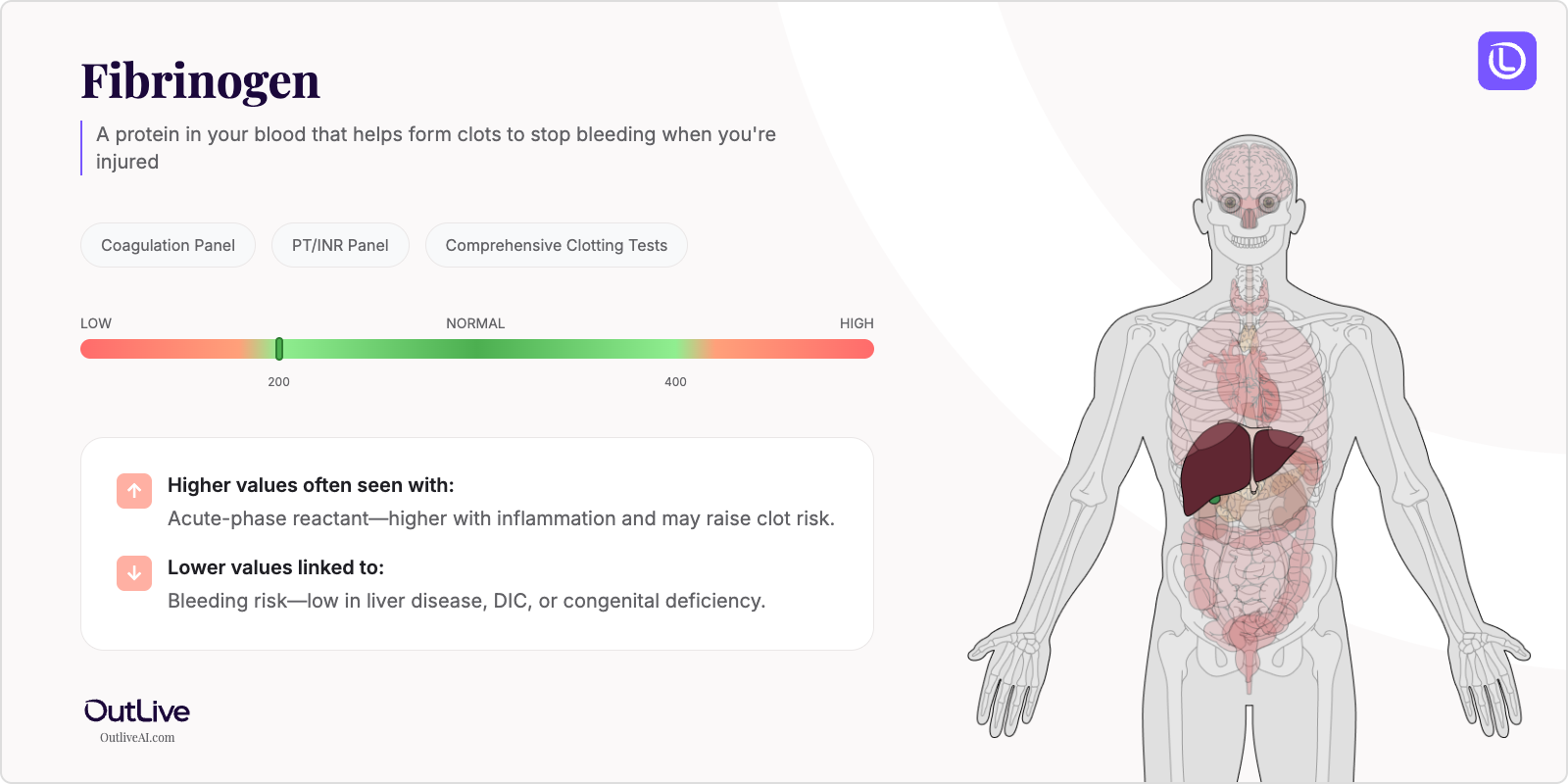
📋 At a Glance
- What it is: A protein in your blood that helps form clots to stop bleeding when you're injured
- Found in tests: Coagulation Panel, PT/INR Panel, Comprehensive Clotting Tests, Pre-surgical Screening
- Normal range: 200-400 mg/dL (may vary slightly by lab)
If you're looking at your lab results and wondering what fibrinogen means, you're in the right place. Think of fibrinogen as your body's emergency repair glue – it's the protein that rushes to the scene when you get a cut or injury, helping to form a protective patch (blood clot) that stops the bleeding. Let's break down what your numbers mean in plain English.
Why Is Fibrinogen Tested?
Your doctor orders a fibrinogen test to understand how well your blood can clot when needed. It's like checking if you have enough emergency supplies in your first aid kit. This test is commonly included in coagulation panels, especially before surgery, or when investigating unexplained bleeding or clotting issues.
Doctors typically request this test when you have symptoms like excessive bleeding from minor cuts, heavy menstrual periods, or easy bruising. It's also ordered if you've had unexplained blood clots, multiple miscarriages, or if there's a family history of bleeding disorders. Additionally, fibrinogen is checked as part of pre-surgical screening to ensure your blood will clot properly during and after procedures.
The test helps diagnose conditions ranging from inherited clotting disorders to liver disease, and it can also serve as a marker for inflammation in your body. Understanding your fibrinogen levels gives your healthcare team crucial information about your bleeding risk and overall cardiovascular health.
What Does Fibrinogen Do in Your Body?
Fibrinogen is produced by your liver and circulates in your bloodstream, waiting to spring into action when needed. When you get injured, your body converts fibrinogen into fibrin – think of it as liquid glue transforming into sticky threads. These fibrin threads weave together with platelets to create a mesh-like structure that forms a blood clot, essentially creating a natural bandage over the wound.
Beyond its role in clotting, fibrinogen also acts as an inflammation marker. When your body is fighting infection or dealing with inflammation, fibrinogen levels often rise as part of your immune response. This is why doctors sometimes use fibrinogen levels to monitor inflammatory conditions or assess cardiovascular risk.
Your body maintains a delicate balance with fibrinogen – too little, and you might bleed excessively; too much, and you could be at risk for unwanted blood clots. This balance involves complex interactions with other clotting factors, platelets, and proteins that regulate the clotting process.
What Do My Fibrinogen Results Mean?
Normal Fibrinogen Ranges
| Population | Normal Range | Optimal Range |
|---|---|---|
| Adult Male | 200-400 mg/dL | 250-350 mg/dL |
| Adult Female | 200-400 mg/dL | 250-350 mg/dL |
| Children | 150-350 mg/dL | 200-300 mg/dL |
| Pregnancy | 400-650 mg/dL | 450-550 mg/dL |
Note: Reference ranges may vary slightly between laboratories. Always compare your results to the range provided on your specific lab report.
What Does High Fibrinogen Mean?
Common Causes:
- Acute inflammation or infection (your body's natural response to fighting illness)
- Pregnancy (levels naturally rise to protect against bleeding during delivery)
- Smoking (chronic irritation causes persistent elevation)
- Obesity and metabolic syndrome (linked to chronic low-grade inflammation)
- Stress or trauma (physical or emotional stress triggers production)
- Certain cancers (some tumors stimulate fibrinogen production)
- Cardiovascular disease (often elevated with atherosclerosis)
Possible Symptoms:
- Often no symptoms directly from high fibrinogen
- Increased risk of blood clots
- Chest pain or shortness of breath (if clots form)
- Leg swelling or pain (deep vein thrombosis)
- Headaches or vision changes (rare, with very high levels)
When to Be Concerned: Levels above 500 mg/dL significantly increase your risk of blood clots and cardiovascular events. If your levels exceed 700 mg/dL, or if you're experiencing chest pain, difficulty breathing, or sudden leg swelling, seek immediate medical attention as these could indicate dangerous clot formation.
What Does Low Fibrinogen Mean?
Common Causes:
- Liver disease (your liver can't produce enough fibrinogen)
- DIC (disseminated intravascular coagulation - uses up clotting factors rapidly)
- Inherited fibrinogen deficiency (rare genetic conditions)
- Severe malnutrition (lack of protein building blocks)
- Certain medications (like valproic acid or some chemotherapy drugs)
- Large volume blood transfusions (dilutes clotting factors)
- Advanced cancer (consumption of clotting factors)
Possible Symptoms:
- Easy bruising
- Excessive bleeding from minor cuts
- Heavy menstrual periods
- Bleeding gums
- Nosebleeds that are hard to stop
- Blood in urine or stool
When to Be Concerned: Levels below 100 mg/dL pose a significant bleeding risk. If you have levels below 50 mg/dL, or experience uncontrolled bleeding, severe headaches, or signs of internal bleeding (like black stools or vomiting blood), seek emergency medical care immediately.
What Can Affect My Fibrinogen Levels?
Factors That May Increase Levels:
- Medications: Oral contraceptives, hormone replacement therapy, corticosteroids
- Lifestyle: Smoking, sedentary behavior, high-stress lifestyle, obesity
- Conditions: Recent surgery, acute infections, inflammatory conditions
- Supplements: High-dose vitamin K supplements
Factors That May Decrease Levels:
- Medications: Anabolic steroids, valproic acid, fibrinolytic drugs, some antibiotics
- Lifestyle: Extreme exercise, severe calorie restriction, alcohol abuse
- Conditions: Liver disease, severe burns, snake bites
- Time of Day: Slight variations throughout the day (usually minimal)
How Is Fibrinogen Related to Other Tests?
Fibrinogen is rarely tested alone – it's part of a bigger picture of your clotting ability. Think of it as one instrument in an orchestra that needs to work in harmony with others.
Often tested alongside: PT (Prothrombin Time), PTT (Partial Thromboplastin Time), Platelet Count, D-Dimer Part of: Coagulation Panel, Pre-surgical Screening Ratio calculations: Fibrinogen-to-CRP ratio (inflammation assessment) Follow-up tests: Factor assays, liver function tests, inflammatory markers like CRP or ESR
Frequently Asked Questions
How often should fibrinogen be tested? For most people, fibrinogen is tested only when investigating bleeding or clotting issues. If you have a known disorder, your doctor may monitor it every 3-6 months. During pregnancy or before surgery, it's typically checked once unless abnormalities are found.
Can I improve my fibrinogen levels naturally? Yes, lifestyle changes can help normalize levels. If high, quitting smoking, losing weight, managing stress, and regular exercise can help. For slightly low levels, ensuring adequate protein intake and treating underlying conditions may help, though severe deficiencies require medical treatment.
Should I fast before a fibrinogen test? No fasting is required for a fibrinogen test. You can eat and drink normally before the blood draw, which makes this test more convenient than many others.
How quickly can fibrinogen levels change? Fibrinogen can rise rapidly within 24-48 hours during acute inflammation or infection. Returning to normal typically takes 1-2 weeks after the trigger resolves. Chronic changes from lifestyle modifications usually take 4-8 weeks to show significant improvement.
Next Steps After Your Fibrinogen Test
Questions to Ask Your Doctor:
- What do my fibrinogen results mean for my overall health?
- Are my levels related to my symptoms?
- Do I need additional testing?
- Should we monitor this over time?
- Are there lifestyle changes that could help?
Download our Fibrinogen Doctor Questions Checklist
🔬 Ready to Track Your Fibrinogen Over Time?
Understanding a single fibrinogen result is just the beginning. Our free Lab Analyzer tool helps you:
- Track how your Fibrinogen changes over time
- See how it relates to your other lab values
- Identify patterns your doctor might miss
- Get personalized insights based on your trends
[Upload Your Lab Report for Free Analysis →]