
📋 At a Glance
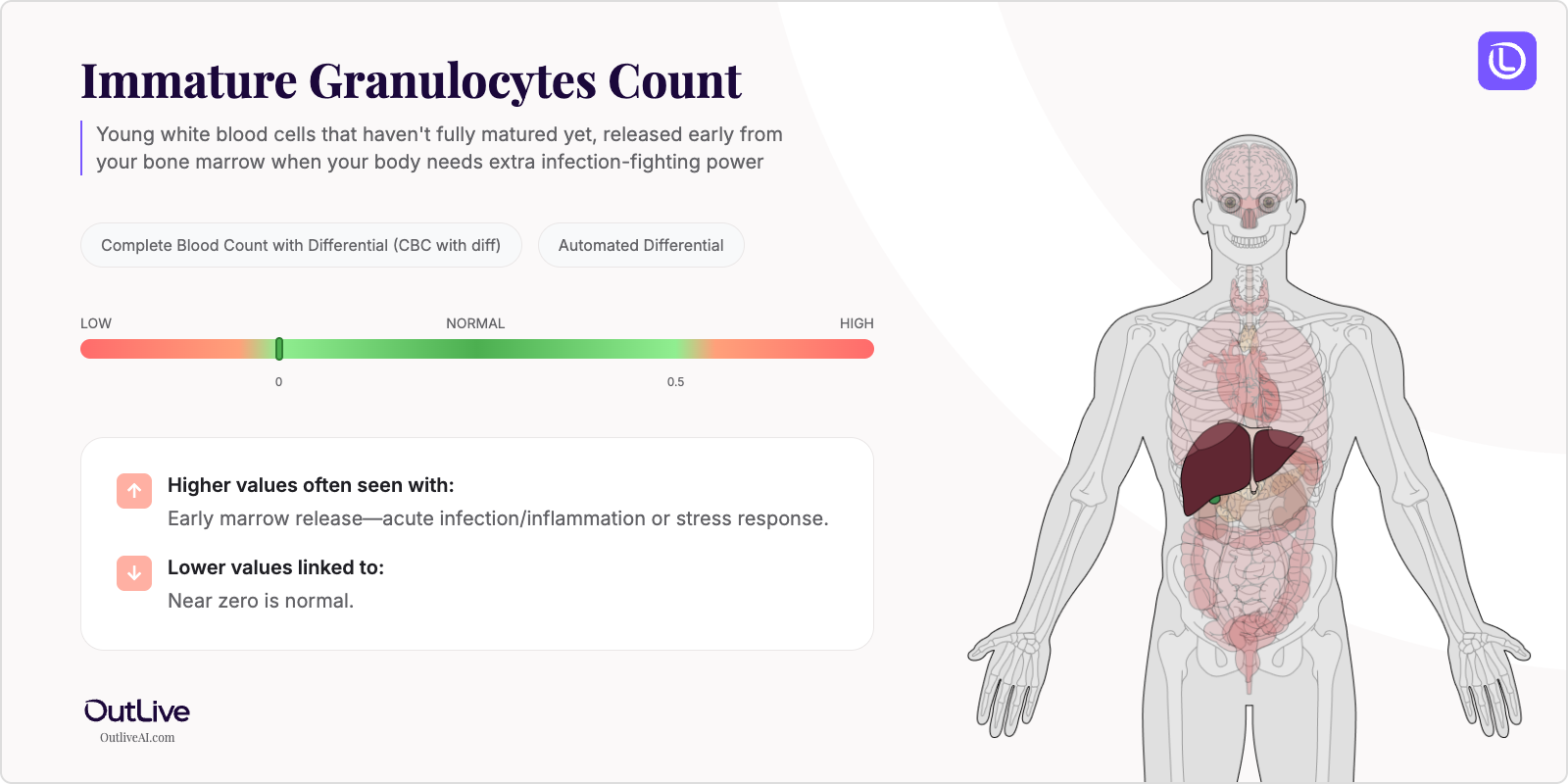
- What it is: Young white blood cells that haven't fully matured yet, released early from your bone marrow when your body needs extra infection-fighting power
- Found in tests: Complete Blood Count with Differential (CBC with diff), Automated Differential
- Normal range: 0-0.5% of total white blood cells (or 0-0.03 x 10⁹/L absolute count)
If you're looking at your lab results and wondering what immature granulocytes means, you're in the right place. Think of immature granulocytes like rookie soldiers being rushed into battle before completing their full training - your bone marrow sends them out early when your body urgently needs more infection fighters. Let's break down what your numbers mean in plain English.
Why Is Immature Granulocytes Tested?
Your doctor includes immature granulocytes as part of your Complete Blood Count with Differential to get a fuller picture of how your immune system is responding to challenges. This test acts like a "stress meter" for your bone marrow, showing whether it's working overtime to produce infection-fighting cells.
Doctors specifically look at immature granulocytes when you have signs of infection, unexplained fever, or when monitoring how well you're recovering from illness. It's particularly valuable in hospital settings to quickly identify serious infections or track treatment progress. The test also helps distinguish between bacterial infections (which often increase these cells) and viral infections (which typically don't).
This measurement matters because it can be an early warning sign - often rising before you feel seriously ill. It's like your body's smoke detector, alerting doctors to potential problems before they become emergencies.
What Does Immature Granulocytes Do in Your Body?
Immature granulocytes are the young, not-quite-ready versions of your body's primary infection-fighting white blood cells. Normally, these cells mature completely in your bone marrow over about 10-14 days before entering your bloodstream. They're like students who need to complete their full training before graduation.
Your bone marrow - the factory inside your bones - usually keeps these immature cells tucked away until they're fully developed. But when faced with serious infection or inflammation, your body may call these "trainees" into action early. This is your immune system's way of sending reinforcements when the regular troops aren't enough.
These cells are part of your body's rapid response team, working alongside mature granulocytes (neutrophils, eosinophils, and basophils) to fight bacteria, remove damaged tissue, and coordinate immune responses. While they're not as effective as fully mature cells, having some backup is better than none when your body is under attack.
What Do My Immature Granulocytes Results Mean?
Normal Immature Granulocytes Ranges
| Population | Normal Range | Optimal Range |
|---|---|---|
| Adult Male | 0-0.5% or 0-0.03 x 10⁹/L | Less than 0.3% |
| Adult Female | 0-0.5% or 0-0.03 x 10⁹/L | Less than 0.3% |
| Children | 0-0.5% or 0-0.03 x 10⁹/L | Less than 0.3% |
| Pregnancy | 0-2% (slightly higher acceptable) | Less than 1% |
Note: Reference ranges may vary slightly between laboratories. Always compare your results to the range provided on your specific lab report.
What Does High Immature Granulocytes Mean?
Common Causes:
- Bacterial infections: Your body's most common reason for releasing immature cells early
- Severe inflammation: From conditions like inflammatory bowel disease or rheumatoid arthritis
- Bone marrow recovery: After chemotherapy or bone marrow transplant
- Medications: Certain drugs like corticosteroids or growth factors can stimulate production
- Physical stress: Major surgery, burns, or trauma trigger emergency cell production
- Pregnancy: Especially in the third trimester as your body prepares for delivery
- Certain cancers: Particularly blood cancers that affect bone marrow function
Possible Symptoms:
- Fever or chills
- Fatigue and weakness
- Body aches
- Rapid heart rate
- Shortness of breath
- Swollen lymph nodes
When to Be Concerned: If your immature granulocytes are above 2-3%, especially with fever, severe fatigue, or other concerning symptoms, contact your healthcare provider promptly. Levels above 10% often indicate serious infection requiring immediate medical attention.
What Does Low Immature Granulocytes Mean?
Common Causes:
- Normal finding: Most healthy people have zero or near-zero immature granulocytes
- Viral infections: Unlike bacterial infections, viruses rarely trigger early cell release
- Well-controlled chronic conditions: Stable health means no emergency cell production needed
- Certain medications: Some drugs that suppress bone marrow activity
- Nutritional deficiencies: Severe B12 or folate deficiency affecting cell production
- Bone marrow disorders: Conditions affecting the bone marrow's ability to produce cells
Possible Symptoms:
- Usually no symptoms (low or zero is typically normal)
- If related to bone marrow issues: unusual bruising, frequent infections, extreme fatigue
When to Be Concerned: Low or zero immature granulocytes is usually perfectly normal and not concerning. However, if you have persistently low levels along with other abnormal blood counts or recurring infections, discuss this with your doctor.
What Can Affect My Immature Granulocytes Levels?
Factors That May Increase Levels:
- Medications: Corticosteroids, lithium, G-CSF (growth factors), some antibiotics
- Lifestyle: Extreme physical stress, smoking, obesity
- Conditions: Recent surgery, allergic reactions, autoimmune flares
- Supplements: High-dose vitamin B12 injections (temporarily)
Factors That May Decrease Levels:
- Medications: Chemotherapy drugs, some antibiotics, anti-thyroid medications
- Lifestyle: Chronic alcohol use, severe malnutrition
- Conditions: Viral infections, vitamin deficiencies, aplastic anemia
- Time of Day: Levels can be slightly lower in early morning
How Is Immature Granulocytes Related to Other Tests?
Immature granulocytes are always evaluated alongside your complete white blood cell picture. They're particularly meaningful when compared with your total white blood cell count and absolute neutrophil count.
Often tested alongside: Total WBC count, Neutrophils, Lymphocytes, C-reactive protein (CRP), Erythrocyte sedimentation rate (ESR) Part of: Complete Blood Count with Differential Ratio calculations: IG% (percentage of total white blood cells), IG# (absolute count) Follow-up tests: Blood cultures, procalcitonin, specific infection markers
Frequently Asked Questions
How often should immature granulocytes be tested? For healthy individuals, testing during annual check-ups is sufficient. If you're being treated for infection or have a chronic condition, your doctor may check levels more frequently to monitor your response to treatment.
Can I improve my immature granulocytes levels naturally? Since elevated levels usually indicate your body is fighting something, focus on supporting overall immune health: adequate sleep, balanced nutrition, stress management, and treating any underlying infections or inflammation.
Should I fast before an immature granulocytes test? No fasting is required. This test can be done at any time of day, though your doctor may want it done at a consistent time if monitoring trends.
How quickly can immature granulocytes levels change? Levels can rise within hours of a serious infection starting and typically normalize within days to weeks after successful treatment. This makes them useful for monitoring acute conditions.
Next Steps After Your Immature Granulocytes Test
Questions to Ask Your Doctor:
- What do my immature granulocytes results mean for my overall health?
- Are my levels related to my current symptoms?
- Do I need additional testing to identify an infection?
- Should we monitor this over time?
- Are there lifestyle changes that could help support my immune system?
Download our Immature Granulocytes Doctor Questions Checklist
🔬 Ready to Track Your Immature Granulocytes Over Time?
Understanding a single immature granulocytes result is just the beginning. Our free Lab Analyzer tool helps you:
- Track how your immature granulocytes changes over time
- See how it relates to your other lab values
- Identify patterns your doctor might miss
- Get personalized insights based on your trends
[Upload Your Lab Report for Free Analysis →]