
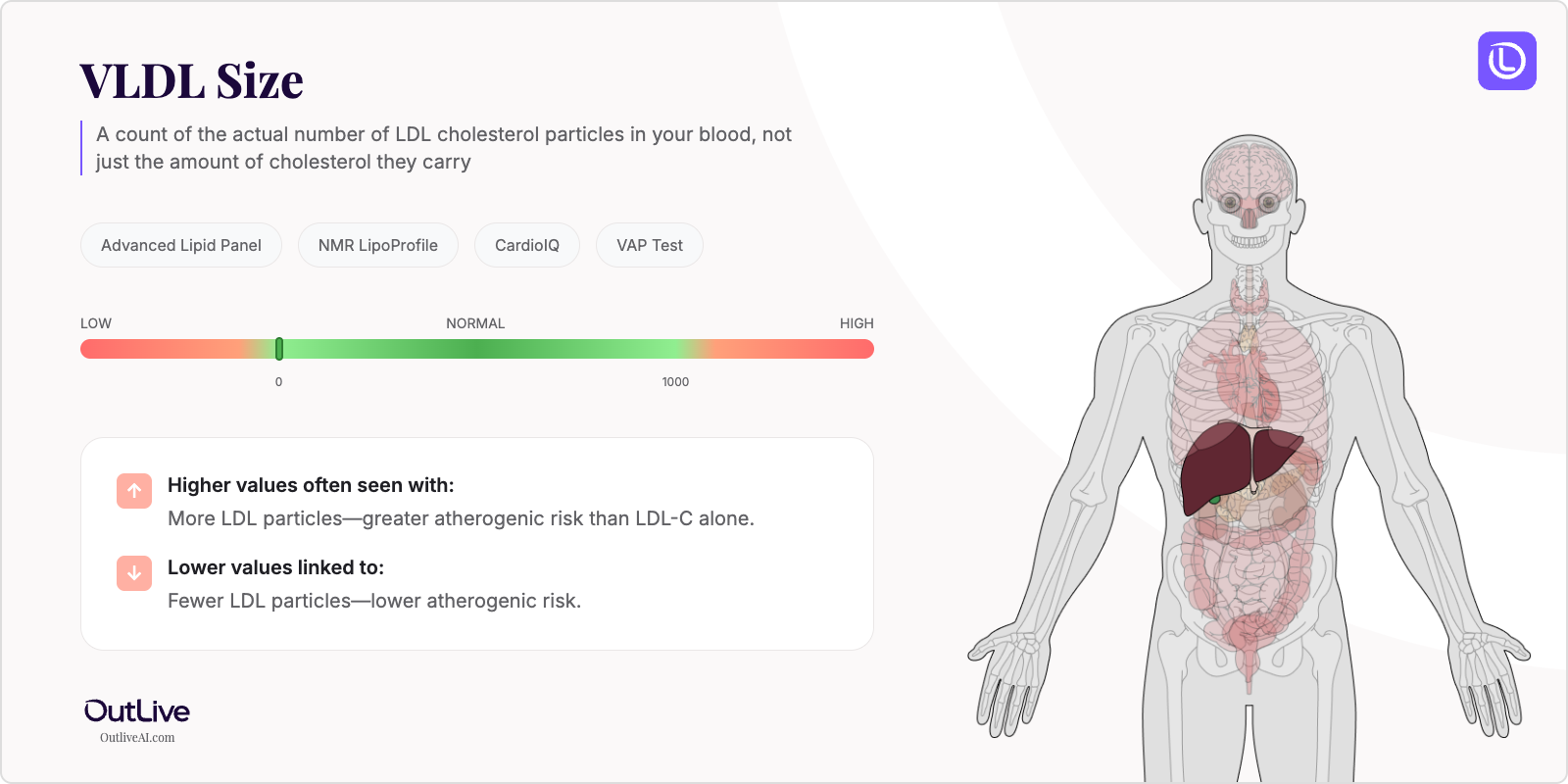
📋 At a Glance
- What it is: A count of the actual number of LDL cholesterol particles in your blood, not just the amount of cholesterol they carry
- Found in tests: Advanced Lipid Panel, NMR LipoProfile, CardioIQ, VAP Test
- Normal range: Less than 1,000 nmol/L (optimal), with variations based on cardiovascular risk
If you're looking at your lab results and wondering what LDL-P means, you're in the right place. Think of LDL particles as tiny delivery trucks carrying cholesterol through your bloodstream - while traditional cholesterol tests measure how much cargo these trucks carry, LDL-P counts how many trucks are actually on the road. Let's break down what your numbers mean in plain English, because understanding this test could be a game-changer for your heart health.
Why Is LDL Particle Number Tested?
Your doctor ordered this test because they want a more complete picture of your cardiovascular risk than traditional cholesterol tests provide. While standard lipid panels have been our go-to for decades, we now know that two people with identical LDL cholesterol levels can have vastly different numbers of LDL particles - and it's the particle count that often matters more for heart disease risk.
This advanced test is particularly valuable if you have a family history of heart disease, diabetes, metabolic syndrome, or if your traditional cholesterol numbers don't seem to match your overall risk profile. Many people with "normal" LDL cholesterol still have heart attacks, and this test helps explain why - they may have many small, dense LDL particles that standard tests miss.
LDL-P testing is becoming part of comprehensive cardiovascular screening, especially for people with intermediate risk or those whose treatment decisions aren't clear-cut based on standard cholesterol tests alone. It's also monitored in patients already on cholesterol-lowering medications to ensure treatment is truly effective at reducing particle numbers, not just cholesterol content.
What Does LDL Particle Number Do in Your Body?
LDL particles are like the postal service of your cholesterol system - they deliver cholesterol from your liver to cells throughout your body. Each particle is a tiny sphere with a protein wrapper (called apoB) that acts like an address label, helping the particle find where it needs to go. The problem isn't the delivery service itself - your cells need cholesterol to function - but rather when there are too many delivery trucks clogging up your arterial highways.
Here's where it gets interesting: not all LDL particles are created equal. Some are large and fluffy (imagine big delivery vans), while others are small and dense (think compact cars). The small, dense particles are particularly troublesome because they can more easily slip through the lining of your arteries and get stuck, starting the process that leads to plaque buildup. When you have high LDL-P, you typically have more of these small, dangerous particles.
Your liver produces these particles as part of normal metabolism, packaging cholesterol and triglycerides for distribution. The number of particles your body makes depends on genetics, diet, insulin resistance, inflammation, and other factors. While traditional LDL cholesterol tests measure the total cargo, LDL-P tells us about traffic density - and in your arteries, heavy traffic increases the risk of accidents (heart attacks and strokes).
What Do My LDL-P Results Mean?
Normal LDL-P Ranges
| Population | Normal Range | Optimal Range |
|---|---|---|
| Adult Male | <1,300 nmol/L | <1,000 nmol/L |
| Adult Female | <1,300 nmol/L | <1,000 nmol/L |
| High Risk Patients | <1,000 nmol/L | <700 nmol/L |
| Very High Risk | <700nmol/L | <550 nmol/L |
Note: Reference ranges may vary slightly between laboratories. Always compare your results to the range provided on your specific lab report.
What Does High LDL-P Mean?
Common Causes:
- Insulin resistance/diabetes: High blood sugar causes your liver to produce more small LDL particles
- Metabolic syndrome: The combination of belly fat, high blood pressure, and abnormal cholesterol creates a perfect storm for particle production
- Genetic factors: Familial hypercholesterolemia and other inherited conditions affect particle metabolism
- Diet high in refined carbohydrates: Sugars and processed foods trigger increased particle production
- Hypothyroidism: Low thyroid hormone slows the clearance of LDL particles from your blood
- Chronic inflammation: Conditions like rheumatoid arthritis or psoriasis increase particle numbers
- Certain medications: Some blood pressure medications, steroids, and hormones can raise levels
Possible Symptoms:
- Usually no symptoms until arterial damage occurs
- Chest pain or pressure with exertion
- Shortness of breath
- Fatigue with minimal activity
- Leg pain when walking (if peripheral arteries affected)
When to Be Concerned: LDL-P above 2,000 nmol/L indicates very high cardiovascular risk and typically requires immediate medical intervention. Even moderately elevated levels (1,300-2,000 nmol/L) warrant discussion with your doctor about treatment options, especially if you have other risk factors like diabetes, smoking, or family history of early heart disease.
What Does Low LDL-P Mean?
Common Causes:
- Cholesterol-lowering medications: Statins, PCSK9 inhibitors effectively reduce particle numbers
- Genetic variations: Some people naturally produce fewer LDL particles
- Hyperthyroidism: Overactive thyroid speeds up particle clearance
- Malabsorption disorders: Conditions affecting fat absorption reduce particle production
- Very low-fat diets: Extremely restricted fat intake (though not always healthy)
- Certain cancers: Some malignancies affect lipid metabolism
- Severe liver disease: Impaired liver function reduces particle production
Possible Symptoms:
- Generally no symptoms from low LDL-P itself
- May have symptoms related to underlying cause
- Fatigue if due to malabsorption
- Weight loss if due to hyperthyroidism or illness
When to Be Concerned: Very low LDL-P (below 500 nmol/L) without medication is unusual and should prompt investigation for underlying conditions. However, low levels achieved through treatment are generally considered beneficial for cardiovascular health.
What Can Affect My LDL-P Levels?
Factors That May Increase Levels:
- Medications: Beta-blockers, thiazide diuretics, corticosteroids, some antipsychotics
- Lifestyle: Sedentary behavior, smoking, excessive alcohol, chronic stress
- Conditions: Pregnancy, kidney disease, liver problems, infections
- Supplements: Anabolic steroids, high-dose vitamin A
Factors That May Decrease Levels:
- Medications: Statins, ezetimibe, PCSK9 inhibitors, fibrates, niacin
- Lifestyle: Regular exercise, Mediterranean diet, weight loss, stress management
- Conditions: Acute illness, hyperthyroidism
- Time of Day: Levels can vary by 10-20% throughout the day
How Is LDL Particle Number Related to Other Tests?
LDL-P provides crucial context for your other cholesterol numbers. You might have "normal" LDL cholesterol but high LDL-P, indicating many small particles carrying less cholesterol each - a pattern called discordance that significantly increases heart disease risk.
Often tested alongside: ApoB (each LDL particle has one ApoB protein), LDL cholesterol, HDL-P, triglycerides, insulin, HbA1c Part of: Advanced Lipid Panel, Cardiovascular Risk Assessment Ratio calculations: LDL-P/HDL-P ratio, sometimes used for risk assessment Follow-up tests: Coronary calcium score, carotid ultrasound, inflammatory markers like hs-CRP
Frequently Asked Questions
How often should LDL-P be tested? Initially, test annually if you're at moderate cardiovascular risk, or every 3-6 months if you're starting or adjusting treatment. Once stable on therapy, annual testing is usually sufficient unless your health status changes.
Can I improve my LDL-P levels naturally? Yes! Weight loss (even 5-10%), regular exercise, reducing refined carbohydrates and sugar, increasing fiber intake, and managing stress can significantly lower particle numbers. Some people see 20-30% reductions through lifestyle changes alone.
Should I fast before an LDL-P test? Most labs recommend 9-12 hours of fasting for the most accurate results, though some newer tests don't require fasting. Follow your specific lab's instructions.
How quickly can LDL-P levels change? Diet and lifestyle changes can affect levels within 4-6 weeks. Medications like statins typically show maximum effect within 6-8 weeks. Weight loss impacts are gradual but cumulative.
Next Steps After Your LDL-P Test
Questions to Ask Your Doctor:
- How does my LDL-P compare to my traditional cholesterol numbers?
- Based on my particle number, what's my actual cardiovascular risk?
- Should we consider treatment even if my regular cholesterol is normal?
- Would repeating this test help monitor my treatment response?
- Are there specific dietary changes that could help lower my particle count?
Download our LDL Particle Number Doctor Questions Checklist
🔬 Ready to Track Your LDL Particle Number Over Time?
Understanding a single LDL-P result is just the beginning. Our free Lab Analyzer tool helps you:
- Track how your LDL-P changes over time
- See how it relates to your other lab values
- Identify patterns your doctor might miss
- Get personalized insights based on your trends
[Upload Your Lab Report for Free Analysis →]