
📋 At a Glance
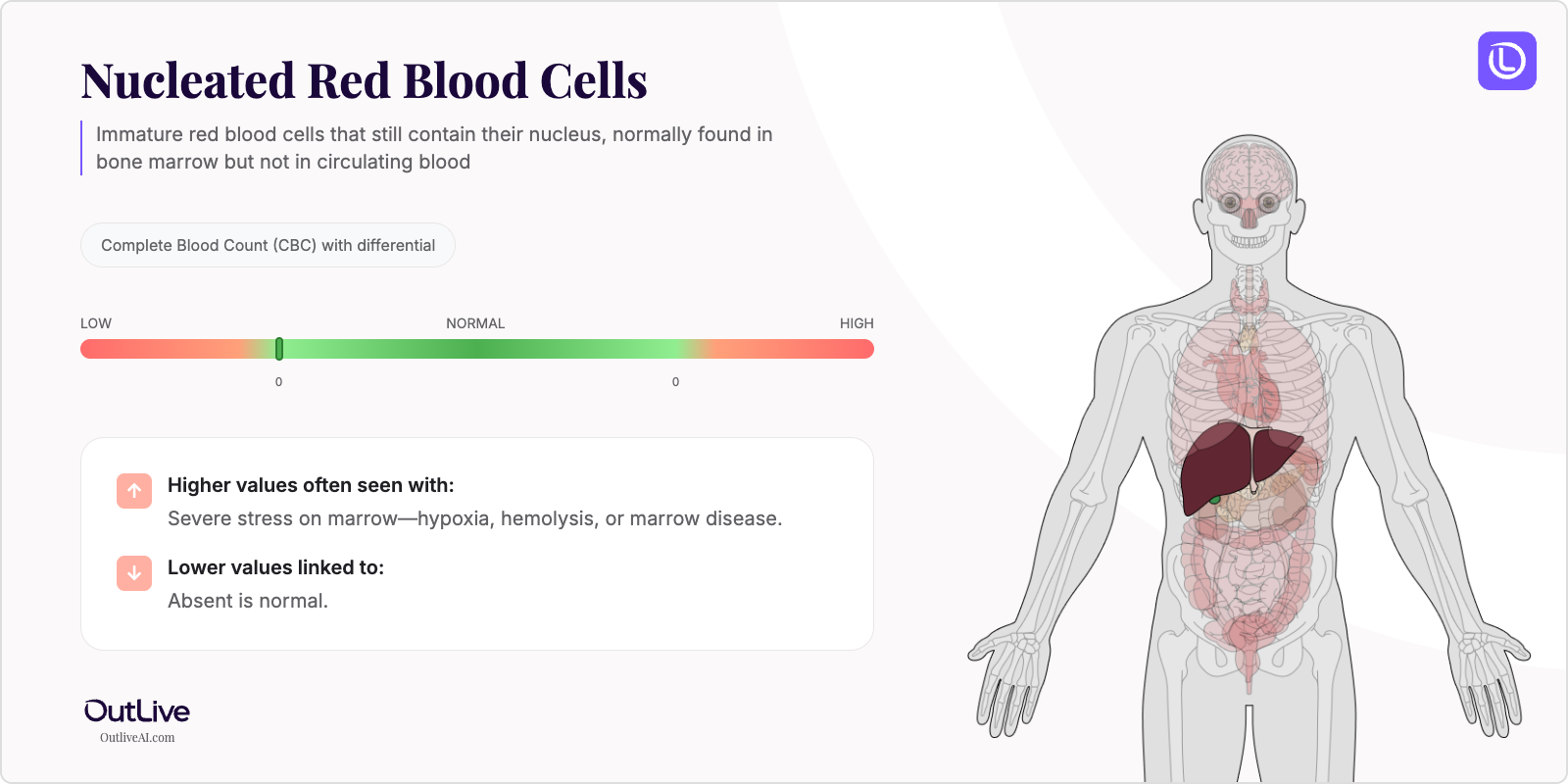
- What it is: Immature red blood cells that still contain their nucleus, normally found in bone marrow but not in circulating blood
- Found in tests: Complete Blood Count (CBC) with differential, specialized hematology panels
- Normal range: 0 per 100 white blood cells in healthy adults (should not be present in normal blood)
If you're looking at your lab results and wondering what nucleated RBCs means, you're in the right place. Think of nucleated RBCs like teenagers who've left home too early – they're immature red blood cells that still have their nucleus (control center) and shouldn't normally be in your bloodstream yet. Let's break down what your numbers mean in plain English.
Why Is Nucleated RBCs Tested?
Your doctor orders a nucleated RBC test as part of a complete blood count when they need to understand how well your bone marrow is functioning and whether your body is under unusual stress. This test is particularly important when you're experiencing unexplained fatigue, shortness of breath, or if your doctor suspects a blood disorder.
Nucleated RBCs are routinely checked in newborns, where their presence is normal for the first few days of life. In adults, however, finding these cells in your blood is like finding a student driver on the highway – it usually means something has prompted your bone marrow to release cells before they're fully ready. This could indicate that your body is working overtime to produce red blood cells or that there's a problem with how your bone marrow functions.
The test becomes especially important if you have symptoms suggesting anemia, have been diagnosed with certain cancers, or if other blood tests have shown abnormalities. It helps your doctor understand whether your bone marrow is responding appropriately to your body's needs or if there's an underlying condition affecting blood cell production.
What Does Nucleated RBCs Do in Your Body?
Nucleated RBCs are actually the teenage version of mature red blood cells. In healthy adults, red blood cells lose their nucleus before leaving the bone marrow – think of it like packing light for a long journey. The nucleus takes up space that could be used for carrying oxygen, so mature red blood cells shed it to become more efficient oxygen carriers.
Your bone marrow is like a factory that produces millions of blood cells daily. Normally, quality control is strict – only fully mature, nucleus-free red blood cells get released into your bloodstream. When nucleated RBCs appear in your blood, it's often because your bone marrow is either rushing production due to high demand (like during severe blood loss) or because the normal maturation process has been disrupted.
These immature cells can still carry some oxygen, but they're not as efficient as mature red blood cells. Their presence in your blood tells an important story about what's happening in your bone marrow and can help your doctor understand whether you're dealing with increased red blood cell destruction, production problems, or other blood-related conditions.
What Do My Nucleated RBC Results Mean?
Normal Nucleated RBC Ranges
| Population | Normal Range | Optimal Range |
|---|---|---|
| Adult Male | 0 per 100 WBCs | 0 per 100 WBCs |
| Adult Female | 0 per 100 WBCs | 0 per 100 WBCs |
| Children ( >1week old) | 0 per 100 WBCs | 0 per 100 WBCs |
| Newborns (0-7 days) | 0-10 per 100 WBCs | <5per 100 WBCs |
| Pregnancy (3rd trimester) | 0-1 per 100 WBCs | 0 per 100 WBCs |
Note: Reference ranges may vary slightly between laboratories. Always compare your results to the range provided on your specific lab report.
What Does High Nucleated RBCs Mean?
Common Causes:
- Severe anemia: Your bone marrow releases immature cells to compensate for low red blood cell counts
- Hemolytic anemia: Rapid destruction of red blood cells triggers emergency production
- Bone marrow disorders: Conditions like myelofibrosis or leukemia disrupt normal cell development
- Severe infections or sepsis: Body's stress response can push immature cells into circulation
- Heart failure: Reduced oxygen delivery triggers increased red blood cell production
- Massive blood loss: Emergency response releases all available cells, including immature ones
- Certain cancers: Particularly blood cancers that affect bone marrow function
Possible Symptoms:
- Extreme fatigue or weakness
- Shortness of breath, especially with activity
- Pale skin or nail beds
- Rapid heartbeat or palpitations
- Dizziness or lightheadedness
- Frequent infections
When to Be Concerned: If nucleated RBCs are present along with severe fatigue, chest pain, difficulty breathing, or signs of infection (fever, chills), contact your healthcare provider immediately. Any presence of nucleated RBCs in adults warrants follow-up testing to determine the underlying cause.
What Does Low Nucleated RBCs Mean?
Common Causes: Since the normal level is zero, there's no such thing as "low" nucleated RBCs. Finding none in your blood is actually the ideal result for adults and children over one week old.
Possible Symptoms: Not applicable – absence of nucleated RBCs is normal and healthy.
When to Be Concerned: No concern needed when nucleated RBCs are absent – this is exactly what we want to see in healthy individuals.
What Can Affect My Nucleated RBC Levels?
Factors That May Increase Levels:
- Medications: Erythropoietin (EPO), certain chemotherapy drugs, corticosteroids
- Lifestyle: Living at high altitudes, extreme physical stress, severe dehydration
- Conditions: Pregnancy (especially with complications), severe hypoxia, acute bleeding
- Supplements: High-dose iron supplements (in certain conditions)
Factors That May Decrease Levels:
- Medications: Not applicable – medications don't typically lower already-normal zero levels
- Lifestyle: Maintaining good overall health keeps levels appropriately at zero
- Conditions: Successful treatment of underlying conditions returns levels to normal
- Time of Day: Levels remain consistently zero in healthy individuals regardless of timing
How Is Nucleated RBCs Related to Other Tests?
Nucleated RBCs are never evaluated in isolation – they're like a piece of a puzzle that needs other pieces to complete the picture. Your doctor will look at them alongside your complete blood count results, including hemoglobin, hematocrit, and white blood cell counts.
Often tested alongside: Red blood cell count, hemoglobin, hematocrit, reticulocyte count, white blood cell differential Part of: Complete Blood Count (CBC) with differential Ratio calculations: Reported as number per 100 white blood cells Follow-up tests: Bone marrow biopsy, hemoglobin electrophoresis, vitamin B12 and folate levels, iron studies
Frequently Asked Questions
How often should nucleated RBCs be tested? For healthy adults, nucleated RBCs aren't routinely tested unless you have symptoms or other abnormal blood work. If they're found, your doctor will determine monitoring frequency based on the underlying cause.
Can I improve my nucleated RBC levels naturally? Since the goal is to have zero nucleated RBCs in your blood, "improvement" means addressing any underlying condition causing their presence. This might include treating anemia, managing chronic conditions, or addressing nutritional deficiencies under medical supervision.
Should I fast before a nucleated RBC test? No fasting is required for this test. You can eat and drink normally before having your blood drawn.
How quickly can nucleated RBC levels change? Levels can change within days to weeks depending on the underlying cause. Acute conditions may show rapid changes, while chronic conditions typically show gradual changes over time.
Next Steps After Your Nucleated RBC Test
Questions to Ask Your Doctor:
- What do my nucleated RBC results mean for my overall health?
- Are my levels related to my symptoms?
- Do I need additional testing?
- Should we monitor this over time?
- Are there lifestyle changes that could help?
Download our Nucleated RBCs Doctor Questions Checklist
🔬 Ready to Track Your Nucleated RBCs Over Time?
Understanding a single nucleated RBC result is just the beginning. Our free Lab Analyzer tool helps you:
- Track how your Nucleated RBCs change over time
- See how it relates to your other lab values
- Identify patterns your doctor might miss
- Get personalized insights based on your trends
[Upload Your Lab Report for Free Analysis →]