
📋 At a Glance
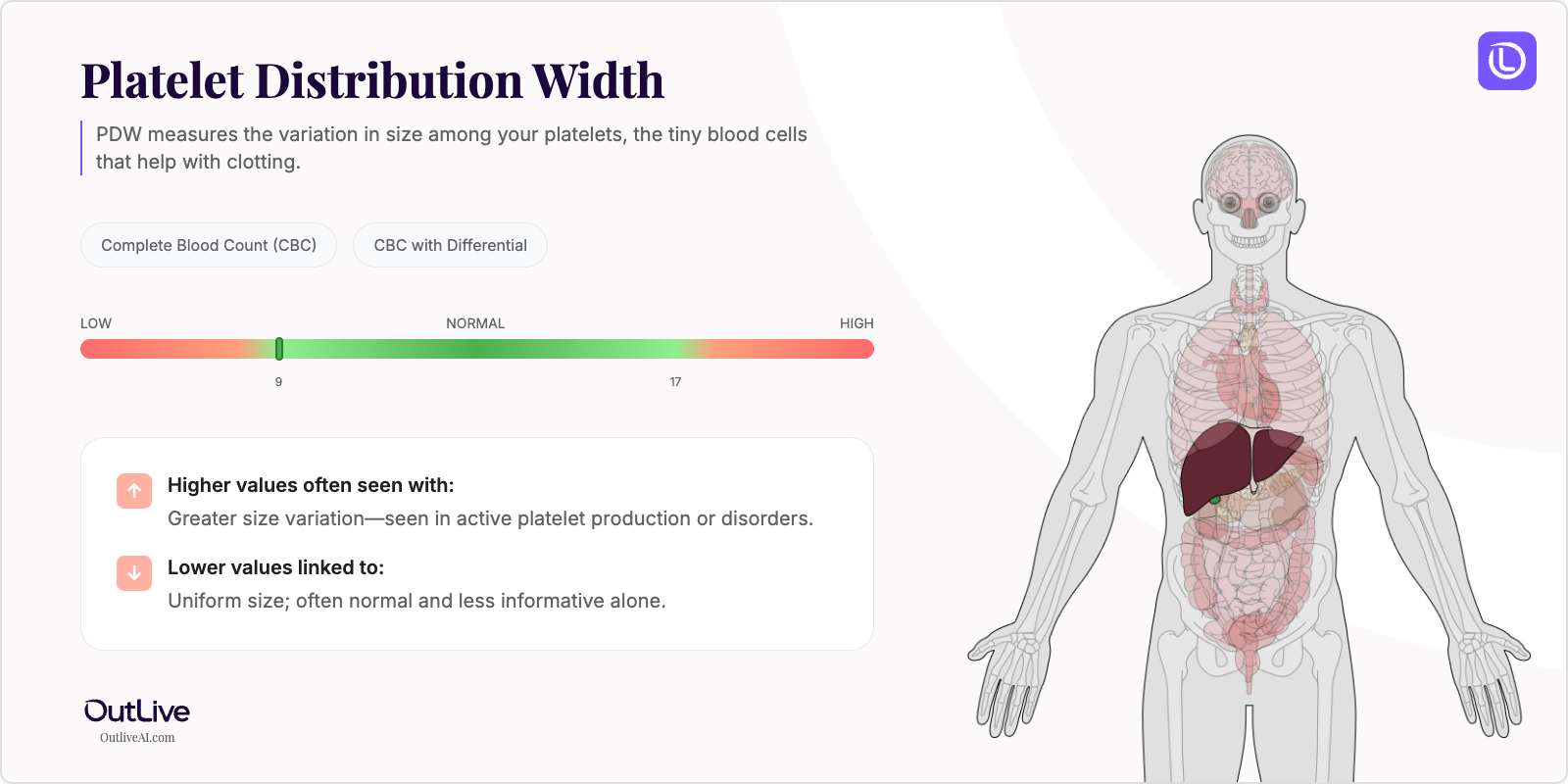
- What it is: PDW measures the variation in size among your platelets, the tiny blood cells that help with clotting.
- Found in tests: Complete Blood Count (CBC), CBC with Differential
- Normal range: 9.0-17.0% (may vary slightly by laboratory)
If you're looking at your lab results and wondering what PDW means, you're in the right place. Think of PDW as a quality control inspector at a factory - it's checking whether your body is making platelets in consistent sizes or if there's unusual variation. Just like cookies from a bakery should be roughly the same size, your platelets work best when they're relatively uniform. Let's break down what your numbers mean in plain English.
Why Is PDW Tested?
PDW, or Platelet Distribution Width, is automatically calculated whenever you have a Complete Blood Count (CBC) test done. Your doctor doesn't specifically order this test alone - it comes as part of the standard blood work package that gives a comprehensive picture of your blood health.
Doctors pay attention to PDW when they're investigating bleeding or clotting problems, monitoring certain blood disorders, or checking how well your bone marrow is producing platelets. It's particularly useful when combined with your platelet count and other platelet measurements, as it can reveal subtle changes in how your body is making these important clotting cells.
This test matters because platelets that vary too much in size might not work together effectively. It's like trying to build with blocks of wildly different sizes - the structure won't be as stable. When your PDW is abnormal, it can signal that your bone marrow is under stress, recovering from an issue, or dealing with an underlying condition.
What Does PDW Do in Your Body?
PDW doesn't actually "do" anything in your body - it's a measurement that tells us about the consistency of your platelet production. Your bone marrow, the factory inside your bones, constantly produces platelets. These tiny cell fragments are your body's first responders to bleeding, rushing to plug holes in damaged blood vessels.
Normally, your bone marrow releases platelets that are fairly uniform in size, typically between 2-4 micrometers in diameter. When everything is working smoothly, most of your platelets fall within this narrow range. The PDW percentage tells us how much variation exists - a lower percentage means more uniform sizes, while a higher percentage indicates more variation.
This measurement relates closely to other platelet indices like MPV (Mean Platelet Volume) and platelet count. Together, these values give your doctor a complete picture of your platelet health. Think of it as examining not just how many workers show up to a job site (platelet count), but also checking if they're all equally equipped and ready to work (PDW).
What Do My PDW Results Mean?
Normal PDW Ranges
| Population | Normal Range | Optimal Range |
|---|---|---|
| Adult Male | 9.0-17.0% | 10.0-15.5% |
| Adult Female | 9.0-17.0% | 10.0-15.5% |
| Children | 9.0-16.5% | 10.0-15.0% |
| Pregnancy | 9.5-18.0% | 10.5-16.0% |
Note: Reference ranges may vary slightly between laboratories. Always compare your results to the range provided on your specific lab report.
What Does High PDW Mean?
Common Causes:
- Immune Thrombocytopenia (ITP): Your immune system mistakenly attacks platelets, causing your bone marrow to produce new ones of varying sizes
- Iron Deficiency Anemia: Low iron affects platelet production, leading to size variation
- Vitamin B12 or Folate Deficiency: These nutrients are crucial for proper platelet formation
- Recent Blood Loss: Your bone marrow rushes to replace platelets, producing them in various sizes
- Inflammatory Conditions: Chronic inflammation can affect platelet production consistency
- Certain Cancers: Some blood cancers or cancers affecting the bone marrow
- Medications: Some chemotherapy drugs or antibiotics can affect platelet production
Possible Symptoms:
- Easy bruising or bleeding
- Frequent nosebleeds
- Heavy menstrual periods
- Tiny red spots on the skin (petechiae)
- Fatigue or weakness
- Bleeding gums
When to Be Concerned: If your PDW is above 20% and you're experiencing unexplained bleeding, bruising, or severe fatigue, contact your healthcare provider promptly. Values above 25% with symptoms warrant immediate medical attention, especially if accompanied by fever, severe headaches, or confusion.
What Does Low PDW Mean?
Common Causes:
- Aplastic Anemia: Bone marrow produces fewer blood cells overall, but those made are uniform
- Chronic Kidney Disease: Affects the hormone that stimulates platelet production
- Certain Medications: Some blood pressure medications or antibiotics
- Viral Infections: Some viruses temporarily suppress platelet production
- Alcohol Use: Chronic alcohol consumption can affect bone marrow function
- Hereditary Conditions: Rare genetic disorders affecting platelet production
- Bone Marrow Suppression: From radiation, toxins, or certain medications
Possible Symptoms:
- Generally few symptoms from low PDW alone
- Fatigue if associated with anemia
- Increased infections if white cells are also affected
- Pale skin
- Shortness of breath
When to Be Concerned: Low PDW alone rarely causes symptoms, but if it's accompanied by very low platelet counts (below 50,000), abnormal bleeding, or signs of infection like fever, seek medical evaluation. Values below 7% with other abnormal blood counts should be investigated further.
What Can Affect My PDW Levels?
Factors That May Increase Levels:
- Medications: Heparin, certain antibiotics, chemotherapy drugs, quinidine
- Lifestyle: Heavy alcohol consumption, smoking, extreme physical stress
- Conditions: Recent surgery, active bleeding, pregnancy (mild increase)
- Supplements: High-dose vitamin E, ginkgo biloba, garlic supplements
Factors That May Decrease Levels:
- Medications: Aspirin, clopidogrel, some antidepressants
- Lifestyle: Chronic alcohol abuse, poor nutrition
- Conditions: Chronic liver disease, spleen enlargement
- Time of Day: PDW can be slightly lower in the morning
How Is PDW Related to Other Tests?
PDW is never interpreted alone - it's always considered alongside other blood measurements for a complete picture.
Often tested alongside: Platelet count, MPV (Mean Platelet Volume), PCT (Plateletcrit), RDW (Red Cell Distribution Width) Part of: Complete Blood Count (CBC), CBC with Differential Ratio calculations: PDW/MPV ratio may be calculated in certain conditions Follow-up tests: Peripheral blood smear, bone marrow biopsy, coagulation studies, vitamin B12 and folate levels
Frequently Asked Questions
How often should PDW be tested? For most people, PDW is checked during routine annual blood work. If you have a blood disorder or are being monitored for a specific condition, your doctor may check it every 3-6 months or as needed based on your symptoms.
Can I improve my PDW levels naturally? Yes, if the cause is nutritional. Eating a balanced diet rich in iron, B12, and folate can help normalize PDW. Reducing alcohol intake, managing stress, and treating underlying inflammation may also help.
Should I fast before a PDW test? No fasting is required for a PDW test or CBC. You can eat and drink normally before the blood draw.
How quickly can PDW levels change? PDW can change within days to weeks depending on the cause. Nutritional improvements may take 2-3 months to fully reflect in your PDW, while changes from medications can occur within days.
Next Steps After Your PDW Test
Questions to Ask Your Doctor:
- What do my PDW results mean for my overall health?
- Are my PDW levels related to my current symptoms?
- Do I need additional testing to understand why my PDW is abnormal?
- Should we monitor this over time or is one-time testing sufficient?
- Are there lifestyle changes or treatments that could help normalize my PDW?
Download our PDW Doctor Questions Checklist
🔬 Ready to Track Your PDW Over Time?
Understanding a single PDW result is just the beginning. Our free Lab Analyzer tool helps you:
- Track how your PDW changes over time
- See how it relates to your other lab values
- Identify patterns your doctor might miss
- Get personalized insights based on your trends
[Upload Your Lab Report for Free Analysis →]