
📋 At a Glance
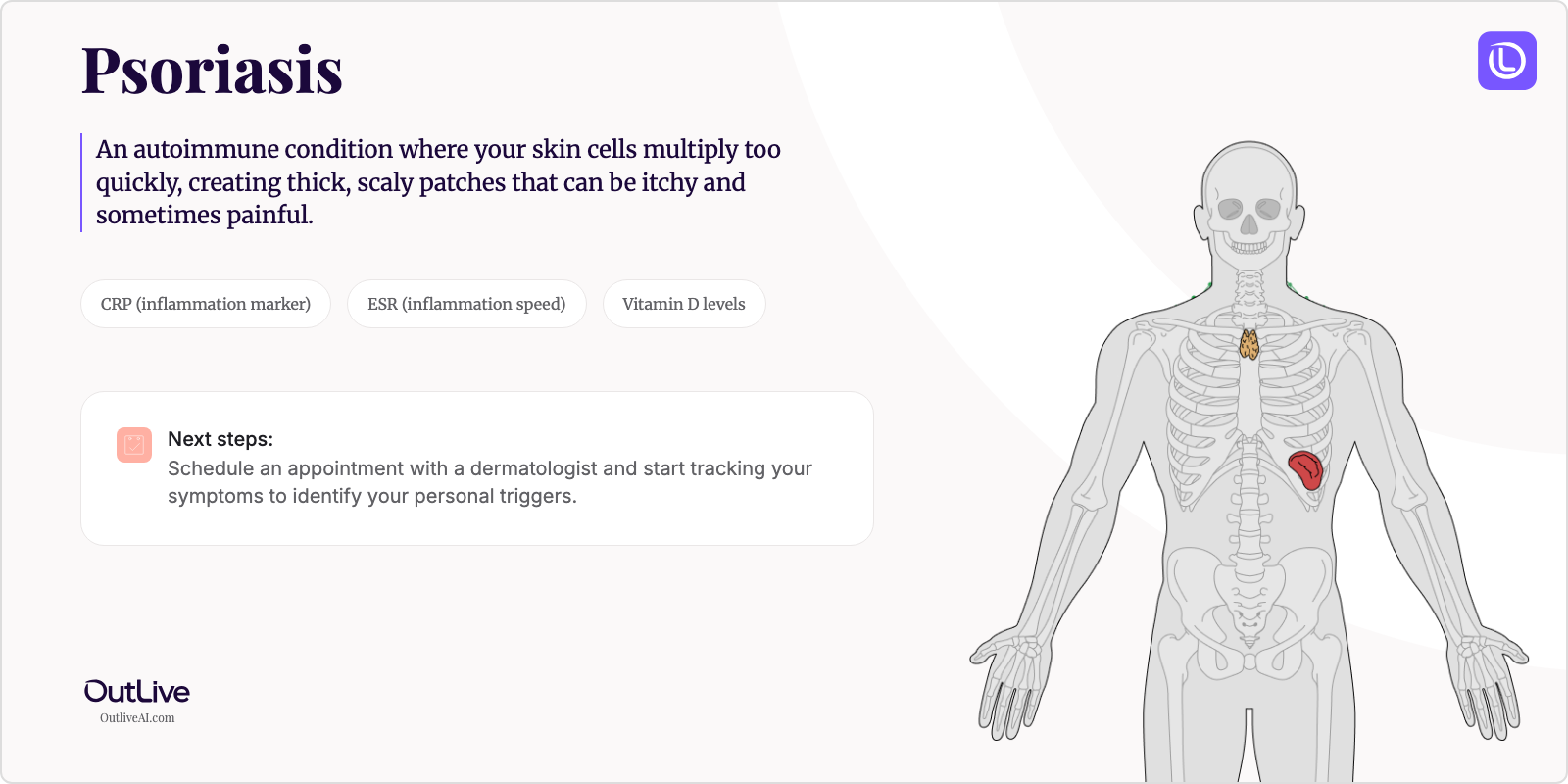
- What it is: An autoimmune condition where your skin cells multiply too quickly, creating thick, scaly patches that can be itchy and sometimes painful.
- Key lab tests: CRP (inflammation marker), ESR (inflammation speed), Vitamin D levels
- Your first goal: Schedule an appointment with a dermatologist and start tracking your symptoms to identify your personal triggers.
Receiving a new diagnosis for Psoriasis can be overwhelming. You might be feeling anxious, confused, and unsure of what comes next. That's completely normal. This guide is here to help you understand your condition in simple terms, know which lab tests matter most, and feel prepared for your next steps.
First, Take a Breath: What is Psoriasis in Simple Terms?
Think of your skin like a factory that makes new skin cells. Normally, this factory runs on a 28-day schedule – making new cells as the old ones naturally shed away. With psoriasis, your immune system sends the wrong signals, and suddenly this factory goes into overdrive, producing new skin cells every 3-4 days instead. The result? Traffic jam! Your skin cells pile up faster than they can shed, creating those thick, scaly patches you're experiencing. The good news is that while psoriasis is chronic (meaning it's a long-term condition), it's very manageable with the right treatment plan. You're not alone – about 2-3% of people worldwide have psoriasis, and there are more treatment options available today than ever before.
Understanding Your Diagnosis: The Key Lab Tests
This is the most important section. While psoriasis is primarily diagnosed by examining your skin, certain blood tests help your doctor understand the full picture of your health and rule out related conditions.
Key Tests for Psoriasis:
- C-Reactive Protein (CRP): This test measures inflammation in your body – when psoriasis is active, CRP levels often rise, helping your doctor gauge how much internal inflammation is happening alongside your skin symptoms.
- Erythrocyte Sedimentation Rate (ESR): Like a speedometer for inflammation, ESR shows how quickly your red blood cells settle in a test tube – faster settling means more inflammation, which is common during psoriasis flares.
- Vitamin D: Many people with psoriasis have low vitamin D levels, and since vitamin D helps regulate immune function and skin cell growth, monitoring this can be crucial for your treatment plan.
- Complete Blood Count (CBC): This comprehensive test checks your overall blood health and can reveal if certain psoriasis medications are affecting your blood cells, ensuring your treatments remain safe.
Your First Specialist Appointment: What to Ask
What to Expect: You'll likely see a dermatologist – a doctor who specializes in skin conditions. They'll examine your skin closely, possibly with a magnifying tool, and may take photos to track changes over time. The appointment usually lasts 20-30 minutes, and they'll discuss your medical history, current symptoms, and treatment options. Don't worry if you feel emotional during this visit – it's completely normal, and your dermatologist has seen it all before.
Questions to Ask Your Doctor:
- "What type of psoriasis do I have, and what does that mean for my treatment options?"
- "How severe is my psoriasis on the medical scale, and what factors determine if it gets worse or better?"
- "What are the pros and cons of topical treatments versus systemic medications for my specific case?"
- "Are there any other health conditions I should be monitored for, given that I have psoriasis?"
- "How will we know if my treatment is working, and how long should I try a treatment before we consider changing it?"
Download our [Checklist of Questions to Ask Your Psoriasis Specialist](# to feel prepared.
How to Track Your Journey
Tracking your Psoriasis journey is crucial for understanding how your treatment is working and spotting important trends. Here's what you should monitor:
Symptoms to Track:
- Location and size of plaques (taking photos helps!)
- Itch intensity on a scale of 1-10
- Joint pain or stiffness (about 30% of people with psoriasis develop psoriatic arthritis)
- Emotional impact and stress levels
- Sleep quality and fatigue
Lab Results to Monitor:
- CRP and ESR levels - Every 3-6 months or during flares
- Vitamin D - Every 6 months, especially in winter
- Liver function tests - If on systemic medications, usually every 3 months
- Complete blood count - As recommended based on your medications
Why Tracking Matters: Your psoriasis is unique to you. By tracking your symptoms and lab results, you'll start to see patterns – maybe stress triggers flares, or certain foods seem to help. This information becomes incredibly valuable for fine-tuning your treatment plan. Plus, having concrete data helps you have more productive conversations with your doctor instead of trying to remember how you felt three months ago.
Next Steps After Your Diagnosis
Immediate Actions (This Week):
- Schedule an appointment with a dermatologist if you haven't already
- Start a symptom diary (even a simple notebook works)
- Take photos of affected areas to establish a baseline
- Research your health insurance coverage for psoriasis treatments
- Join a reputable online support group or forum for emotional support
Short-term Goals (Next Month):
- Begin your prescribed treatment plan and set reminders for medications
- Identify and start avoiding your personal triggers (common ones include stress, alcohol, and certain medications)
- Establish a gentle skincare routine with fragrance-free, moisturizing products
- Schedule any recommended blood work or follow-up appointments
- Learn about the different treatment options available so you can be an informed participant in your care
Long-term Management:
- Build a healthcare team that may include a dermatologist, rheumatologist (if joints are affected), and mental health professional
- Develop stress management techniques that work for you (yoga, meditation, exercise)
- Consider lifestyle modifications that may help, such as maintaining a healthy weight and limiting alcohol
- Stay informed about new treatments and research developments
- Plan for regular monitoring of related conditions like cardiovascular health and metabolic syndrome
Frequently Asked Questions
How quickly can I expect to feel better? Most topical treatments show improvement within 2-8 weeks, while systemic medications may take 3-4 months for full effect. Remember, finding the right treatment is often a process of trial and adjustment – be patient with yourself and communicate openly with your doctor about what's working and what isn't.
Will I need to change my diet? While there's no specific "psoriasis diet," many people find that reducing inflammatory foods (like processed foods, excess sugar, and alcohol) and increasing anti-inflammatory foods (like fatty fish, leafy greens, and nuts) helps their symptoms. Keep a food diary to identify your personal triggers.
How often will I need to see my doctor? Initially, you'll likely have appointments every 2-3 months to monitor your response to treatment. Once your psoriasis is well-controlled, visits may decrease to every 6-12 months. However, you should always schedule an appointment if you experience a significant flare or new symptoms.
Can I still exercise/work/travel? Absolutely! Exercise can actually help reduce inflammation and stress. Choose activities that don't irritate your skin (swimming in chlorinated pools might require extra moisturizing). For work and travel, plan ahead – bring your medications, moisturizers, and sun protection. Most people with psoriasis lead full, active lives.
When to Seek Immediate Medical Attention
Contact your doctor immediately if you experience:
- Sudden, widespread rash covering most of your body (could indicate erythrodermic psoriasis)
- Fever, chills, or signs of infection in psoriasis patches
- Severe joint pain or swelling that limits your daily activities
- Pustules (pus-filled bumps) appearing on your hands, feet, or spreading across your body
- Any concerning side effects from medications, such as severe nausea, unusual bruising, or persistent cough
🔬 Ready to Organize Your Health Journey?
Understanding your condition is the first step. Our free Lab Analyzer tool helps you:
- Track all your lab results for Psoriasis in one place
- Spot important trends over time
- Generate personalized questions for your doctor
[Upload Your Lab Report for Free Analysis →]