
📋 At a Glance
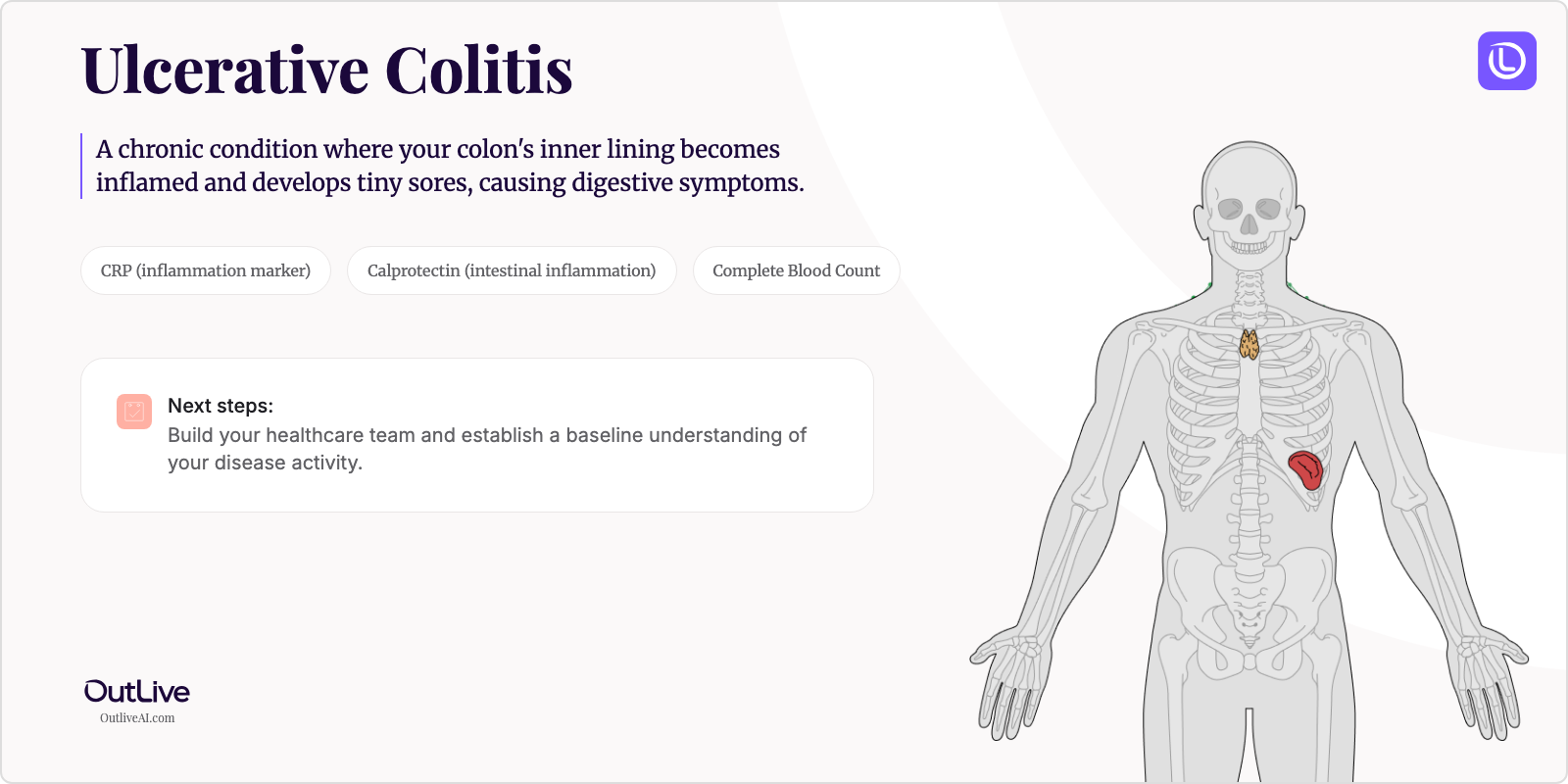
- What it is: A chronic condition where your colon's inner lining becomes inflamed and develops tiny sores, causing digestive symptoms.
- Key lab tests: CRP (inflammation marker), Calprotectin (intestinal inflammation), Complete Blood Count
- Your first goal: Build your healthcare team and establish a baseline understanding of your disease activity.
Receiving a new diagnosis for Ulcerative Colitis can be overwhelming. You might be feeling anxious, confused, and unsure of what comes next. That's completely normal. This guide is here to help you understand your condition in simple terms, know which lab tests matter most, and feel prepared for your next steps.
First, Take a Breath: What is Ulcerative Colitis in Simple Terms?
Think of your colon like a garden hose. In a healthy colon, the inner lining is smooth, allowing waste to pass through easily. With Ulcerative Colitis (UC), your immune system mistakenly attacks this inner lining, creating inflammation and small sores called ulcers. It's like having a sunburn on the inside of your colon – it becomes red, swollen, and sensitive. This causes symptoms like urgent bathroom trips, bloody stools, and abdominal cramping. The good news? Unlike some digestive conditions, UC only affects your colon and rectum (not your entire digestive tract), and with the right treatment plan, many people achieve remission and live full, active lives.
Understanding Your Diagnosis: The Key Lab Tests
This is the most important section. These tests help your doctor understand how active your UC is and how well your treatment is working. Think of them as your body's report card for inflammation.
Key Tests for Ulcerative Colitis:
- C-Reactive Protein (CRP): This blood test measures general inflammation in your body – when UC flares, CRP often rises like a smoke alarm detecting fire.
- Fecal Calprotectin: This stool test specifically measures inflammation in your intestines – it's like a GPS that pinpoints inflammation directly in your gut rather than anywhere else in your body.
- Complete Blood Count (CBC): This blood test checks for anemia (low red blood cells) and infection markers – important because UC can cause bleeding and your medications may affect your immune system.
- Erythrocyte Sedimentation Rate (ESR): Another inflammation marker that, when elevated alongside CRP, helps confirm that your UC is active rather than in remission.
Your First Specialist Appointment: What to Ask
You'll be seeing a gastroenterologist – a doctor who specializes in digestive conditions. Think of them as your UC coach who will guide you through treatment options and help you achieve remission.
What to Expect: Your gastroenterologist will review your colonoscopy results, discuss your symptoms in detail, and create a personalized treatment plan. They'll likely order baseline blood work and may discuss medication options. This appointment usually lasts 30-45 minutes, so come prepared with your questions written down.
Questions to Ask Your Doctor:
- "How extensive is my UC – is it limited to my rectum, left-sided, or throughout my entire colon?"
- "What medications do you recommend starting with, and what are the potential side effects I should watch for?"
- "How often will I need colonoscopies, and what are we looking for during these procedures?"
- "Are there any lifestyle changes or dietary modifications that might help my symptoms?"
- "What's the difference between a flare and remission, and how will I know which state I'm in?"
Download our [Checklist of Questions to Ask Your Ulcerative Colitis Specialist](# to feel prepared.
How to Track Your Journey
Think of tracking your UC like keeping a weather log – patterns emerge that help predict storms (flares) and sunny days (remission). This information becomes invaluable for fine-tuning your treatment.
Symptoms to Track:
- Number of bowel movements per day and presence of blood
- Urgency levels (on a scale of 1-10)
- Abdominal pain location and intensity
- Energy levels and fatigue patterns
- Any foods that seem to trigger symptoms
Lab Results to Monitor:
- CRP and Calprotectin - Every 3-6 months or during flares
- Complete Blood Count - Every 3-4 months if on immunosuppressants
- Liver function tests - Every 3-4 months if on certain medications
- Vitamin D and B12 levels - Annually or as recommended
Why Tracking Matters: Your UC is unique to you. By tracking symptoms and lab results, you and your doctor can identify your personal triggers, see how well medications are working, and catch flares early when they're easier to treat. It transforms you from a passenger to a co-pilot in your healthcare journey.
Next Steps After Your Diagnosis
Immediate Actions (This Week):
- Fill your prescriptions and understand how to take your medications properly
- Start a symptom diary (even a simple notebook works)
- Contact your insurance to understand your coverage for medications and procedures
- Join a reputable UC support group online or locally
Short-term Goals (Next Month):
- Establish care with a gastroenterologist if you haven't already
- Complete baseline blood work and stool tests
- Learn to recognize your early flare warning signs
- Identify a few "safe" foods that don't trigger symptoms
Long-term Management:
- Build a relationship with your healthcare team (GI doctor, primary care, and possibly a dietitian)
- Develop a flare action plan with your doctor
- Stay current with vaccinations (some UC medications affect immunity)
- Consider mental health support – chronic illness is challenging, and support helps
Frequently Asked Questions
How quickly can I expect to feel better? Most people see improvement within 2-8 weeks of starting treatment, though achieving full remission may take 3-6 months. Everyone's timeline is different, and finding the right medication combination sometimes requires patience and adjustments.
Will I need to change my diet? While UC isn't caused by diet, certain foods may trigger symptoms during flares. Many people find keeping a food diary helpful. During flares, a low-residue diet might help, but during remission, most people can enjoy a varied, healthy diet.
How often will I need to see my doctor? Initially, expect visits every 1-3 months until you achieve remission. Once stable, you'll typically see your gastroenterologist every 6-12 months, with additional visits during flares.
Can I still exercise/work/travel? Absolutely! During remission, most people with UC live completely normal lives. During flares, you might need to modify activities, but with proper treatment, UC shouldn't stop you from pursuing your goals.
When to Seek Immediate Medical Attention
Contact your doctor immediately if you experience:
- Severe abdominal pain with fever (could indicate perforation)
- More than 10 bloody bowel movements per day
- Signs of severe dehydration (dizziness, rapid heartbeat, decreased urination)
- Persistent vomiting that prevents you from keeping medications down
- Sudden, severe worsening of symptoms despite treatment
🔬 Ready to Organize Your Health Journey?
Understanding your condition is the first step. Our free Lab Analyzer tool helps you:
- Track all your lab results for Ulcerative Colitis in one place
- Spot important trends over time
- Generate personalized questions for your doctor
[Upload Your Lab Report for Free Analysis →]