
📋 At a Glance
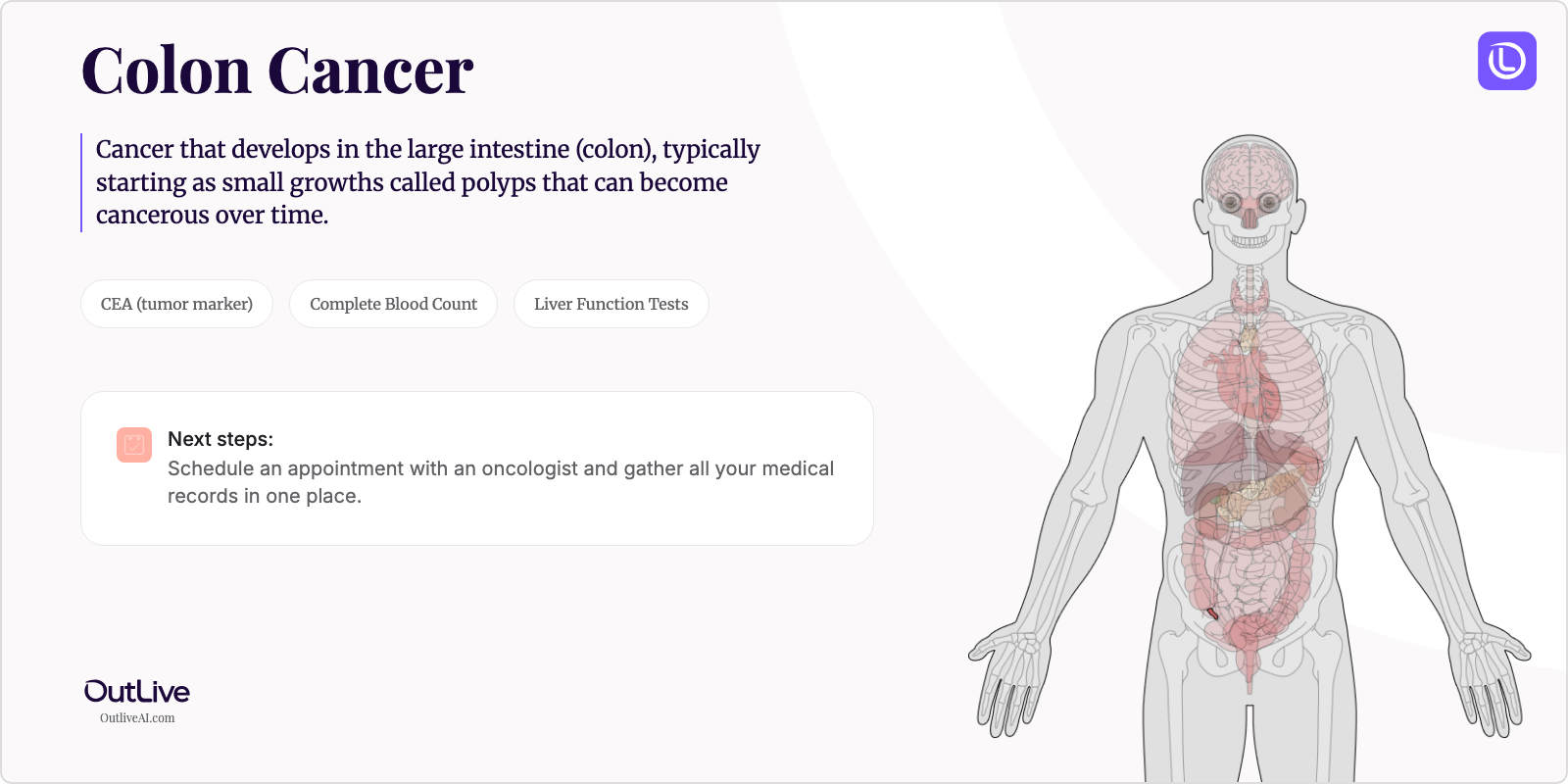
- What it is: Cancer that develops in the large intestine (colon), typically starting as small growths called polyps that can become cancerous over time.
- Key lab tests: CEA (tumor marker), Complete Blood Count, Liver Function Tests
- Your first goal: Schedule an appointment with an oncologist and gather all your medical records in one place.
Receiving a new diagnosis for Colon Cancer can be overwhelming. You might be feeling anxious, confused, and unsure of what comes next. That's completely normal. This guide is here to help you understand your condition in simple terms, know which lab tests matter most, and feel prepared for your next steps.
First, Take a Breath: What is Colon Cancer in Simple Terms?
Think of your colon as a processing plant that handles waste in your body - it's the final section of your digestive highway. Colon cancer happens when cells in this area start growing out of control, like weeds taking over a garden. These abnormal cells can form tumors that interfere with your colon's normal job of processing waste and absorbing water. The good news? When caught early, colon cancer is highly treatable, and even in later stages, there are many effective treatment options available today. You're not alone in this journey, and understanding what's happening in your body is your first step toward taking control.
Understanding Your Diagnosis: The Key Lab Tests
This is the most important section. These are the blood tests your medical team will use to monitor your condition and guide your treatment:
Key Tests for Colon Cancer:
- CEA (Carcinoembryonic Antigen): This is like a smoke detector for colon cancer activity - it measures a protein that cancer cells often produce, helping doctors track how well treatment is working.
- Complete Blood Count (CBC): This test checks if you have enough healthy blood cells, which is crucial since colon cancer can cause bleeding and anemia (low red blood cells).
- Liver Function Tests (ALT/AST): These tests check how well your liver is working, which is important because the liver is a common place where colon cancer might spread.
- Alkaline Phosphatase (ALP): This enzyme level can indicate if cancer has spread to your bones or liver, helping doctors understand the full picture of your condition.
Your First Specialist Appointment: What to Ask
What to Expect: You'll likely see an oncologist - a doctor who specializes in treating cancer. This appointment typically lasts 45-60 minutes. They'll review your diagnosis, explain your cancer's stage (how far it has spread), and discuss treatment options. Bring a trusted friend or family member to help you remember information and take notes.
Questions to Ask Your Doctor:
- "What stage is my cancer, and what does that mean in plain English?"
- "What are my treatment options, and what do you recommend for someone in my situation?"
- "How will we know if the treatment is working?"
- "What side effects should I expect, and how can we manage them?"
- "Should I get genetic testing to see if this runs in my family?"
Download our [Checklist of Questions to Ask Your Colon Cancer Specialist](# to feel prepared.
How to Track Your Journey
Tracking your Colon Cancer journey is crucial for understanding how your treatment is working and spotting important trends. Here's what you should monitor:
Symptoms to Track:
- Changes in bowel habits (frequency, consistency, difficulty)
- Abdominal pain or cramping
- Energy levels and fatigue
- Unexpected weight changes
- Any bleeding or unusual discharge
Lab Results to Monitor:
- CEA levels - Usually checked every 3-6 months during treatment
- Complete Blood Count - Checked before each chemotherapy cycle
- Liver function tests - Monitored every 3-6 months or as directed
Why Tracking Matters: Think of tracking as creating a roadmap of your health journey. When you can show your doctor patterns - like "my energy drops three days after treatment" or "my CEA levels have decreased by 50%" - you're giving them valuable information to fine-tune your care. It also helps you feel more in control and spot improvements that might otherwise go unnoticed.
Next Steps After Your Diagnosis
Immediate Actions (This Week):
- Contact your insurance company to understand your coverage and find in-network specialists
- Gather all medical records, imaging results, and pathology reports in one folder
- Start a health journal to track symptoms, questions, and important information
Short-term Goals (Next Month):
- Meet with your oncology team and understand your treatment plan
- Connect with a nutritionist who specializes in cancer care
- Consider joining a colon cancer support group (in-person or online)
Long-term Management:
- Establish a routine for regular monitoring and follow-up appointments
- Build a support network of family, friends, and healthcare professionals
- Focus on overall wellness including nutrition, gentle exercise, and stress management
Frequently Asked Questions
How quickly can I expect to feel better? Everyone's journey is different. Some people feel better within weeks of starting treatment, while others take months. Many patients report feeling more in control once treatment begins and they have a clear plan. Your energy may fluctuate during treatment, but most people find their "new normal" within 3-6 months.
Will I need to change my diet? Yes, but don't worry - it's manageable. You'll likely need to eat smaller, more frequent meals and may need to avoid certain foods that are hard to digest. A nutritionist can create a personalized plan that ensures you're getting proper nutrition while being gentle on your digestive system.
How often will I need to see my doctor? During active treatment, you might see your oncologist every 2-3 weeks. After treatment, visits typically decrease to every 3-6 months for the first few years, then annually. You'll also have regular scans to monitor your progress.
Can I still exercise/work/travel? Many people continue modified versions of their normal activities. Light exercise like walking is often encouraged. Work arrangements can often be adjusted. Travel may need planning around treatment schedules, but it's usually possible with your doctor's guidance.
When to Seek Immediate Medical Attention
Contact your doctor immediately if you experience:
- Severe abdominal pain that doesn't improve with rest
- Persistent vomiting or inability to keep fluids down
- High fever (over 100.4°F/38°C) especially during chemotherapy
- Heavy bleeding from the rectum
- Sudden shortness of breath or chest pain
- Signs of severe dehydration (dizziness, dark urine, extreme thirst)
🔬 Ready to Organize Your Health Journey?
Understanding your condition is the first step. Our free Lab Analyzer tool helps you:
- Track all your lab results for Colon Cancer in one place
- Spot important trends over time
- Generate personalized questions for your doctor
[Upload Your Lab Report for Free Analysis →]