
📋 At a Glance
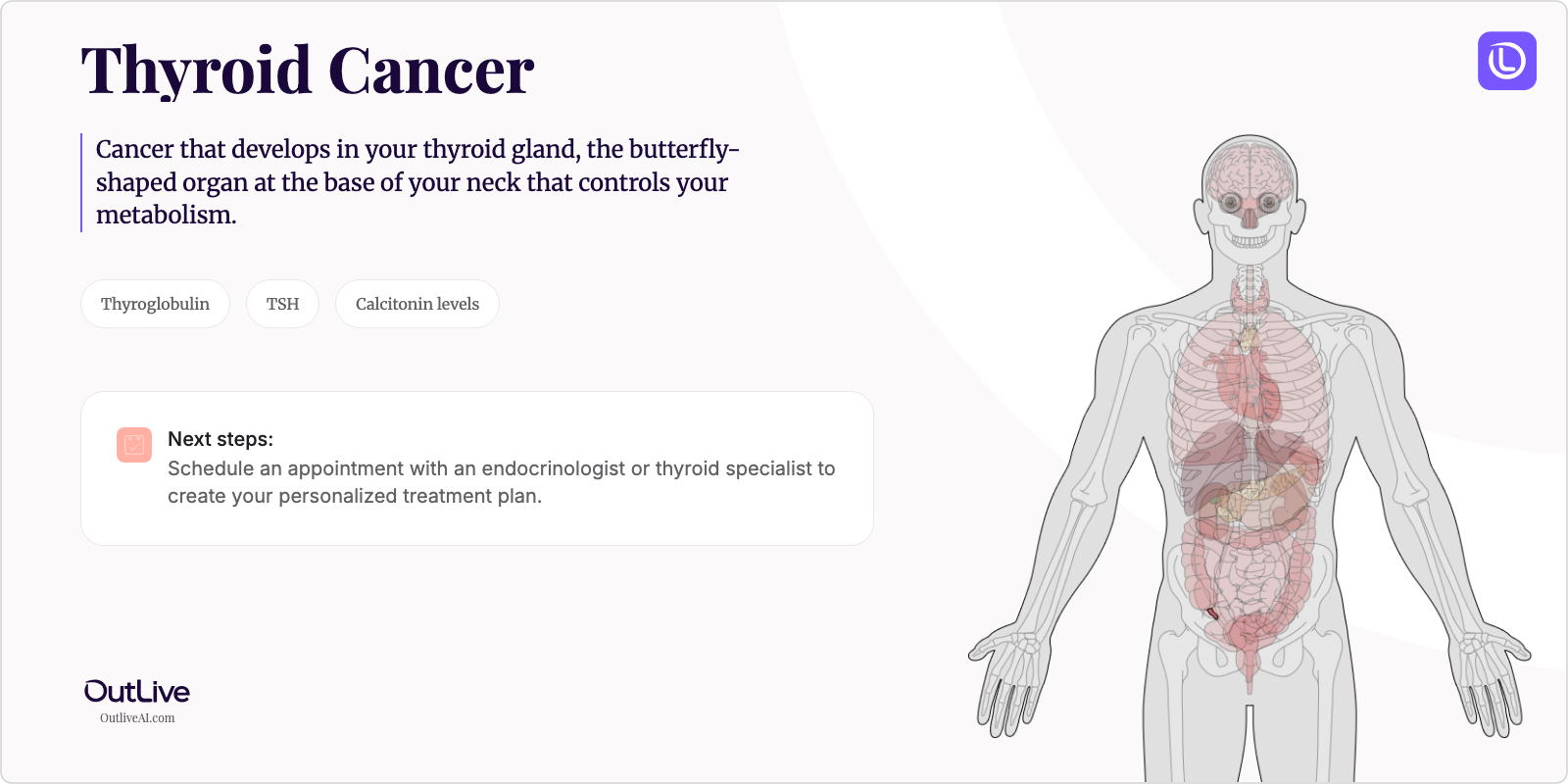
- What it is: Cancer that develops in your thyroid gland, the butterfly-shaped organ at the base of your neck that controls your metabolism.
- Key lab tests: Thyroglobulin, TSH, and Calcitonin levels
- Your first goal: Schedule an appointment with an endocrinologist or thyroid specialist to create your personalized treatment plan.
Receiving a new diagnosis for Thyroid Cancer can be overwhelming. You might be feeling anxious, confused, and unsure of what comes next. That's completely normal. This guide is here to help you understand your condition in simple terms, know which lab tests matter most, and feel prepared for your next steps.
First, Take a Breath: What is Thyroid Cancer in Simple Terms?
Think of your thyroid as your body's thermostat – it sits at the base of your neck and produces hormones that control how fast or slow your body runs. When cancer develops here, it means some cells in your thyroid have started growing in an uncontrolled way. The good news? Thyroid cancer is one of the most treatable cancers, with excellent survival rates. Most people with thyroid cancer go on to live full, normal lives. Your thyroid might look like a small butterfly, but it plays a big role in keeping your energy levels, heart rate, and metabolism in balance. When cancer affects it, we need to remove or treat those abnormal cells while making sure your body still gets the hormones it needs.
Understanding Your Diagnosis: The Key Lab Tests
This is the most important section. These are the blood tests your doctor will use to monitor your thyroid cancer and track how well your treatment is working.
Key Tests for Thyroid Cancer:
- Thyroglobulin (Tg): This protein is made by thyroid cells, and after treatment, low or undetectable levels mean the cancer is under control – think of it as your cancer's "fingerprint" in the blood.
- TSH (Thyroid Stimulating Hormone): This test shows how hard your pituitary gland is working to tell your thyroid to produce hormones – after thyroid cancer treatment, your doctor will carefully adjust your medication to keep this at the right level.
- Calcitonin: This hormone is especially important if you have medullary thyroid cancer, as elevated levels can indicate cancer cells are present or growing.
- Anti-Thyroglobulin Antibodies: These antibodies can interfere with thyroglobulin testing, so your doctor needs to check for them to ensure your other test results are accurate.
Your First Specialist Appointment: What to Ask
What to Expect: You'll likely see an endocrinologist (hormone specialist) or an oncologist who specializes in thyroid cancer. They'll review your biopsy results, discuss your specific type of thyroid cancer, and explain your treatment options. The appointment usually lasts 30-60 minutes, and they may order additional imaging tests like an ultrasound or radioiodine scan to see if the cancer has spread.
Questions to Ask Your Doctor:
- What specific type of thyroid cancer do I have, and what stage is it?
- Will I need surgery, radioactive iodine treatment, or both?
- How will my thyroid hormone levels be managed after treatment?
- How often will I need follow-up appointments and blood tests?
- What are the potential side effects of my treatment, and how can we manage them?
Download our [Checklist of Questions to Ask Your Thyroid Cancer Specialist](# to feel prepared.
How to Track Your Journey
Tracking your Thyroid Cancer journey is crucial for understanding how your treatment is working and spotting important trends. Here's what you should monitor:
Symptoms to Track:
- Energy levels and fatigue patterns
- Any neck swelling or discomfort
- Changes in voice or difficulty swallowing
- Weight changes (gain or loss)
- Heart rate changes or palpitations
Lab Results to Monitor:
- Thyroglobulin levels - Every 6-12 months after treatment
- TSH levels - Every 6-8 weeks until stable, then every 6 months
- Free T4 levels - With each TSH check to ensure proper hormone replacement
Why Tracking Matters: Tracking helps you and your doctor see patterns over time. For example, if your thyroglobulin levels stay low or undetectable after treatment, that's a great sign the cancer is gone. If your TSH levels fluctuate, you might need medication adjustments to feel your best. Think of it like keeping a diary of your health – the trends tell a story that individual snapshots can't capture.
Next Steps After Your Diagnosis
Immediate Actions (This Week):
- Schedule your appointment with a thyroid specialist or endocrinologist
- Gather all your medical records, including biopsy results and imaging reports
- Start a symptom journal to track how you're feeling day-to-day
Short-term Goals (Next Month):
- Complete any additional testing your specialist recommends
- Understand your treatment plan and timeline
- Connect with a thyroid cancer support group for emotional support
Long-term Management:
- Establish a regular monitoring schedule with your healthcare team
- Learn to recognize your body's signals when thyroid hormone levels need adjustment
- Build a sustainable routine that includes proper medication timing and regular follow-ups
Frequently Asked Questions
How quickly can I expect to feel better? Most patients start feeling more like themselves 2-3 months after treatment begins, once thyroid hormone levels are properly balanced. Surgery recovery typically takes 2-4 weeks, while the full effects of radioactive iodine treatment may take 3-6 months to assess.
Will I need to change my diet? If you're having radioactive iodine treatment, you'll need a low-iodine diet for about 2 weeks beforehand. Otherwise, most thyroid cancer patients can maintain a normal, healthy diet. Your doctor will let you know if you have any specific dietary needs.
How often will I need to see my doctor? Initially, you'll have appointments every 3-6 months for the first year, then annually if everything looks good. Blood tests might be more frequent at first (every 6-8 weeks) until your thyroid hormone replacement dose is optimized.
Can I still exercise/work/travel? Yes! Most people can return to normal activities within a few weeks after surgery. During radioactive iodine treatment, you'll have some temporary restrictions, but afterward, you can resume your regular lifestyle. Many patients find that once their hormone levels are balanced, they have even more energy than before.
When to Seek Immediate Medical Attention
Contact your doctor immediately if you experience:
- Severe neck swelling or difficulty breathing
- Sudden hoarseness or complete voice loss
- Signs of calcium imbalance (tingling in fingers, muscle cramps, or spasms) after surgery
- Rapid heartbeat with chest pain or severe anxiety
- High fever or signs of infection at the surgical site
🔬 Ready to Organize Your Health Journey?
Understanding your condition is the first step. Our free Lab Analyzer tool helps you:
- Track all your lab results for Thyroid Cancer in one place
- Spot important trends over time
- Generate personalized questions for your doctor
[Upload Your Lab Report for Free Analysis →]