
📋 At a Glance
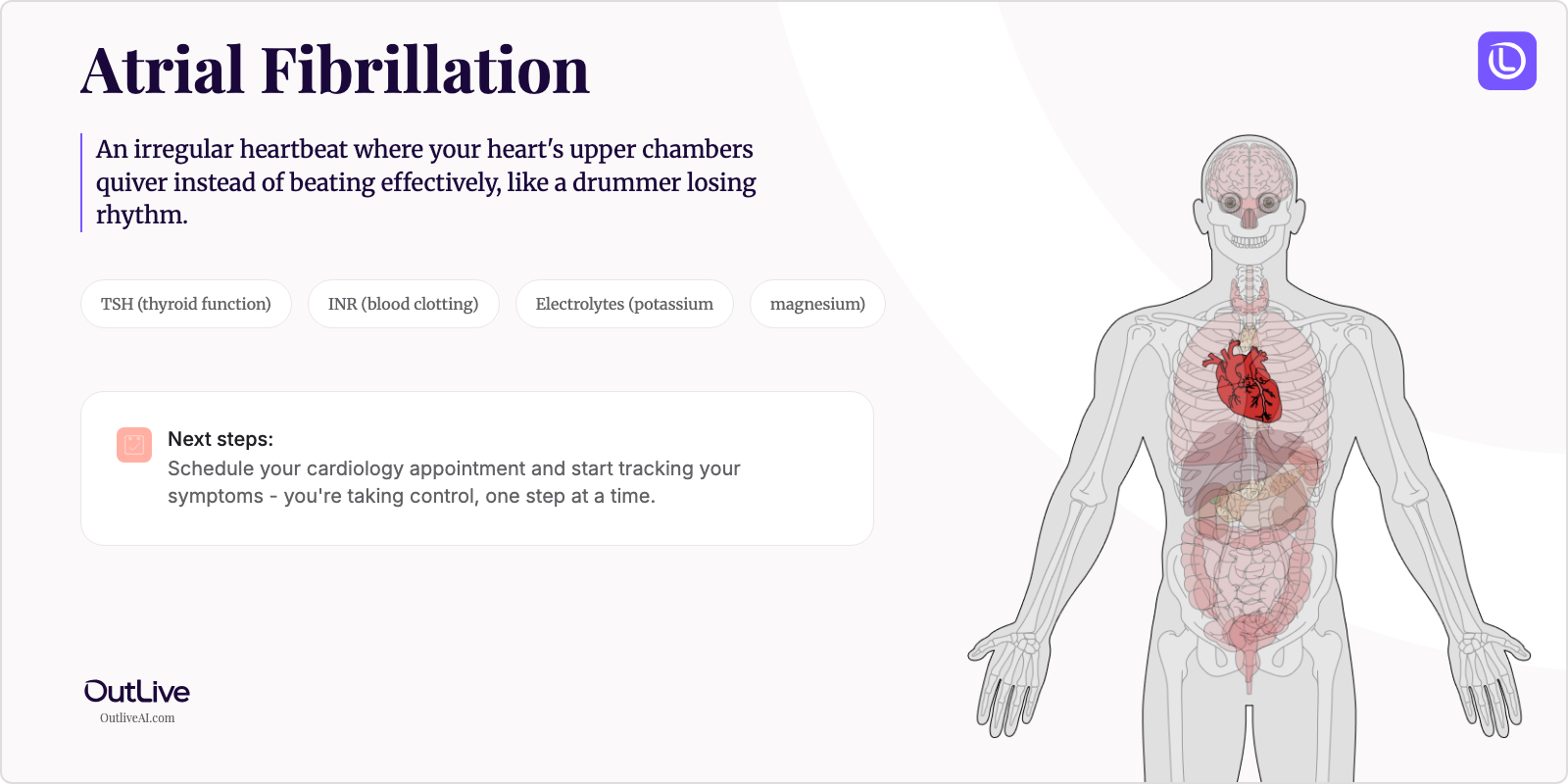
- What it is: An irregular heartbeat where your heart's upper chambers quiver instead of beating effectively, like a drummer losing rhythm.
- Key lab tests: TSH (thyroid function), INR (blood clotting), and electrolytes (potassium, magnesium)
- Your first goal: Schedule your cardiology appointment and start tracking your symptoms - you're taking control, one step at a time.
Receiving a new diagnosis for Atrial Fibrillation can be overwhelming. You might be feeling anxious, confused, and unsure of what comes next. That's completely normal. This guide is here to help you understand your condition in simple terms, know which lab tests matter most, and feel prepared for your next steps.
First, Take a Breath: What is Atrial Fibrillation in Simple Terms?
Imagine your heart as a four-room house with two upstairs rooms (atria) and two downstairs rooms (ventricles). Normally, electricity flows through your heart in an organized pattern, like a well-choreographed dance. With atrial fibrillation (often called "AFib"), the upper rooms start quivering chaotically instead of contracting properly - it's like having multiple conductors trying to lead the orchestra at once. This can make your heart beat irregularly and sometimes too fast, which is why you might feel fluttering in your chest, shortness of breath, or unusual fatigue. The good news? While AFib needs attention and management, millions of people live full, active lives with this condition. You're not alone, and there are effective treatments to help you feel better and protect your heart.
Understanding Your Diagnosis: The Key Lab Tests
This is the most important section. These blood tests help your doctor understand what might be triggering your AFib and how to best treat it. Think of them as pieces of a puzzle that, when put together, create a clear picture of your heart health.
Key Tests for Atrial Fibrillation:
- TSH (Thyroid Stimulating Hormone): Your thyroid is like your body's thermostat - when it's overactive, it can trigger AFib by making your heart race.
- INR (International Normalized Ratio): If you're on blood thinners to prevent stroke, this test ensures your blood is "just right" - not too thick, not too thin.
- Potassium: This mineral helps control your heart's electrical signals - too little or too much can worsen irregular heartbeats.
- Magnesium: Works hand-in-hand with potassium to keep your heart rhythm steady - low levels can trigger AFib episodes.
Your First Specialist Appointment: What to Ask
You'll likely be referred to a cardiologist or an electrophysiologist (a heart rhythm specialist). Think of them as your heart's personal trainer - they'll help you understand your specific type of AFib and create a game plan tailored just for you.
What to Expect: Your first appointment will typically last 30-60 minutes. The doctor will listen to your heart, review your medical history, discuss your symptoms, and may order additional tests like an echocardiogram (ultrasound of your heart) or a Holter monitor (a portable heart monitor you wear for 24-48 hours). They'll explain whether your AFib is occasional (paroxysmal) or constant (persistent), which helps determine your treatment approach.
Questions to Ask Your Doctor:
- "Is my AFib occasional or constant, and what does that mean for my treatment?"
- "What's my stroke risk score (CHA2DS2-VASc), and do I need blood thinners?"
- "Should we try to control my heart rate, rhythm, or both?"
- "Are there any triggers I should avoid, like caffeine, alcohol, or certain activities?"
- "How often will I need follow-up appointments and blood tests?"
Download our [Checklist of Questions to Ask Your Atrial Fibrillation Specialist](# to feel prepared.
How to Track Your Journey
Think of tracking your AFib like keeping a diary of your heart's behavior - it helps you and your doctor spot patterns and see what's working. Many patients find that tracking actually reduces their anxiety because they feel more in control.
Symptoms to Track:
- Heart palpitations or fluttering (note time of day and duration)
- Shortness of breath or chest discomfort
- Fatigue levels on a scale of 1-10
- Dizziness or lightheadedness episodes
- Any potential triggers (stress, poor sleep, alcohol, large meals)
Lab Results to Monitor:
- INR (if on warfarin) - Every 2-4 weeks initially, then monthly when stable
- Electrolytes (potassium, magnesium) - Every 3-6 months or as directed
- Kidney function (creatinine) - Every 6-12 months if on certain medications
- Liver function tests - Annually or as recommended
- TSH - Annually or if symptoms change
Why Tracking Matters: Tracking helps you become an expert on your own body. You might notice that AFib episodes happen after poor sleep or during stressful periods. This information is gold for your doctor - it helps them fine-tune your treatment and gives you power to make lifestyle changes that really matter.
Next Steps After Your Diagnosis
Immediate Actions (This Week):
- Schedule your cardiology appointment (call today - many offices have cancellation lists)
- Start a simple symptom diary (even notes on your phone work great)
- Gather all your recent test results and medication lists in one folder
- Consider purchasing a home blood pressure monitor with irregular heartbeat detection
Short-term Goals (Next Month):
- Establish care with a cardiologist and understand your treatment plan
- Learn to check your pulse and recognize when you're in AFib
- Review your stroke risk with your doctor and start preventive medications if needed
- Join an AFib support group (online or in-person) to connect with others
Long-term Management:
- Develop a consistent medication routine using pill organizers or apps
- Create heart-healthy habits: regular sleep schedule, stress management, moderate exercise
- Build your healthcare team: cardiologist, primary care doctor, and pharmacist who communicate well
Frequently Asked Questions
How quickly can I expect to feel better? Many people notice improvement within 2-4 weeks of starting treatment, especially if your heart rate was very fast. Some medications work immediately to slow your heart rate, while rhythm control medications may take several weeks to show full effect. Be patient with yourself - finding the right treatment combination is often a process of fine-tuning.
Will I need to change my diet? You don't need a complete diet overhaul, but some adjustments help. Limit caffeine if it triggers symptoms, moderate alcohol intake (or avoid it completely if it's a trigger), maintain consistent vitamin K intake if on warfarin, and reduce sodium to help control blood pressure. A Mediterranean-style diet rich in fruits, vegetables, and omega-3 fatty acids supports heart health.
How often will I need to see my doctor? Initially, expect appointments every 2-4 weeks as your treatment is adjusted. Once stable, most patients see their cardiologist every 3-6 months. You'll continue regular check-ups with your primary care doctor and may need periodic blood tests depending on your medications.
Can I still exercise/work/travel? Absolutely! Most people with well-controlled AFib can maintain their normal activities. Start exercise gradually and avoid overexertion initially. Most jobs are fine, though discuss with your doctor if you operate heavy machinery. Travel is usually no problem - just bring extra medication, keep a list of your conditions and medications, and know how to find medical care at your destination.
When to Seek Immediate Medical Attention
Contact your doctor immediately if you experience:
- Chest pain or pressure that doesn't go away
- Severe shortness of breath or inability to lie flat
- Sudden weakness, numbness, or difficulty speaking (stroke symptoms)
- Fainting or near-fainting episodes
- Heart rate over 150 beats per minute that won't slow down
- Unusual bleeding if you're on blood thinners (black stools, blood in urine, severe nosebleeds)
🔬 Ready to Organize Your Health Journey?
Understanding your condition is the first step. Our free Lab Analyzer tool helps you:
- Track all your lab results for Atrial Fibrillation in one place
- Spot important trends over time
- Generate personalized questions for your doctor
[Upload Your Lab Report for Free Analysis →]