
📋 At a Glance
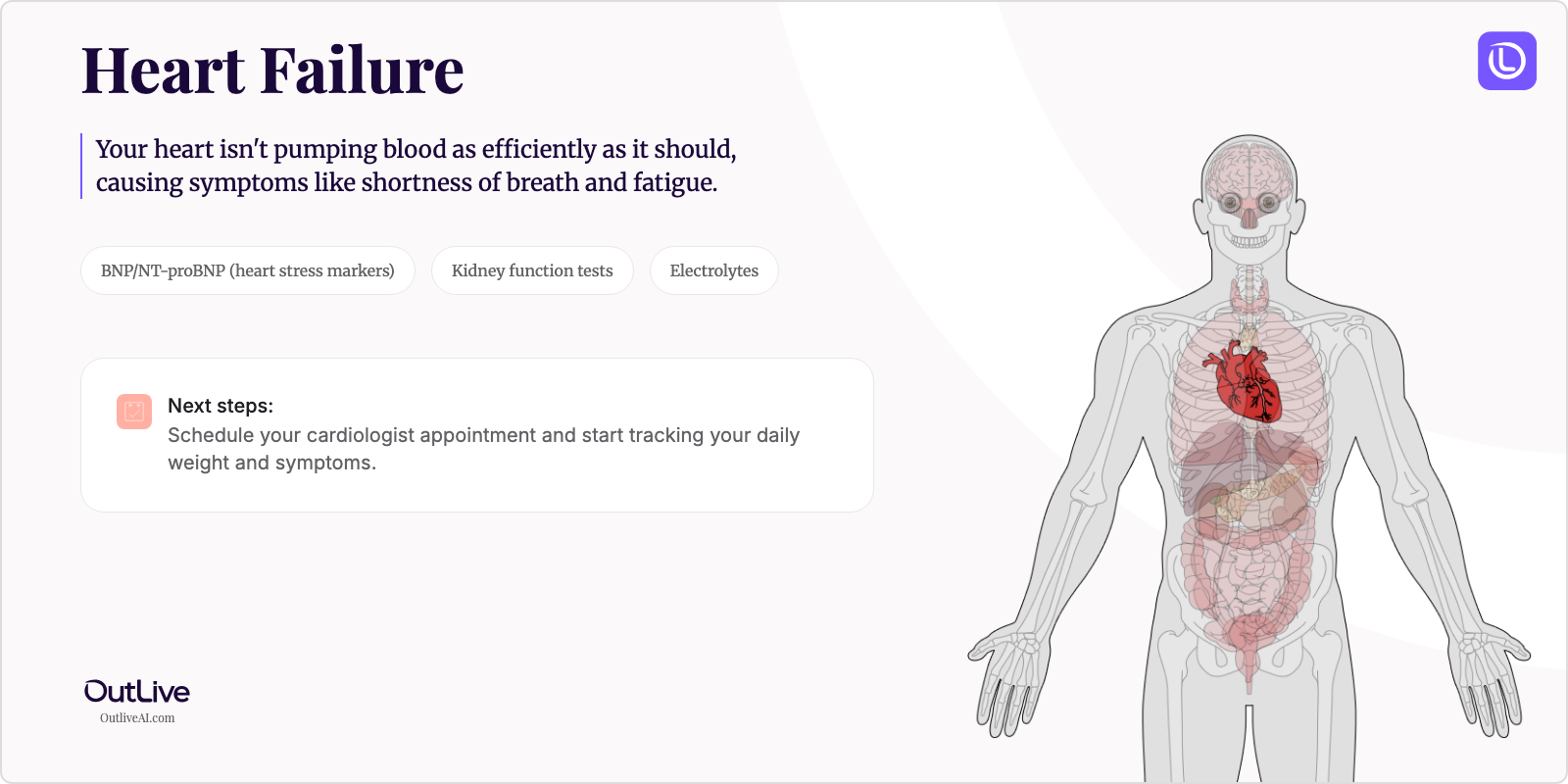
- What it is: Your heart isn't pumping blood as efficiently as it should, causing symptoms like shortness of breath and fatigue.
- Key lab tests: BNP/NT-proBNP (heart stress markers), kidney function tests, and electrolytes
- Your first goal: Schedule your cardiologist appointment and start tracking your daily weight and symptoms.
Receiving a new diagnosis for Heart Failure can be overwhelming. You might be feeling anxious, confused, and unsure of what comes next. That's completely normal. This guide is here to help you understand your condition in simple terms, know which lab tests matter most, and feel prepared for your next steps.
First, Take a Breath: What is Heart Failure in Simple Terms?
Think of your heart as the main pump in your home's plumbing system. In heart failure, this pump isn't working at full capacity—it's like trying to water your entire garden with a partially clogged pump. The pump still works, but it can't deliver enough water (or in your body's case, blood and oxygen) to meet all the demands. This doesn't mean your heart has stopped or is about to stop. It means your heart needs help doing its job, and with the right treatment, many people with heart failure live full, active lives for years.
The term "heart failure" sounds scarier than it actually is. Your heart hasn't failed you—it just needs some support, like wearing glasses when your eyes need help seeing clearly.
Understanding Your Diagnosis: The Key Lab Tests
This is the most important section. These are the lab tests your doctor uses to understand how your heart is doing and guide your treatment:
Key Tests for Heart Failure:
- BNP or NT-proBNP: These are like your heart's "stress signals"—when your heart is working harder than normal, these numbers go up, helping doctors confirm heart failure and track how well treatment is working.
- Creatinine and eGFR: These kidney function tests are crucial because your heart and kidneys work as a team—when one struggles, it affects the other, and many heart failure medications need healthy kidneys to work safely.
- Sodium and Potassium: These electrolytes are like the spark plugs for your heart's electrical system—keeping them balanced is essential for maintaining a steady heartbeat and preventing complications.
- Hemoglobin: This measures your red blood cells' ability to carry oxygen—low levels (anemia) are common in heart failure and can make your symptoms worse.
Your First Specialist Appointment: What to Ask
What to Expect: You'll be seeing a cardiologist—a heart specialist who will become your partner in managing this condition. They'll listen to your heart and lungs, check for swelling in your legs, review your test results, and likely order an echocardiogram (an ultrasound of your heart) if you haven't had one yet. This appointment usually lasts 30-45 minutes, and it's perfectly okay to bring a family member or friend for support.
Questions to Ask Your Doctor:
- "What type of heart failure do I have, and what's my ejection fraction?" (This number tells you how well your heart pumps with each beat)
- "Which medications will help my heart work better, and what side effects should I watch for?"
- "How much fluid should I drink each day, and do I need to limit salt?"
- "What daily weight change should prompt me to call your office?"
- "Can you explain what activities are safe for me, and when I might be able to increase my activity level?"
Download our [Checklist of Questions to Ask Your Heart Failure Specialist](# to feel prepared.
How to Track Your Journey
Tracking your Heart Failure journey is crucial for understanding how your treatment is working and spotting important trends. Here's what you should monitor:
Symptoms to Track:
- Daily weight (same time each day, after using the bathroom)
- Shortness of breath (at rest, with activity, or lying flat)
- Swelling in your feet, ankles, or belly
- Fatigue levels and ability to do daily activities
- Heart rate and blood pressure if your doctor recommends it
Lab Results to Monitor:
- BNP or NT-proBNP - Every 3-6 months or when symptoms change
- Kidney function (creatinine, eGFR) - Every 3-6 months
- Electrolytes (sodium, potassium) - Every 3-6 months or after medication changes
- Complete blood count - Every 6-12 months
Why Tracking Matters: Think of tracking as your early warning system. A sudden weight gain of 2-3 pounds might mean you're retaining fluid before you even feel symptoms. Catching these changes early means your doctor can adjust your medications before you feel worse, potentially avoiding a hospital visit.
Next Steps After Your Diagnosis
Immediate Actions (This Week):
- Buy a reliable digital scale and start weighing yourself every morning
- Create a simple symptom diary or use a smartphone app to track how you feel
- Organize all your medications and set up a pill organizer if needed
- Call to schedule your cardiologist appointment if not already done
Short-term Goals (Next Month):
- Learn to check your ankles for swelling (press your thumb on your shin for 5 seconds—if it leaves a dent, that's swelling)
- Start a low-sodium diet (aim for less than 2,000mg daily—about one teaspoon of salt)
- Begin gentle exercise as approved by your doctor, even if it's just a 5-minute walk
- Join a heart failure support group, either online or in your community
Long-term Management:
- Establish a routine for taking medications at the same time daily
- Build a relationship with your care team, including your cardiologist, primary care doctor, and pharmacist
- Learn to recognize your personal warning signs that indicate your heart failure might be worsening
Frequently Asked Questions
How quickly can I expect to feel better? Many people start feeling better within 2-4 weeks of starting treatment, especially as excess fluid is removed. However, finding the right medication combination can take 2-3 months. Be patient with your body—improvement is often gradual but steady.
Will I need to change my diet? Yes, but it's manageable. The biggest change is reducing sodium (salt) to less than 2,000mg daily. This means cooking more at home, reading food labels, and choosing fresh foods over processed ones. Many patients find they actually enjoy food more once they discover herbs and spices as salt alternatives.
How often will I need to see my doctor? Initially, expect appointments every 2-4 weeks as your medications are adjusted. Once stable, most patients see their cardiologist every 3-6 months. You'll also continue seeing your primary care doctor for regular check-ups.
Can I still exercise/work/travel? Most people with heart failure can and should exercise—it actually helps your heart. Start slowly with your doctor's guidance. Many people continue working, though you might need some adjustments. Travel is usually fine once you're stable, but discuss plans with your doctor and ensure you have enough medications.
When to Seek Immediate Medical Attention
Contact your doctor immediately if you experience:
- Sudden weight gain of 3+ pounds in one day or 5+ pounds in a week
- Increased shortness of breath, especially when lying flat or waking you at night
- New or worsening swelling in your feet, ankles, legs, or belly
- Persistent cough with pink, frothy sputum
- Chest pain or pressure that doesn't go away with rest
- Feeling like your heart is racing or skipping beats
- Confusion, dizziness, or fainting
🔬 Ready to Organize Your Health Journey?
Understanding your condition is the first step. Our free Lab Analyzer tool helps you:
- Track all your lab results for Heart Failure in one place
- Spot important trends over time
- Generate personalized questions for your doctor
[Upload Your Lab Report for Free Analysis →]