
📋 At a Glance
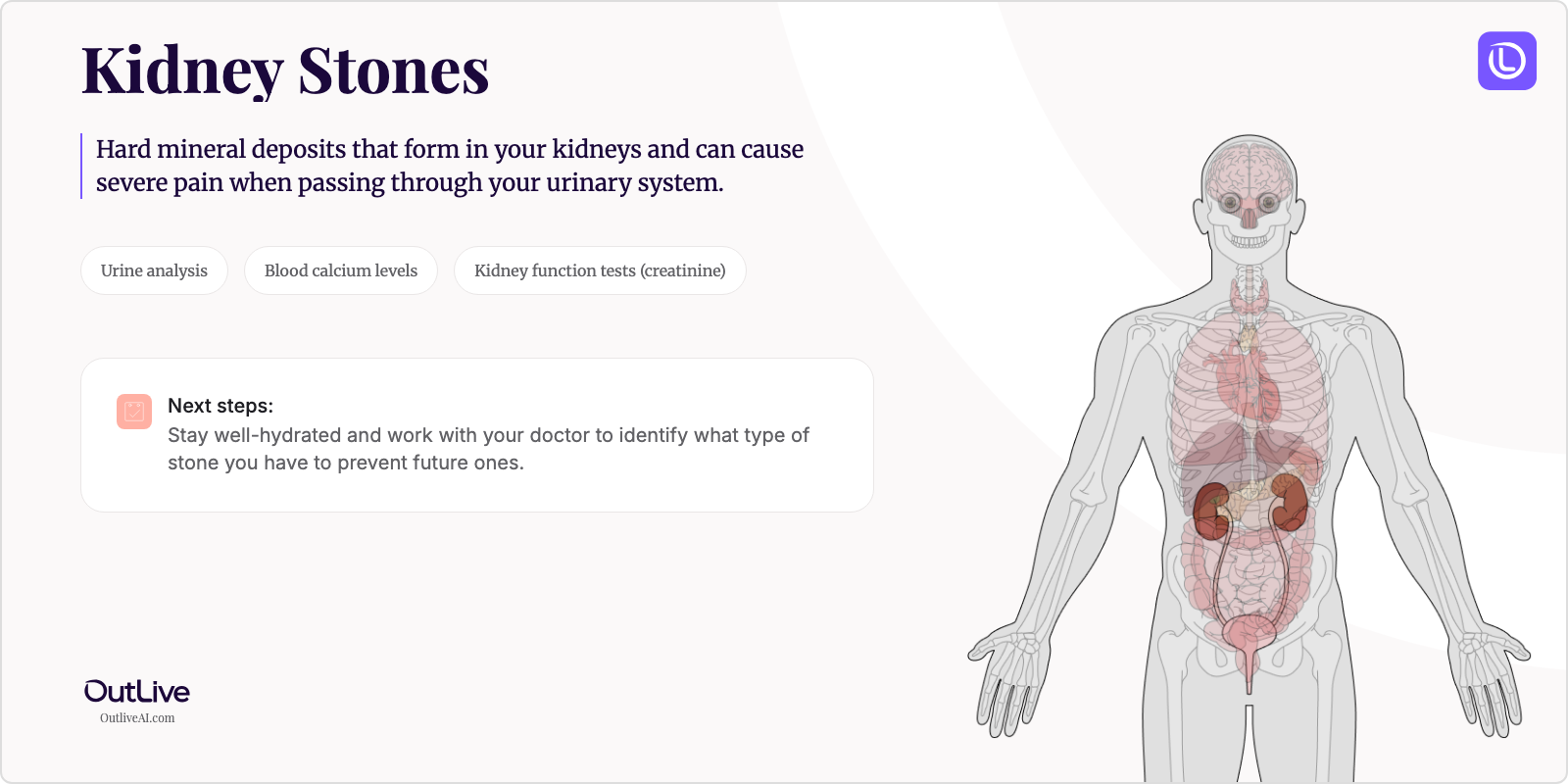
- What it is: Hard mineral deposits that form in your kidneys and can cause severe pain when passing through your urinary system.
- Key lab tests: Urine analysis, blood calcium levels, and kidney function tests (creatinine)
- Your first goal: Stay well-hydrated and work with your doctor to identify what type of stone you have to prevent future ones.
Receiving a new diagnosis for Kidney Stones can be overwhelming. You might be feeling anxious, confused, and unsure of what comes next. That's completely normal. This guide is here to help you understand your condition in simple terms, know which lab tests matter most, and feel prepared for your next steps.
First, Take a Breath: What is Kidney Stones in Simple Terms?
Think of your kidneys as sophisticated filters that clean your blood, removing waste and extra minerals through your urine. Sometimes, when there's too much of certain minerals and not enough liquid, these minerals stick together like rock candy forming in a jar of sugar water. These tiny crystals can grow into stones - some as small as a grain of sand, others as large as a golf ball. The good news? Most kidney stones pass on their own, and once we know what type you have, we can often prevent new ones from forming. You're not alone in this - about 1 in 10 people will have a kidney stone at some point in their life.
Understanding Your Diagnosis: The Key Lab Tests
This is the most important section. These are the tests your doctor uses to understand your kidney stones and monitor your kidney health:
Key Tests for Kidney Stones:
- Urinalysis: This test checks your urine for crystals, blood, and minerals that reveal what type of stone you have and helps guide prevention strategies.
- Serum Calcium: Measures calcium levels in your blood, as high calcium can contribute to the most common type of kidney stones (calcium oxalate).
- Serum Creatinine: Shows how well your kidneys are filtering waste - important to ensure your kidneys aren't being damaged by stones.
- Uric Acid: Checks for elevated uric acid levels which can form a specific type of kidney stone, especially if your urine is too acidic.
Your First Specialist Appointment: What to Ask
What to Expect: You'll likely see a urologist - a doctor who specializes in the urinary system. They'll review your imaging results (CT scan or ultrasound), discuss your pain management, and create a plan based on your stone's size and location. The appointment usually lasts 30-45 minutes, and they may order additional tests to determine your stone type.
Questions to Ask Your Doctor:
- "What type of kidney stone do I have, and what caused it to form?"
- "Is my stone small enough to pass on its own, or will I need a procedure?"
- "How long should I expect this process to take, and what pain management options are available?"
- "What dietary changes can help prevent future stones based on my specific stone type?"
- "How often should I have follow-up imaging to check for new stones?"
Download our [Checklist of Questions to Ask Your Kidney Stones Specialist](# to feel prepared.
How to Track Your Journey
Tracking your Kidney Stones journey is crucial for understanding how your treatment is working and spotting important trends. Here's what you should monitor:
Symptoms to Track:
- Pain levels and location (back, side, or groin pain)
- Urination changes (frequency, burning sensation, or blood in urine)
- Nausea or vomiting episodes
Lab Results to Monitor:
- 24-hour urine collection - Once after stone passes, then yearly
- Blood calcium and uric acid - Every 6-12 months
- Kidney function (creatinine) - Every 6-12 months
Why Tracking Matters: Kidney stones often recur - about 50% of people will have another stone within 5 years. By tracking your lab results and symptoms, you and your doctor can spot patterns, adjust prevention strategies, and catch new stones early when they're easier to manage. Think of it as being a detective for your own health - the clues in your tracking help solve the mystery of what triggers your stones.
Next Steps After Your Diagnosis
Immediate Actions (This Week):
- Start drinking 2.5-3 liters of water daily (aim for pale yellow urine)
- Strain your urine to catch any stone fragments for analysis
- Fill any prescribed pain medications and take as directed
Short-term Goals (Next Month):
- Complete a 24-hour urine collection test if ordered
- Meet with a dietitian familiar with kidney stone prevention
- Establish a hydration routine that works with your lifestyle
Long-term Management:
- Maintain dietary modifications specific to your stone type
- Schedule regular follow-ups every 6-12 months for monitoring
Frequently Asked Questions
How quickly can I expect to feel better? Small stones (under 4mm) typically pass within 1-2 weeks with proper hydration. Larger stones may take 2-3 weeks or require intervention. Pain usually improves significantly once the stone passes into your bladder.
Will I need to change my diet? Most likely, yes - but the changes depend on your stone type. Common adjustments include reducing sodium, moderating animal protein, and either increasing or decreasing calcium intake (counterintuitively, too little calcium can cause stones too).
How often will I need to see my doctor? Initially, you'll have follow-ups every few weeks until your stone passes. After that, expect check-ups every 6-12 months to monitor for new stones and adjust prevention strategies.
Can I still exercise/work/travel? Light exercise like walking can actually help stones pass. Most people can work unless pain is severe. For travel, stay hydrated and bring pain medication - notify your doctor if traveling internationally.
When to Seek Immediate Medical Attention
Contact your doctor immediately if you experience:
- Fever above 101°F with chills (could indicate infection)
- Severe pain that doesn't respond to prescribed medication
- Complete inability to urinate (blockage emergency)
- Persistent vomiting preventing you from keeping fluids down
- Blood in urine that looks like pure blood rather than pink-tinged
🔬 Ready to Organize Your Health Journey?
Understanding your condition is the first step. Our free Lab Analyzer tool helps you:
- Track all your lab results for Kidney Stones in one place
- Spot important trends over time
- Generate personalized questions for your doctor
[Upload Your Lab Report for Free Analysis →]