
📋 At a Glance
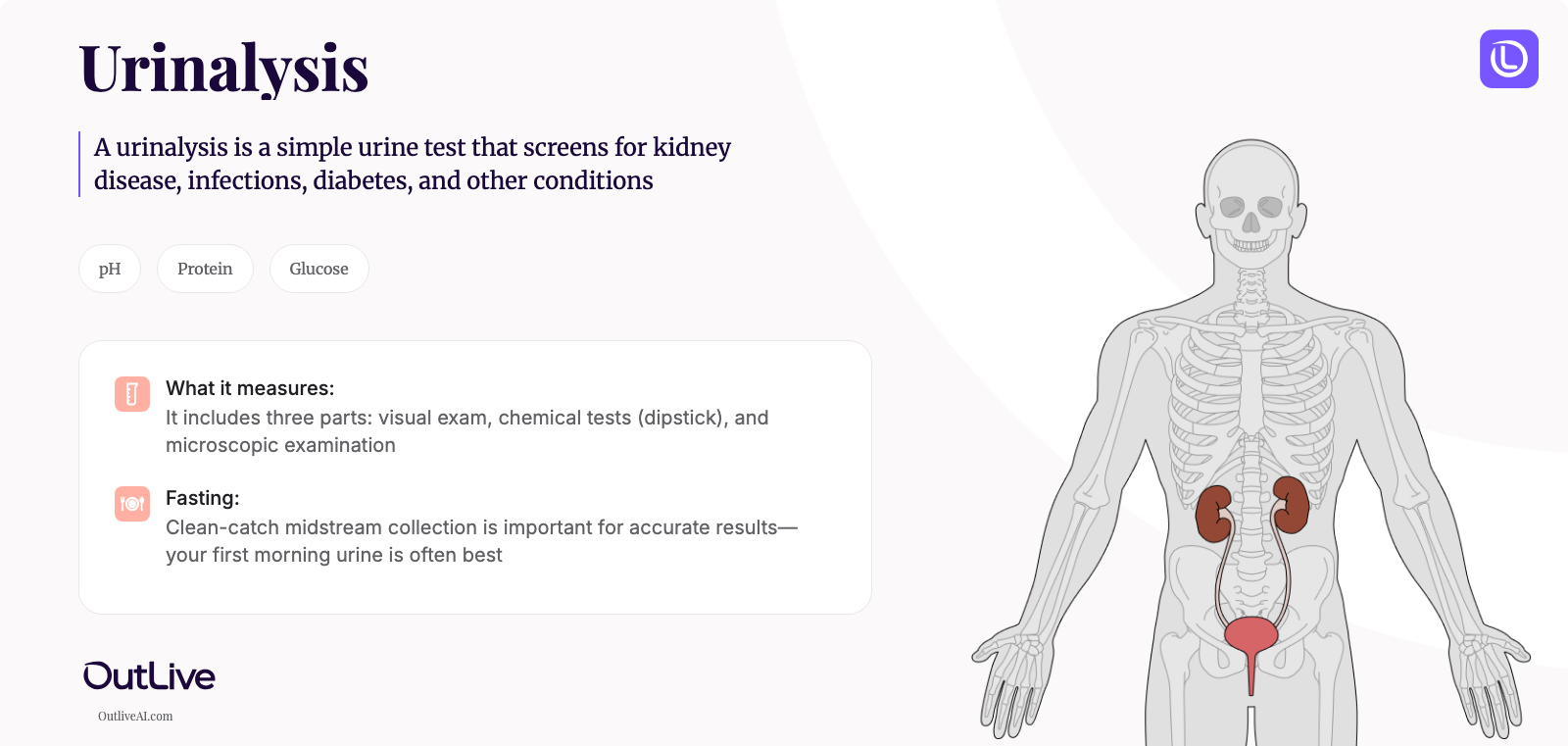
- A urinalysis is a simple urine test that screens for kidney disease, infections, diabetes, and other conditions
- It includes three parts: visual exam, chemical tests (dipstick), and microscopic examination
- Clean-catch midstream collection is important for accurate results—your first morning urine is often best
If you're reading this, you've likely just had a urinalysis and are looking at a report filled with terms like "specific gravity," "leukocyte esterase," or "epithelial cells" that might seem overwhelming. Take a breath. You're in the right place. This guide will walk you through what a urinalysis is, what each of those findings means, and most importantly, what you should do next. Think of us as your translator—we're here to help you understand your results so you can have a more informed conversation with your healthcare provider.
Why Is a Urinalysis Ordered?
Your doctor might order a urinalysis for several reasons. Think of it as a window into your body's internal health—your kidneys filter your blood 24/7, and what ends up in your urine tells a story about what's happening inside.
The most common reasons include:
Routine health screening: A urinalysis is often part of your annual physical exam, prenatal visits, or pre-surgery evaluation. It can detect problems before symptoms appear.
Investigating symptoms: If you're experiencing painful urination, frequent urination, back pain, abdominal pain, or blood in your urine, a urinalysis helps identify the cause.
Diagnosing urinary tract infections (UTIs): This is one of the most common reasons for urinalysis. It can quickly confirm if bacteria are causing your symptoms.
Monitoring chronic conditions: If you have diabetes, kidney disease, or high blood pressure, regular urinalysis tests help track how these conditions affect your kidneys.
Pregnancy monitoring: Pregnant women have regular urinalysis tests to check for gestational diabetes, preeclampsia (protein in urine), and infections.
Medication monitoring: Certain medications can affect your kidneys. Regular testing ensures they're not causing damage.
Remember, urinalysis is one of the oldest medical tests—doctors have been examining urine for thousands of years because it provides so much valuable information about your health.
How to Prepare for a Urinalysis Test
Proper collection is crucial for accurate results. Here's how to prepare:
Timing considerations: First morning urine is often best because it's most concentrated, making it easier to detect abnormalities. However, follow your doctor's specific instructions.
Hydration: Don't over-hydrate before the test. Drinking excessive water can dilute your urine and affect results. Maintain normal fluid intake.
Dietary considerations: Some foods can affect results:
- Beets can cause red-colored urine
- Vitamin C supplements can interfere with some test results
- Asparagus can affect urine odor but won't impact medical results
Medication notes: Tell your doctor about all medications and supplements. Some can affect results, but don't stop taking prescribed medications unless instructed.
For women: Try to avoid testing during your menstrual period, as blood can affect results. If testing is urgent, inform your healthcare provider about your period.
Clean-catch collection technique:
- Wash your hands thoroughly
- Clean the genital area with the provided wipe (women: front to back)
- Start urinating into the toilet
- Mid-stream, position the collection cup to catch urine
- Finish urinating into the toilet
- Secure the lid tightly
This "clean-catch midstream" method reduces contamination from skin bacteria, providing the most accurate results.
Understanding the Components of Your Urinalysis Report
A complete urinalysis examines your urine in three ways: how it looks, its chemical composition, and what's floating in it under a microscope. Each part tells us something different about your health.
What Do the Physical and Chemical Tests Mean?
The first parts of your urinalysis involve looking at your urine and testing it with special strips that change color when certain substances are present:
Physical Characteristics:
Color: Normal urine ranges from pale yellow to amber. Dark urine might indicate dehydration, while unusual colors could signal medications, foods, or health issues.
Clarity: Normal urine is clear to slightly cloudy. Very cloudy urine might indicate infection, crystals, or other substances.
Specific Gravity: This measures urine concentration. Think of it as how much "stuff" is dissolved in your urine. It shows if your kidneys can properly concentrate or dilute urine.
Chemical Tests (Dipstick):
pH: Measures acidity or alkalinity. Your body carefully controls urine pH, and changes might indicate infections, kidney stones, or metabolic issues.
Protein: Healthy kidneys keep protein in your blood. Protein in urine (proteinuria) might indicate kidney damage, though temporary increases can occur with exercise or fever.
Glucose: Normally, there's no glucose in urine. Its presence might indicate diabetes or other conditions affecting blood sugar.
Ketones: These appear when your body burns fat for energy instead of glucose. Common in uncontrolled diabetes, fasting, or very low-carb diets.
Blood: Can indicate infection, kidney stones, kidney disease, or other conditions. Not always visible to the naked eye.
Bilirubin and Urobilinogen: These are breakdown products of red blood cells. Abnormal levels might indicate liver problems or hemolytic anemia.
Nitrites: Certain bacteria convert nitrates to nitrites. Positive nitrites usually indicate a bacterial UTI.
Leukocyte Esterase: An enzyme from white blood cells. Its presence suggests inflammation or infection in the urinary tract.
Here are the typical normal ranges for chemical tests:
| Component | Normal Range | Abnormal Finding |
|---|---|---|
| Color | Pale yellow to amber | Red, brown, orange, green |
| Clarity | Clear to slightly cloudy | Very cloudy or turbid |
| Specific Gravity | 1.003-1.030 | \ <1.003or \ >1.030 |
| pH | 4.5-8.0 | \ <4.5or \ >8.0 |
| Protein | Negative to trace (\ <30mg/dL) | 1+ or greater |
| Glucose | Negative | Any positive result |
| Ketones | Negative | Any positive result |
| Blood | Negative | Any positive result |
| Bilirubin | Negative | Any positive result |
| Nitrites | Negative | Positive |
| Leukocyte Esterase | Negative | Positive |
What Does the Microscopic Examination Mean?
The microscopic exam looks at what's actually floating in your urine. A technician spins your urine in a centrifuge, then examines the sediment under a microscope:
Cells:
Red Blood Cells (RBCs): A few are normal, but increased numbers might indicate kidney disease, stones, infection, or trauma.
White Blood Cells (WBCs): A few are normal, but increased numbers usually indicate infection or inflammation.
Epithelial Cells: These are cells shed from your urinary tract. A few squamous cells are normal (especially in women), but many transitional or renal cells might indicate problems.
Casts: These are cylindrical structures formed in kidney tubules. Different types indicate different conditions:
- Hyaline casts: Can be normal or indicate dehydration
- RBC casts: Usually indicate kidney disease (glomerulonephritis)
- WBC casts: Suggest kidney infection or inflammation
- Granular casts: May indicate kidney disease
Crystals: Various crystals can form in urine. Some are normal, others might indicate kidney stones or metabolic disorders:
- Uric acid crystals: May indicate gout or kidney stones
- Calcium oxalate: Most common kidney stone type
- Struvite crystals: Often associated with UTIs
Microorganisms:
- Bacteria: Small amounts might be contamination, but significant bacteria with WBCs suggest UTI
- Yeast: May indicate vaginal yeast infection contamination or systemic infection in diabetics
- Parasites: Rare but may indicate specific infections
Here are typical microscopic findings:
| Component | Normal Range (per high-power field) | Concerning Level |
|---|---|---|
| RBCs | 0-2 | \ >3 |
| WBCs | 0-5 | \ >5 |
| Squamous Epithelial Cells | Few | Many (suggests contamination) |
| Bacteria | None to few | Moderate to many |
| Casts | 0-2 hyaline | Any pathologic casts |
| Crystals | None to few | Depends on type |
What Do Abnormal Results Mean? (A High-Level Guide)
Urinalysis results often need to be interpreted as patterns rather than individual findings. Here are common patterns your doctor might identify:
Urinary Tract Infection (UTI) Pattern:
- Positive nitrites and/or leukocyte esterase
- Increased WBCs
- Bacteria present
- Possibly cloudy appearance and blood
- Common causes: Bacterial infection, usually E. coli
- Next steps: Urine culture to identify bacteria and antibiotics
Kidney Disease Pattern:
- Persistent protein in urine
- RBC casts or abnormal casts
- Possible blood
- Abnormal specific gravity
- Common causes: Diabetes, high blood pressure, glomerulonephritis
- Next steps: Additional kidney function tests, possible kidney biopsy
Diabetes Pattern:
- Glucose in urine
- Possibly ketones (if uncontrolled)
- Higher specific gravity
- Increased risk of UTIs
- Next steps: Blood glucose testing, hemoglobin A1c
Kidney Stone Pattern:
- Blood in urine (often microscopic)
- Crystals present
- Possibly increased RBCs
- May have normal or abnormal pH depending on stone type
- Next steps: Imaging studies, stone analysis if passed
Liver Disease Pattern:
- Bilirubin positive
- Urobilinogen increased or decreased
- Urine may appear dark or tea-colored
- Next steps: Liver function blood tests, imaging
Dehydration Pattern:
- High specific gravity
- Dark yellow color
- Possibly small amounts of hyaline casts
- Next steps: Increase fluid intake, address underlying cause
Important disclaimer: Many factors can cause temporary abnormalities in urinalysis—exercise, dehydration, menstruation, medications, or improper collection. A single abnormal result often requires repeat testing. Only your healthcare provider can interpret results in context with your symptoms and medical history. Never self-diagnose based on urinalysis results alone.
Next Steps After Your Urinalysis Test
So you've read through your results—what now? Here's your action plan:
1. Schedule a follow-up with your doctor: Even seemingly minor abnormalities deserve discussion. Your doctor will interpret results in context with your symptoms and history.
2. Prepare your questions: Not sure what to ask? We've created a helpful checklist of questions to bring to your appointment. [Download our Urinalysis Doctor Questions Checklist](# to make sure you cover everything important.
3. Understand if repeat testing is needed: Many abnormalities require confirmation with a second test, especially if you had no symptoms or improper collection might have occurred.
4. Follow up on abnormal findings: If infection is suspected, you may need a urine culture. If kidney disease is possible, you may need blood tests or imaging.
5. Know your risk factors: If you have diabetes, high blood pressure, or a family history of kidney disease, regular urinalysis screening is important for early detection of complications.
6. Practice prevention: For UTI prevention, stay hydrated, practice good hygiene, and urinate after intercourse. For kidney health, manage blood pressure and blood sugar, stay hydrated, and limit sodium.
🔬 Ready to Translate Your Full Report?
Understanding your urinalysis is just the beginning. Our free Lab Analyzer tool helps you:
- Track all your lab results in one place
- Spot important trends over time
- Generate personalized questions for your doctor
- Get plain-English explanations of every test
[Upload Your Lab Report for Free Analysis →]
Join 50,000+ people taking control of their health journey
Remember, knowledge is power when it comes to your health. Understanding your urinalysis results helps you be an active participant in your healthcare. While seeing abnormal results can be concerning, remember that many urinary issues are easily treatable when caught early. You've already taken the first step by educating yourself—now use that knowledge to work with your healthcare provider toward better health.