
📋 At a Glance
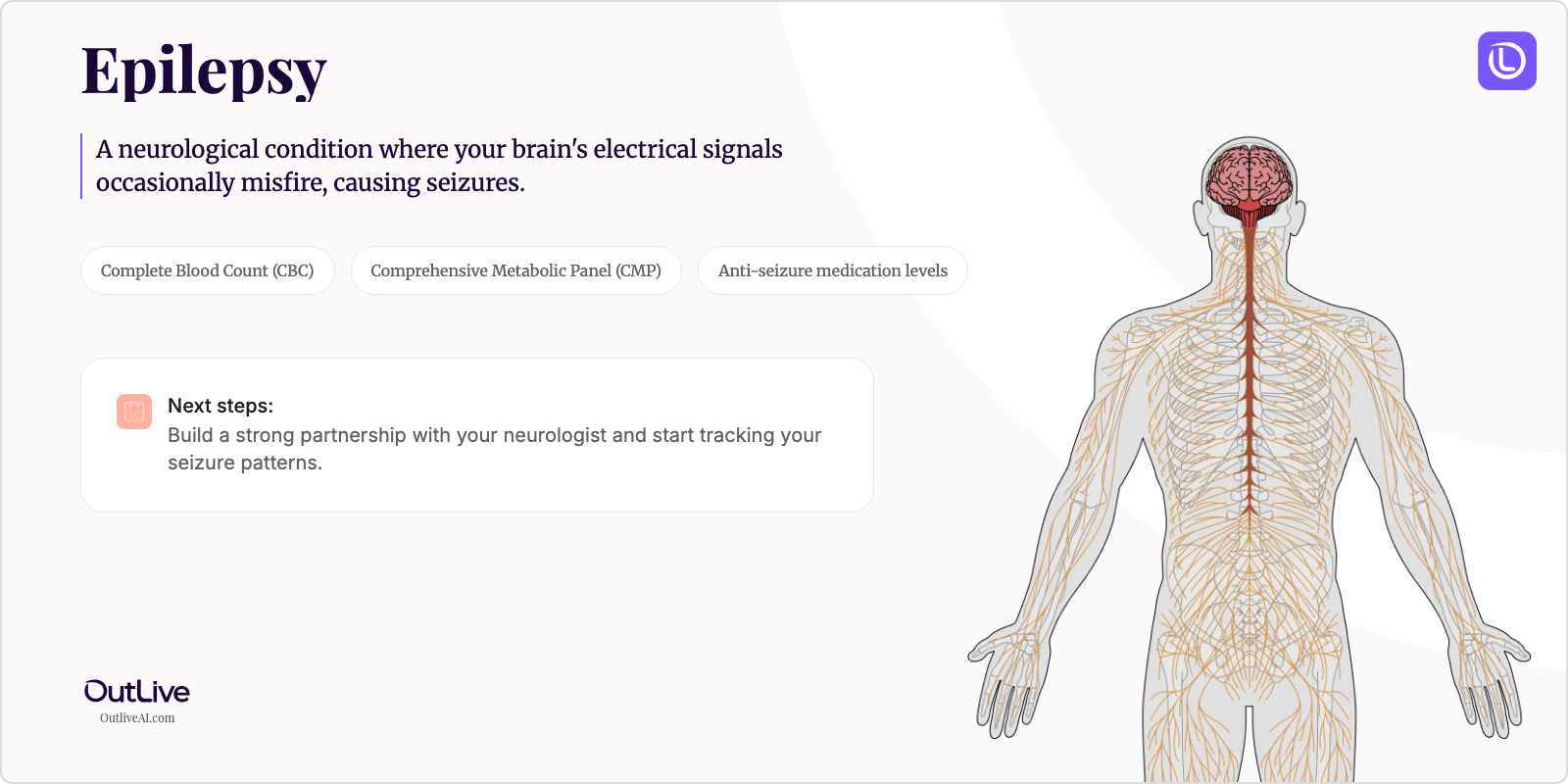
- What it is: A neurological condition where your brain's electrical signals occasionally misfire, causing seizures.
- Key lab tests: Complete Blood Count (CBC), Comprehensive Metabolic Panel (CMP), Anti-seizure medication levels
- Your first goal: Build a strong partnership with your neurologist and start tracking your seizure patterns.
Receiving a new diagnosis for Epilepsy can be overwhelming. You might be feeling anxious, confused, and unsure of what comes next. That's completely normal. This guide is here to help you understand your condition in simple terms, know which lab tests matter most, and feel prepared for your next steps.
First, Take a Breath: What is Epilepsy in Simple Terms?
Think of your brain as a sophisticated electrical system, like the wiring in your home. In epilepsy, occasionally there's a "power surge" where too many electrical signals fire at once. This surge is what we call a seizure. Just like a circuit breaker protects your home's electrical system, medication and lifestyle changes can help prevent these surges from happening. Having epilepsy doesn't mean your brain is damaged or broken – it simply means your electrical system is more sensitive and needs some extra management. With the right treatment plan, most people with epilepsy live full, active lives.
Understanding Your Diagnosis: The Key Lab Tests
This is the most important section. While epilepsy is primarily diagnosed through brain tests like EEGs, blood work plays a crucial role in managing your condition safely and effectively.
Key Tests for Epilepsy:
- Complete Blood Count (CBC): This test checks your overall blood health and is essential before starting anti-seizure medications, as some can affect your blood cell production.
- Comprehensive Metabolic Panel (CMP): This measures your kidney and liver function, electrolyte balance, and blood sugar – all critical for safe medication management and identifying seizure triggers.
- Anti-Seizure Medication Levels: Once you start medication, these tests ensure your drug levels stay in the therapeutic range – not too low to be ineffective, not too high to cause side effects.
- Vitamin D: Many anti-seizure medications can lower vitamin D levels, which is important for bone health, so this needs regular monitoring.
Your First Specialist Appointment: What to Ask
What to Expect: You'll be seeing a neurologist – a doctor who specializes in the brain and nervous system. Think of them as your brain's personal electrician. They'll review your seizure history, perform a neurological exam (testing reflexes, coordination, and mental function), and likely order an EEG to map your brain's electrical activity. The appointment typically lasts 45-60 minutes, and it's perfectly okay to bring a trusted person with you for support and to help remember information.
Questions to Ask Your Doctor:
- "What type of epilepsy do I have, and what does that mean for my daily life?"
- "How will we know if my medication is working, and what side effects should I watch for?"
- "Are there specific triggers I should avoid, and how can I identify my personal triggers?"
- "What should my family or friends do if I have a seizure?"
- "How often will I need blood work, and what are we monitoring for?"
Download our [Checklist of Questions to Ask Your Epilepsy Specialist](# to feel prepared.
How to Track Your Journey
Tracking your Epilepsy journey is crucial for understanding how your treatment is working and spotting important trends. Here's what you should monitor:
Symptoms to Track:
- Seizure dates, times, and duration (even brief "auras" or warning feelings)
- Potential triggers (stress, lack of sleep, missed meals, flashing lights)
- Medication side effects (drowsiness, dizziness, mood changes)
- Energy levels and overall well-being
Lab Results to Monitor:
- Anti-seizure medication levels - Every 3-6 months initially, then annually once stable
- Liver function tests - Every 3-6 months if on certain medications
- Complete blood count - Every 6-12 months or as directed
- Vitamin D levels - Annually or if experiencing bone pain or fatigue
Why Tracking Matters: Your seizure diary becomes your most powerful tool in managing epilepsy. It helps your doctor fine-tune your medication, identify patterns you might not notice otherwise, and gives you a sense of control over your condition. Many patients find that tracking actually reduces their anxiety because they can see their progress and understand their triggers better.
Next Steps After Your Diagnosis
Immediate Actions (This Week):
- Fill your prescription and set up a medication reminder system (phone alarms work great)
- Create a seizure action plan with your family or roommates
- Start a seizure diary (even a simple notebook or phone app works)
Short-term Goals (Next Month):
- Establish a regular sleep schedule (irregular sleep is a common seizure trigger)
- Learn about your state's driving regulations for people with epilepsy
- Connect with an epilepsy support group, either locally or online
Long-term Management:
- Build a consistent relationship with your neurologist through regular check-ups
- Develop strategies for managing stress and maintaining overall wellness
- Stay informed about new treatments and management techniques
Frequently Asked Questions
How quickly can I expect to feel better? Finding the right medication and dose can take 2-3 months. About 70% of people with epilepsy become seizure-free with their first or second medication. Be patient with the process – your brain needs time to adjust to the new medication.
Will I need to change my diet? Most people with epilepsy don't need special diets, though eating regular meals helps maintain stable blood sugar. Some children with specific types of epilepsy benefit from a ketogenic diet, but this requires medical supervision. Avoid excessive alcohol and maintain good hydration.
How often will I need to see my doctor? Initially, expect appointments every 1-3 months as you adjust to medication. Once stable, most people see their neurologist every 6-12 months. You'll need blood work periodically to monitor medication levels and organ function.
Can I still exercise/work/travel? Absolutely! Most people with well-controlled epilepsy can do everything they did before. You may need to take extra precautions with certain activities (swimming with a buddy, avoiding heights), but staying active actually helps reduce seizure frequency for many people.
When to Seek Immediate Medical Attention
Contact your doctor immediately if you experience:
- A seizure lasting more than 5 minutes (status epilepticus)
- Multiple seizures without regaining consciousness between them
- Significant injury during a seizure
- Sudden increase in seizure frequency or new seizure types
- Severe medication side effects (extreme drowsiness, rash, vision changes)
🔬 Ready to Organize Your Health Journey?
Understanding your condition is the first step. Our free Lab Analyzer tool helps you:
- Track all your lab results for Epilepsy in one place
- Spot important trends over time
- Generate personalized questions for your doctor
[Upload Your Lab Report for Free Analysis →]