
📋 At a Glance
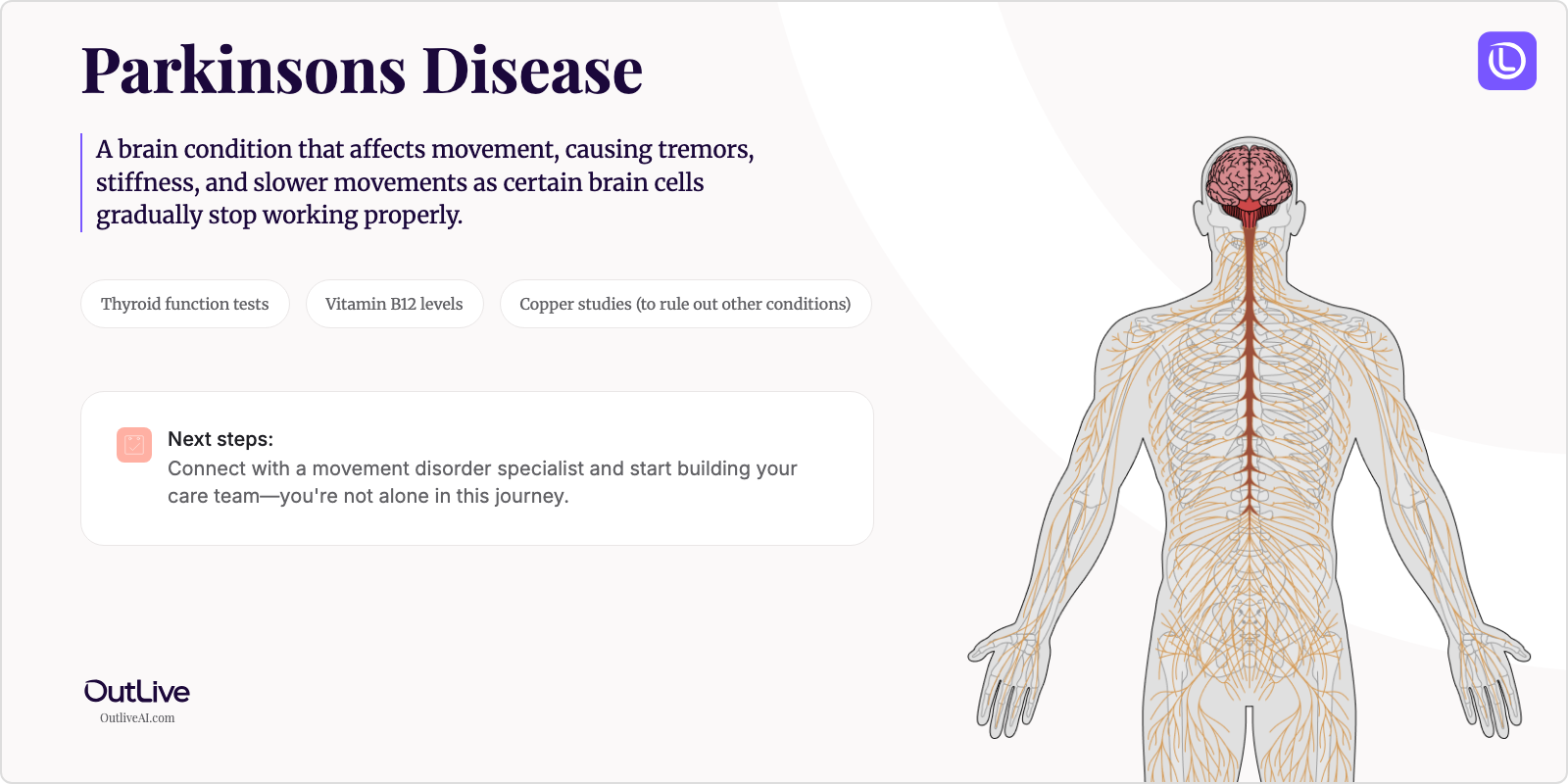
- What it is: A brain condition that affects movement, causing tremors, stiffness, and slower movements as certain brain cells gradually stop working properly.
- Key lab tests: Thyroid function tests, vitamin B12 levels, and copper studies to rule out other conditions
- Your first goal: Connect with a movement disorder specialist and start building your care team—you're not alone in this journey.
Receiving a new diagnosis for Parkinson's Disease can be overwhelming. You might be feeling anxious, confused, and unsure of what comes next. That's completely normal. This guide is here to help you understand your condition in simple terms, know which lab tests matter most, and feel prepared for your next steps.
First, Take a Breath: What is Parkinson's Disease in Simple Terms?
Think of your brain as a sophisticated control center with millions of workers (brain cells) sending messages throughout your body. In Parkinson's, some of these workers in a specific area called the substantia nigra gradually retire early, producing less of an important chemical messenger called dopamine. Dopamine is like the oil in your body's engine—without enough of it, movements that were once smooth and automatic become stiff, slow, or shaky. The good news? While we can't bring those workers back yet, we have effective ways to supplement the dopamine they would have made, helping you maintain your quality of life for many years to come.
Understanding Your Diagnosis: The Key Lab Tests
This is the most important section. While Parkinson's is primarily diagnosed through clinical examination, these lab tests help rule out other conditions and monitor your overall health:
Key Tests for Parkinson's Disease:
- Thyroid Function Tests (TSH, T3, T4): These tests check if your thyroid is working properly, as an underactive thyroid can mimic some Parkinson's symptoms like slowness and fatigue.
- Vitamin B12: Low B12 levels can cause tremors, balance problems, and cognitive changes that might be confused with Parkinson's symptoms.
- Copper and Ceruloplasmin: These tests help rule out Wilson's disease, a rare condition that can cause Parkinson's-like symptoms in younger patients.
- Complete Blood Count (CBC): This basic test checks your overall health and can identify anemia or other issues that might worsen fatigue and weakness.
Your First Specialist Appointment: What to Ask
What to Expect: You'll likely see a neurologist, ideally one who specializes in movement disorders. They'll watch how you walk, test your reflexes, check your muscle tone, and ask detailed questions about your symptoms. This appointment typically lasts 45-60 minutes, and it's perfectly fine to bring a family member or friend for support and to help remember information.
Questions to Ask Your Doctor:
- "What stage is my Parkinson's, and what does that mean for my daily life right now?"
- "Should I start medication immediately, or is it okay to wait? What are the pros and cons?"
- "How often will I need follow-up appointments, and what should I watch for between visits?"
- "Are there any clinical trials or new treatments I might be eligible for?"
- "What lifestyle changes—like exercise or diet—have the strongest evidence for helping my symptoms?"
Download our [Checklist of Questions to Ask Your Parkinson's Disease Specialist](# to feel prepared.
How to Track Your Journey
Tracking your Parkinson's Disease journey is crucial for understanding how your treatment is working and spotting important trends. Here's what you should monitor:
Symptoms to Track:
- Motor symptoms: tremor intensity, stiffness levels, walking speed
- Non-motor symptoms: sleep quality, mood changes, constipation
- Medication timing: when you take doses and when symptoms are best/worst
Lab Results to Monitor:
- Vitamin D levels - Every 6-12 months (many Parkinson's patients have low levels)
- Vitamin B12 - Annually or if symptoms worsen
- Thyroid function - Annually or if fatigue increases
Why Tracking Matters: Your neurologist can only see a snapshot during appointments. Your daily tracking reveals patterns—like whether symptoms worsen at certain times or if medications are wearing off too quickly. This information helps fine-tune your treatment plan for better symptom control.
Next Steps After Your Diagnosis
Immediate Actions (This Week):
- Schedule an appointment with a movement disorder specialist if you haven't already
- Start a simple symptom diary—even just rating your day 1-10 helps
- Research local Parkinson's support groups or online communities for connection
Short-term Goals (Next Month):
- Begin a regular exercise routine—studies show exercise is as important as medication
- Meet with a physical therapist who specializes in Parkinson's for baseline assessment
- Organize your medical records and create a health binder for easy reference
Long-term Management:
- Build your care team: neurologist, physical therapist, and potentially speech therapist
- Consider joining a Parkinson's-specific exercise program like Rock Steady Boxing or dance therapy
Frequently Asked Questions
How quickly can I expect to feel better? If you start medication, many people notice improvement in tremor and stiffness within 2-4 weeks. However, finding the right medication and dose is often a process that takes a few months. Exercise benefits can be felt even sooner—often within days to weeks.
Will I need to change my diet? While there's no specific "Parkinson's diet," eating plenty of fiber helps with constipation (a common issue), and taking carbidopa-levodopa on an empty stomach improves absorption. A Mediterranean-style diet may support brain health.
How often will I need to see my doctor? Initially, expect visits every 3-4 months as you establish treatment. Once stable, many patients see their neurologist every 6 months, with annual comprehensive evaluations.
Can I still exercise/work/travel? Absolutely! In fact, regular exercise is one of the best things you can do. Most people continue working for years after diagnosis, and travel is certainly possible with some planning around medication schedules.
When to Seek Immediate Medical Attention
Contact your doctor immediately if you experience:
- Sudden worsening of symptoms or complete inability to move (could indicate medication issues)
- Hallucinations or significant confusion (may be medication side effects)
- Severe depression or thoughts of self-harm (treatable but needs immediate attention)
- High fever with muscle rigidity (rare but serious reaction to certain medications)
🔬 Ready to Organize Your Health Journey?
Understanding your condition is the first step. Our free Lab Analyzer tool helps you:
- Track all your lab results for Parkinson's Disease in one place
- Spot important trends over time
- Generate personalized questions for your doctor
[Upload Your Lab Report for Free Analysis →]