
📋 At a Glance
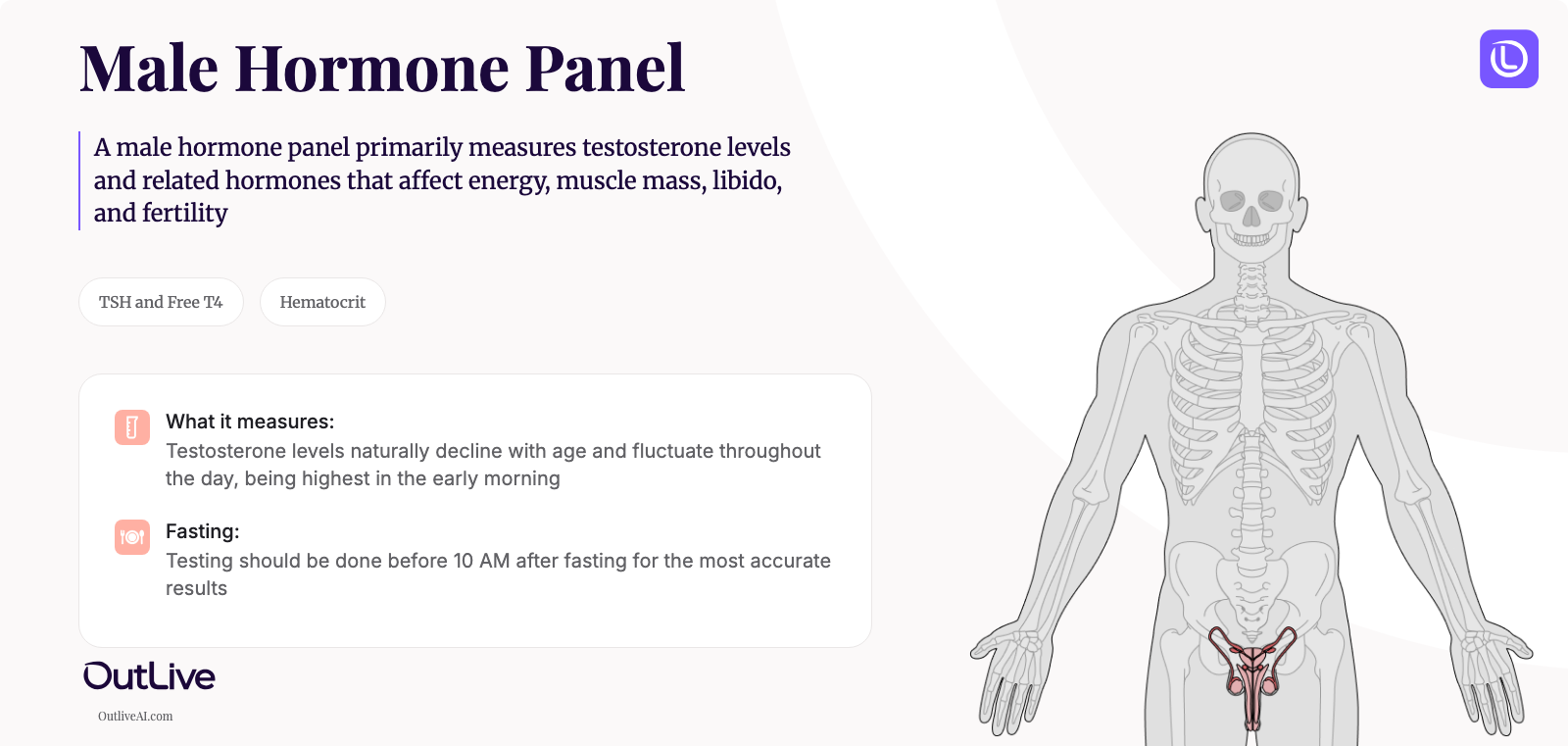
- A male hormone panel primarily measures testosterone levels and related hormones that affect energy, muscle mass, libido, and fertility
- Testosterone levels naturally decline with age and fluctuate throughout the day, being highest in the early morning
- Testing should be done before 10 AM after fasting for the most accurate results
If you're reading this, you've likely just had a Male Hormone Panel and are looking at results showing your testosterone levels along with other hormones that might seem confusing or concerning. Take a breath. You're in the right place. This guide will walk you through what a male hormone panel is, what each hormone means for your health, and most importantly, what you should do next. Think of us as your translator—we're here to help you understand your results so you can have a more informed conversation with your healthcare provider.
Why Is a Male Hormone Panel Ordered?
Your doctor might order a male hormone panel for several reasons. Think of testosterone as your body's foreman—it oversees muscle building, energy production, sexual function, and even mood. When testosterone or related hormones are out of balance, it affects your entire well-being.
The most common reasons include:
Low testosterone symptoms: Fatigue, decreased libido, erectile dysfunction, depression, irritability, or difficulty concentrating often prompt testing. These symptoms become more common after age 40 but can occur at any age.
Fertility evaluation: For couples trying to conceive, hormone panels assess sperm production capability and identify hormonal causes of male infertility, which accounts for 40% of infertility cases.
Muscle and body composition changes: Unexplained muscle loss, increased body fat (especially belly fat), or decreased strength despite exercise might indicate hormone imbalances.
Sexual health concerns: Erectile dysfunction, decreased morning erections, or reduced sexual desire often have hormonal components that testing can identify.
Bone health issues: Low testosterone causes osteoporosis in men. Testing is important if you have low bone density or unexplained fractures.
Metabolic concerns: Low testosterone is linked to diabetes, metabolic syndrome, and cardiovascular disease. Testing helps assess overall health risk.
Monitoring testosterone therapy: If you're on testosterone replacement therapy (TRT), regular panels ensure levels are optimal and monitor for side effects.
Investigating gynecomastia: Breast tissue development in men requires hormone evaluation to identify causes like high estrogen or low testosterone.
Evaluating delayed or early puberty: In younger males, hormone testing determines if development is progressing normally.
Remember, testosterone naturally declines about 1% per year after age 30—but symptomatic low testosterone isn't inevitable and is treatable.
How to Prepare for a Male Hormone Panel Test
Proper preparation and timing are crucial for accurate results:
Critical timing - Morning testing:
- Test between 7-10 AM (testosterone peaks in early morning)
- Levels can be 20-30% lower in afternoon
- Two low morning levels needed for diagnosis
- If you work nights, test after waking
Fasting requirements:
- Fast for 12 hours before testing
- Water is allowed
- Fasting provides most accurate results
- Some labs don't require fasting—follow instructions
Important factors to mention:
- Current medications (especially steroids, opioids)
- Supplements (testosterone boosters, DHEA)
- Recent illness or surgery
- Sleep quality (poor sleep lowers testosterone)
- Alcohol or marijuana use
- Previous testosterone therapy
Medication considerations:
- Continue prescribed medications unless told otherwise
- Opioid pain medications significantly lower testosterone
- Statins may affect levels
- Steroids (prednisone) suppress natural production
Lifestyle factors before testing:
- Get adequate sleep the night before
- Avoid intense exercise 24 hours prior
- Don't drink alcohol 24-48 hours before
- Maintain normal diet pattern
If on testosterone therapy:
- Test midway between injections
- For gels/patches, test before application
- Your doctor needs to know your treatment schedule
The blood draw typically requires 2-3 tubes. Results usually return within 2-5 days.
Understanding the Components of Your Male Hormone Panel Report
Your hormone panel tells the story of your endocrine system's health. Each hormone provides different information about what's happening in your body.
What Do the Main Male Hormones Mean?
These are the primary hormones affecting male health:
Total Testosterone: The main male sex hormone, measuring all testosterone in your blood (both bound and free). Think of it as your overall hormone fuel tank. It's responsible for muscle mass, bone density, fat distribution, red blood cell production, and sex drive. Normal ranges vary by age but generally 300-1000 ng/dL for adult men.
Free Testosterone: The active form not bound to proteins—only 2-3% of total testosterone. This is the testosterone actually available for your body to use. Think of it as the usable fuel versus what's in storage. Often more important than total testosterone for symptoms.
Bioavailable Testosterone: Free testosterone plus loosely bound testosterone. Represents all testosterone readily available to tissues. Some consider this the best measure of active testosterone.
SHBG (Sex Hormone Binding Globulin): The protein that binds and carries sex hormones. High SHBG means less free testosterone available. Think of SHBG as a sponge soaking up testosterone. Increases with age, hyperthyroidism, and liver disease.
LH (Luteinizing Hormone): Made by your pituitary gland to signal testicles to produce testosterone. High LH with low testosterone indicates testicular failure (primary hypogonadism). Low LH with low testosterone indicates pituitary/brain issues (secondary hypogonadism).
FSH (Follicle Stimulating Hormone): Stimulates sperm production in the testicles. Elevated FSH suggests testicular dysfunction. Important for fertility evaluation.
Estradiol: Yes, men need some estrogen! Made from testosterone conversion. Too high causes gynecomastia and sexual problems. Too low affects bone health and libido. Balance is key.
Here are typical ranges for main male hormones:
| Hormone | Age 20-30 | Age 30-40 | Age 40-50 | Age 50+ |
|---|---|---|---|---|
| Total Testosterone | 400-1000 ng/dL | 350-900 ng/dL | 300-850 ng/dL | 250-800 ng/dL |
| Free Testosterone | 10-30 ng/dL | 9-25 ng/dL | 7-23 ng/dL | 5-20 ng/dL |
| Bioavailable Testosterone | 130-680 ng/dL | 100-500 ng/dL | 80-420 ng/dL | 60-350 ng/dL |
| SHBG | 10-50 nmol/L | 15-55 nmol/L | 20-60 nmol/L | 25-75 nmol/L |
| LH | 1.5-9.0 mIU/mL | Same | Same | Same |
| FSH | 1.5-12.0 mIU/mL | Same | Same | Same |
| Estradiol | 10-40 pg/mL | Same | Same | Same |
What Do Additional Hormone Tests Mean?
Other hormones affecting male health:
Prolactin: Elevated prolactin suppresses testosterone and causes erectile dysfunction. Can indicate pituitary tumor (prolactinoma). Should be <20 ng/mL in men.
DHEA-S: An adrenal androgen that converts to testosterone. Declines with age. Low levels associated with fatigue and decreased well-being. Supplementation controversial.
Cortisol: The stress hormone. Chronic elevation suppresses testosterone. Morning cortisol helps evaluate adrenal function. Important if fatigue is primary symptom.
TSH and Free T4: Thyroid hormones affect testosterone production and SHBG. Both hyperthyroidism and hypothyroidism can cause sexual dysfunction.
IGF-1: Marker of growth hormone. Low levels with low testosterone suggest pituitary dysfunction. Important for comprehensive hormone evaluation.
PSA: Prostate-specific antigen. Checked before starting testosterone therapy and monitored during treatment. Testosterone can increase PSA.
Hematocrit: Testosterone stimulates red blood cell production. Monitored during therapy to prevent blood thickening (polycythemia).
What Do Abnormal Results Mean? (A High-Level Guide)
Male hormone interpretation requires understanding patterns and relationships between hormones:
Classic Low Testosterone (Hypogonadism) Pattern:
- Total testosterone <300 ng/dL
- Free testosterone below range
- Symptoms: Low libido, ED, fatigue, depression
- Need two low morning tests for diagnosis
- Affects 40% of men over 45
Primary Hypogonadism (Testicular Failure):
- Low testosterone
- High LH and FSH (brain trying to stimulate testicles)
- Causes: Aging, injury, infection, chemotherapy, Klinefelter syndrome
- Testicles can't respond to signals
- Usually permanent, requires TRT
Secondary Hypogonadism (Pituitary/Hypothalamic):
- Low testosterone
- Low or normal LH and FSH
- Brain not sending proper signals
- Causes: Pituitary tumors, medications (opioids), obesity, chronic illness
- Sometimes reversible by treating underlying cause
Subclinical/Borderline Low T:
- Total testosterone 300-400 ng/dL
- Symptoms present
- Free testosterone often low
- Treatment controversial but often beneficial
- Lifestyle changes may help
High SHBG Pattern:
- Normal total testosterone
- Low free testosterone
- Common in aging, liver disease, hyperthyroidism
- Symptoms despite "normal" total testosterone
- Need to calculate or measure free testosterone
Metabolic Syndrome Pattern:
- Low-normal testosterone
- High estradiol (from fat tissue conversion)
- Insulin resistance
- Central obesity
- Increases cardiovascular risk
Anabolic Steroid Use/Abuse:
- Very low LH and FSH
- Variable testosterone (depending on timing)
- Testicular atrophy
- May take months to recover after stopping
Hyperprolactinemia Pattern:
- Elevated prolactin
- Low testosterone
- Low LH and FSH
- Causes: Medications, pituitary tumor, kidney disease
- Often reversible with treatment
Age-Related Decline:
- Gradual testosterone decrease
- Increased SHBG
- Lower free testosterone
- Variable symptoms
- "Andropause" or "male menopause"
Fertility Issues Pattern:
- Low FSH and LH with low testosterone
- Or high FSH with low sperm count
- May need specialized fertility evaluation
- Testosterone therapy actually decreases fertility
Important Special Considerations:
Factors that lower testosterone:
- Obesity (especially belly fat)
- Diabetes
- Chronic opioid use
- Sleep apnea
- Chronic stress
- Excessive alcohol
- Certain medications
Factors that may raise testosterone:
- Weight loss
- Resistance training
- Adequate sleep (7-9 hours)
- Vitamin D optimization
- Stress reduction
- Limiting alcohol
Important disclaimer: Hormone interpretation is complex and requires clinical correlation. Low testosterone has many causes, some reversible. Testosterone therapy has benefits and risks that must be carefully considered. Only your healthcare provider can diagnose and treat hormone disorders. Never start testosterone or other hormones without medical supervision.
Next Steps After Your Male Hormone Panel Test
So you've read through your results—what now? Here's your action plan:
1. Schedule a follow-up with your doctor: Hormone results always need interpretation with symptoms and health history.
2. Prepare your questions: Not sure what to ask? We've created a helpful checklist of questions to bring to your appointment. [Download our Male Hormone Panel Doctor Questions Checklist](# to make sure you cover everything important.
3. If testosterone is low:
Get confirmatory testing:
- Repeat morning testosterone
- Additional tests: Prolactin, comprehensive metabolic panel
- Consider MRI if pituitary cause suspected
- Sleep study if sleep apnea suspected
Treatment options:
- Testosterone replacement: Injections, gels, patches, pellets
- Alternative medications: Clomid, HCG (preserve fertility)
- Address underlying causes: Weight loss, treat sleep apnea
- Lifestyle optimization first if borderline
4. Understand TRT considerations:
- Benefits: Improved energy, libido, mood, muscle mass
- Risks: Decreased fertility, prostate issues, blood thickening
- Requires lifelong treatment in most cases
- Regular monitoring needed
5. Optimize naturally:
- Weight loss: Even 10% improves testosterone
- Resistance training: Heavy weights boost testosterone
- Sleep: Prioritize 7-9 hours nightly
- Nutrition: Adequate calories, healthy fats, vitamin D
- Stress management: Chronic stress kills testosterone
- Limit alcohol: Maximum 2 drinks daily
6. Monitoring on treatment:
- Testosterone levels at 3-6 months
- PSA and hematocrit regularly
- Symptom improvement tracking
- Annual comprehensive evaluation
7. Know when to see a specialist:
- Fertility concerns (see urologist)
- Pituitary abnormalities (endocrinologist)
- Failed treatment response
- Complex cases
🔬 Ready to Translate Your Full Report?
Understanding your male hormone panel is just the beginning. Our free Lab Analyzer tool helps you:
- Track all your lab results in one place
- Spot important trends over time
- Generate personalized questions for your doctor
- Get plain-English explanations of every test
[Upload Your Lab Report for Free Analysis →]
Join 50,000+ people taking control of their health journey
Remember, knowledge is power when it comes to your health. Understanding your hormone levels helps you work with your healthcare provider to address imbalances that may be affecting your quality of life. Low testosterone is common but not inevitable, and treatment can significantly improve how you feel and function. You've already taken the first step by educating yourself—now use that knowledge to optimize your hormonal health and overall well-being.