
📋 At a Glance
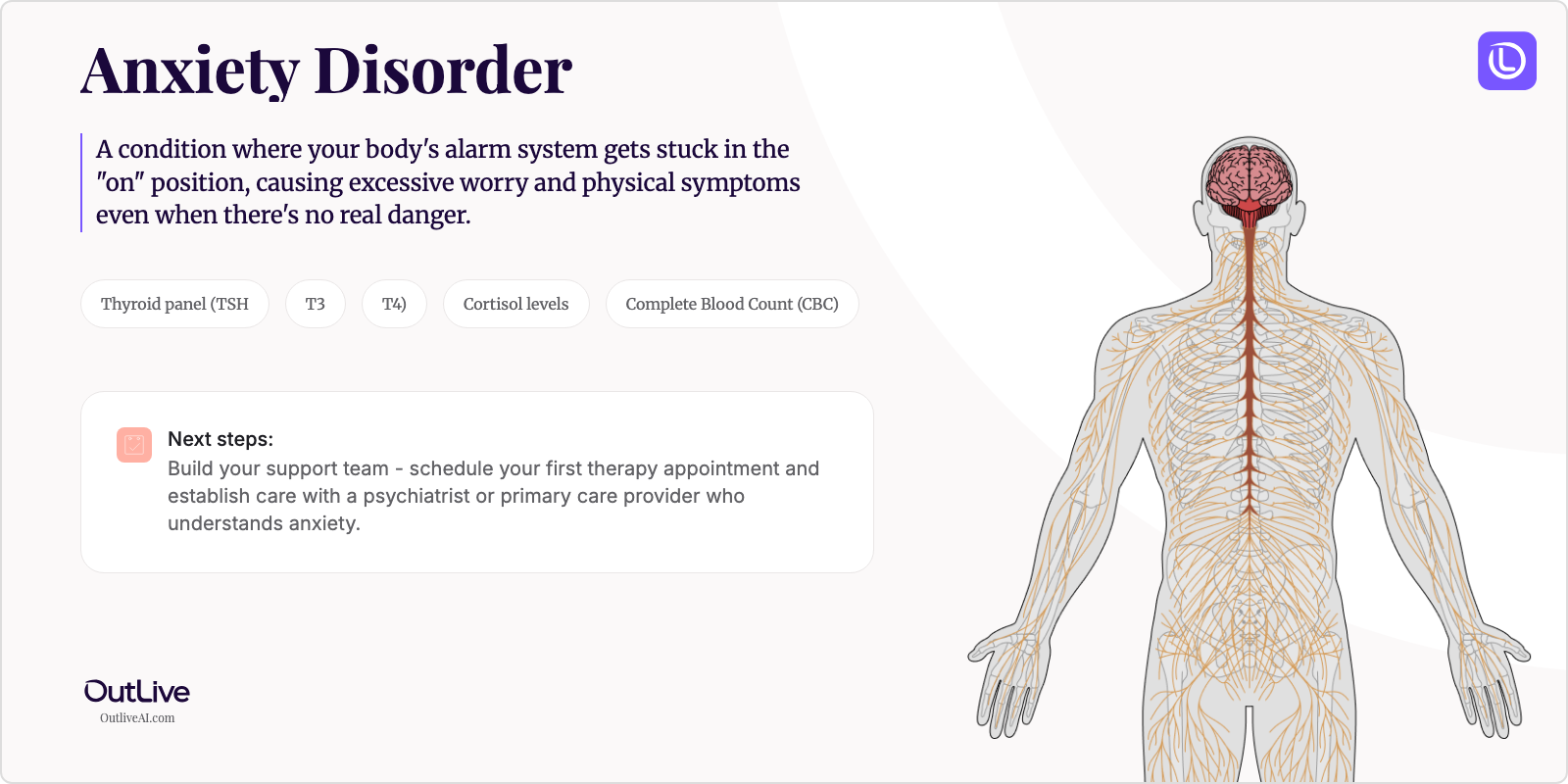
- What it is: A condition where your body's alarm system gets stuck in the "on" position, causing excessive worry and physical symptoms even when there's no real danger.
- Key lab tests: Thyroid panel (TSH, T3, T4), Cortisol levels, Complete Blood Count (CBC)
- Your first goal: Build your support team - schedule your first therapy appointment and establish care with a psychiatrist or primary care provider who understands anxiety.
Receiving a new diagnosis for Anxiety Disorder can be overwhelming. You might be feeling anxious, confused, and unsure of what comes next. That's completely normal. This guide is here to help you understand your condition in simple terms, know which lab tests matter most, and feel prepared for your next steps.
First, Take a Breath: What is Anxiety Disorder in Simple Terms?
Think of your body's anxiety response like a smoke detector in your home. A smoke detector is supposed to alert you when there's real danger - like an actual fire. But imagine if your smoke detector started going off every time you made toast, opened the oven, or even just walked by. That's essentially what happens with anxiety disorder - your body's natural alarm system becomes overly sensitive and triggers the "danger" response even when you're perfectly safe.
This isn't your fault, and it's not a character flaw. Your brain is simply misinterpreting normal situations as threats, flooding your body with stress hormones that cause those uncomfortable physical symptoms like racing heart, sweating, and that feeling of impending doom. The good news? Just like you can adjust a sensitive smoke detector, there are effective treatments to help recalibrate your anxiety response.
Understanding Your Diagnosis: The Key Lab Tests
While anxiety disorder is primarily diagnosed through clinical evaluation and symptom assessment, certain lab tests help rule out medical conditions that can mimic or worsen anxiety. Understanding these tests empowers you to have informed conversations with your healthcare team.
Key Tests for Anxiety Disorder:
- Thyroid Panel (TSH, T3, T4): Your thyroid is like your body's thermostat - when it's overactive, it can cause symptoms identical to anxiety including rapid heartbeat, trembling, and nervousness.
- Cortisol Levels: Known as the "stress hormone," cortisol levels help determine if your body is stuck in a chronic stress response, which often happens with anxiety disorders.
- Complete Blood Count (CBC): This test checks for anemia and other blood conditions that can cause fatigue, dizziness, and heart palpitations - symptoms often confused with anxiety.
- Vitamin D: Low vitamin D levels have been linked to increased anxiety and depression, making this an important marker to check and optimize.
Your First Specialist Appointment: What to Ask
What to Expect: You'll likely see either a psychiatrist (a medical doctor specializing in mental health) or continue working with your primary care provider who has experience treating anxiety. Your first appointment will typically last 45-60 minutes and involve discussing your symptoms, medical history, and treatment options. Remember, this is a conversation, not a test - there are no wrong answers.
Questions to Ask Your Doctor:
- "What specific type of anxiety disorder do I have, and how does this affect my treatment options?"
- "Should we do any additional lab work to rule out medical causes of my symptoms?"
- "What are the pros and cons of medication versus therapy, or using both together?"
- "How long does it typically take to see improvement with the treatment plan you're recommending?"
- "What lifestyle changes can I make right now to help manage my symptoms?"
Download our [Checklist of Questions to Ask Your Anxiety Disorder Specialist](# to feel prepared.
How to Track Your Journey
Think of tracking your anxiety like keeping a weather log - it helps you spot patterns, identify triggers, and see how treatments are working over time. This information becomes incredibly valuable for fine-tuning your treatment plan.
Symptoms to Track:
- Anxiety level on a scale of 1-10 each day
- Physical symptoms (racing heart, sweating, trembling, stomach issues)
- Sleep quality and hours slept
- Panic attacks (frequency, duration, and triggers)
- Avoidance behaviors (situations or places you're avoiding due to anxiety)
Lab Results to Monitor:
- Thyroid panel - Check every 6-12 months or as recommended
- Cortisol levels - Baseline and then as needed based on symptoms
- Vitamin D - Check annually or more frequently if supplementing
- CBC - Annually or if experiencing new physical symptoms
Why Tracking Matters: Tracking transforms vague feelings into concrete data. You might discover that your anxiety spikes after poor sleep, improves with exercise, or worsens during certain times of the month. These patterns help your healthcare team personalize your treatment and help you feel more in control of your condition.
Next Steps After Your Diagnosis
Immediate Actions (This Week):
- Schedule your first therapy appointment (cognitive-behavioral therapy is particularly effective for anxiety)
- Start a simple anxiety journal - even just rating your anxiety 1-10 each day
- Download a meditation or breathing app like Calm or Headspace for immediate relief tools
- Tell one trusted person about your diagnosis to begin building your support network
Short-term Goals (Next Month):
- Establish a consistent sleep schedule (anxiety and poor sleep create a vicious cycle)
- Begin regular exercise - even 15 minutes of walking can reduce anxiety
- Learn and practice one relaxation technique until it becomes second nature
- Complete any recommended lab work to rule out medical causes
Long-term Management:
- Develop a personalized anxiety toolkit with multiple coping strategies
- Build and maintain strong social connections (isolation worsens anxiety)
- Consider joining a support group for people with anxiety disorders
- Work with your healthcare team to find the right balance of therapy, medication, and lifestyle changes
Frequently Asked Questions
How quickly can I expect to feel better? Many people notice some improvement within 2-4 weeks of starting therapy or medication, but significant improvement typically takes 2-3 months. Remember, you're retraining your brain's alarm system - this takes time but is absolutely achievable.
Will I need to change my diet? While there's no specific "anxiety diet," reducing caffeine, alcohol, and processed sugars can help stabilize your mood. Many people find that regular meals with protein help prevent blood sugar crashes that can trigger anxiety symptoms.
How often will I need to see my doctor? Initially, you'll likely have appointments every 2-4 weeks to monitor your response to treatment. Once stable, many people see their provider every 3-6 months for maintenance care, with therapy sessions as needed.
Can I still exercise/work/travel? Absolutely! In fact, regular exercise is one of the most effective natural anxiety treatments. While you might need to modify activities initially or develop coping strategies for challenging situations, anxiety disorder doesn't have to limit your life.
When to Seek Immediate Medical Attention
Contact your doctor immediately if you experience:
- Thoughts of self-harm or suicide (Call 988 for the Suicide & Crisis Lifeline)
- Chest pain or difficulty breathing that doesn't improve with relaxation techniques
- Severe panic attacks that last longer than 20 minutes
- New or worsening symptoms despite treatment
- Side effects from medications that concern you
🔬 Ready to Organize Your Health Journey?
Understanding your condition is the first step. Our free Lab Analyzer tool helps you:
- Track all your lab results for Anxiety Disorder in one place
- Spot important trends over time
- Generate personalized questions for your doctor
[Upload Your Lab Report for Free Analysis →]