
📋 At a Glance
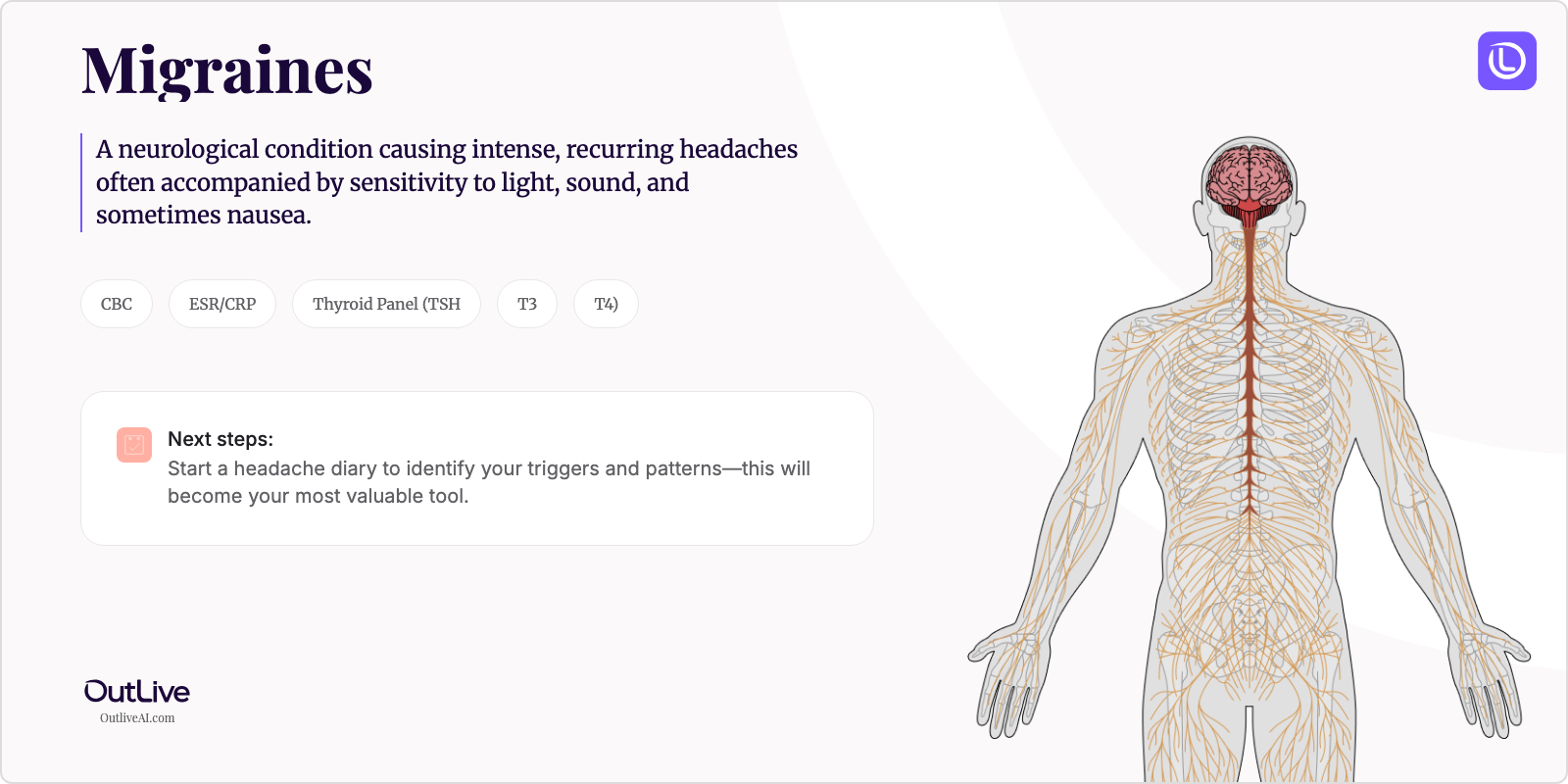
- What it is: A neurological condition causing intense, recurring headaches often accompanied by sensitivity to light, sound, and sometimes nausea.
- Key lab tests: CBC, ESR/CRP, Thyroid Panel (TSH, T3, T4)
- Your first goal: Start a headache diary to identify your triggers and patterns—this will become your most valuable tool.
Receiving a new diagnosis for Migraines can be overwhelming. You might be feeling anxious, confused, and unsure of what comes next. That's completely normal. This guide is here to help you understand your condition in simple terms, know which lab tests matter most, and feel prepared for your next steps.
First, Take a Breath: What is Migraines in Simple Terms?
Think of your brain as having an extremely sensitive alarm system. In most people, this alarm only goes off for real emergencies. But with migraines, your alarm system is hypersensitive—it can be triggered by everyday things like bright lights, certain foods, stress, or weather changes. When triggered, your brain launches a cascade of events: blood vessels change, nerve signals fire differently, and chemicals are released that cause the intense pain and other symptoms you experience. The good news? While we can't "cure" this sensitive alarm system, we can learn what sets it off and how to calm it down.
Understanding Your Diagnosis: The Key Lab Tests
This is the most important section. While migraines are primarily diagnosed through your symptoms and medical history, certain lab tests help rule out other conditions and identify potential triggers.
Key Tests for Migraines:
- Complete Blood Count (CBC): This test checks your overall blood health to rule out anemia or infections that can trigger headaches or make migraines worse.
- Erythrocyte Sedimentation Rate (ESR) and C-Reactive Protein (CRP): These inflammation markers help ensure your headaches aren't caused by blood vessel inflammation or other inflammatory conditions.
- Thyroid Panel (TSH, T3, T4): Your thyroid hormones affect many body systems, and imbalances can trigger or worsen migraines.
- Vitamin D: Low vitamin D levels have been linked to increased migraine frequency and severity in many patients.
Your First Specialist Appointment: What to Ask
What to Expect: You'll likely see a neurologist—a doctor who specializes in the brain and nervous system. They'll ask detailed questions about your headache patterns, triggers, and family history. The appointment usually lasts 45-60 minutes, and they may perform a neurological exam (checking reflexes, coordination, and sensation). Don't worry—these tests are painless and help ensure your diagnosis is correct.
Questions to Ask Your Doctor:
- "What type of migraine do I have, and how does that affect my treatment options?"
- "Should I get an MRI or CT scan to rule out other conditions?"
- "What are my options for both preventing migraines and treating them when they occur?"
- "Are there any lifestyle changes that could significantly reduce my migraine frequency?"
- "How will we know if my treatment is working, and when should we consider adjusting it?"
Download our [Checklist of Questions to Ask Your Migraines Specialist](# to feel prepared.
How to Track Your Journey
Tracking your Migraines journey is crucial for understanding how your treatment is working and spotting important trends. Here's what you should monitor:
Symptoms to Track:
- Headache frequency, duration, and intensity (rate pain 1-10)
- Associated symptoms (nausea, light sensitivity, visual changes)
- Potential triggers (foods, stress, sleep changes, weather)
Lab Results to Monitor:
- Vitamin D levels - Check every 3-6 months initially
- Thyroid function - Check annually or as recommended
- Inflammatory markers - As needed based on symptoms
Why Tracking Matters: Your headache diary becomes your roadmap to better health. It helps you and your doctor identify patterns invisible in the moment—like that your migraines often hit 48 hours after stress peaks, or that certain foods are consistent triggers. This information directly shapes your treatment plan and helps predict which medications will work best for you.
Next Steps After Your Diagnosis
Immediate Actions (This Week):
- Start a headache diary (paper or app—whatever you'll actually use)
- Schedule your follow-up appointment with your neurologist
- Fill any prescribed medications and understand how to use them
Short-term Goals (Next Month):
- Identify at least 2-3 of your personal migraine triggers
- Establish a regular sleep schedule (irregular sleep is a common trigger)
- Learn and practice one relaxation technique for stress management
Long-term Management:
- Develop a comprehensive treatment plan including both preventive and acute medications
- Build a support system including healthcare providers, family, and possibly support groups
Frequently Asked Questions
How quickly can I expect to feel better? Most people see improvement within 2-3 months of starting treatment. Preventive medications typically take 6-8 weeks to show full effect. Remember, success means fewer and less severe migraines, not necessarily zero migraines.
Will I need to change my diet? Many people benefit from identifying food triggers (common ones include aged cheese, chocolate, alcohol, and MSG), but you don't need to eliminate everything at once. Your headache diary will help identify your specific triggers.
How often will I need to see my doctor? Initially, expect visits every 2-3 months to adjust medications and monitor progress. Once stable, many patients only need check-ups every 6-12 months.
Can I still exercise/work/travel? Absolutely! Regular, moderate exercise often helps prevent migraines. You may need to adjust your routine during attacks, but most people with migraines lead full, active lives with proper management.
When to Seek Immediate Medical Attention
Contact your doctor immediately if you experience:
- A sudden, severe headache unlike any you've had before ("thunderclap headache")
- Headache with fever, stiff neck, confusion, or vision loss
- Headache after a head injury
- Progressive worsening of headache pattern over days or weeks
- New headache pattern if you're over 50
🔬 Ready to Organize Your Health Journey?
Understanding your condition is the first step. Our free Lab Analyzer tool helps you:
- Track all your lab results for Migraines in one place
- Spot important trends over time
- Generate personalized questions for your doctor
[Upload Your Lab Report for Free Analysis →]