
📋 At a Glance
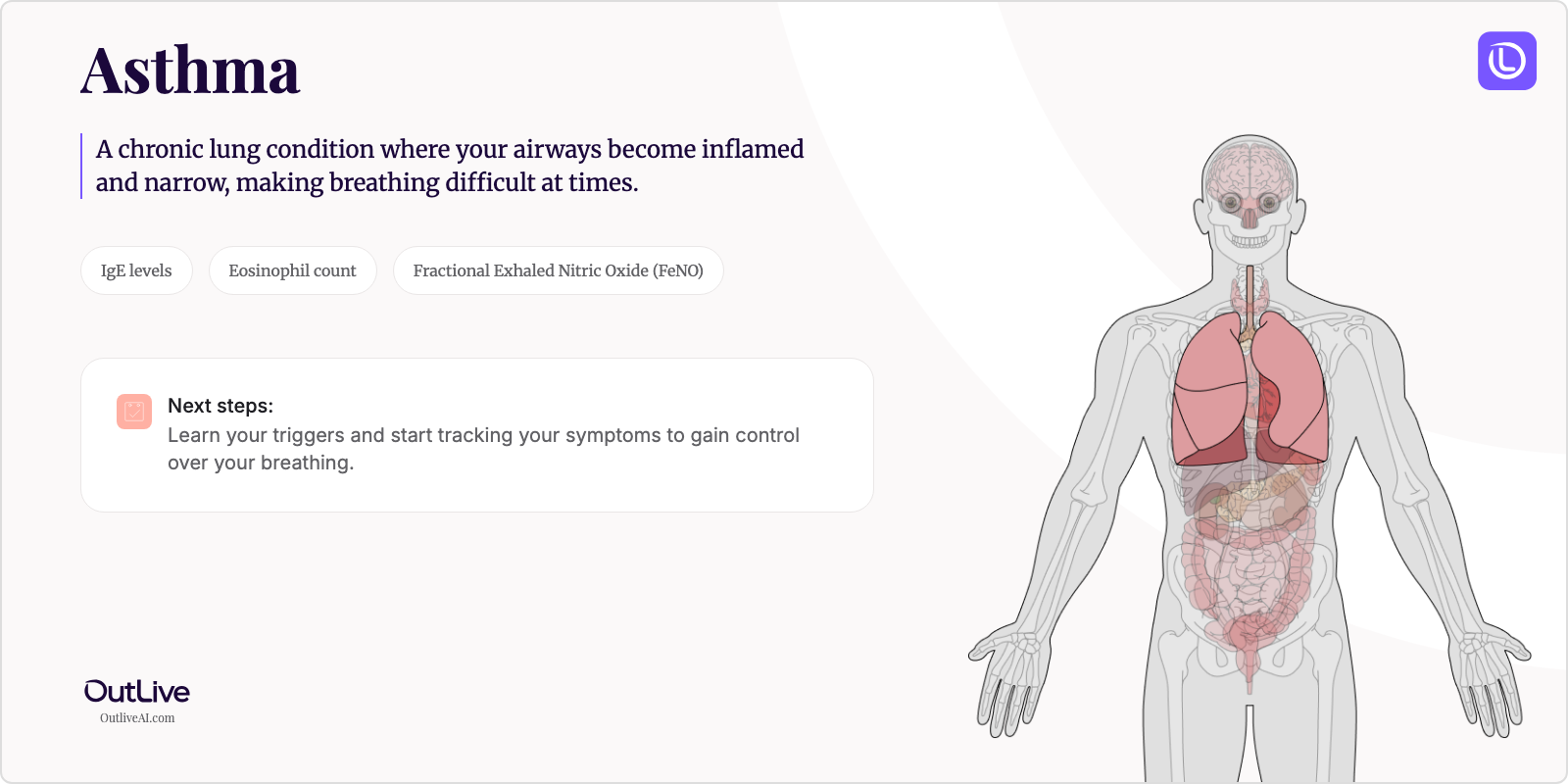
- What it is: A chronic lung condition where your airways become inflamed and narrow, making breathing difficult at times.
- Key lab tests: IgE levels, Eosinophil count, and Fractional Exhaled Nitric Oxide (FeNO)
- Your first goal: Learn your triggers and start tracking your symptoms to gain control over your breathing.
Receiving a new diagnosis for Asthma can be overwhelming. You might be feeling anxious, confused, and unsure of what comes next. That's completely normal. This guide is here to help you understand your condition in simple terms, know which lab tests matter most, and feel prepared for your next steps.
First, Take a Breath: What is Asthma in Simple Terms?
Think of your airways like flexible straws that carry air to your lungs. In asthma, these "straws" are extra sensitive and reactive. When triggered by things like allergens, exercise, or cold air, three things happen: the walls of your airways swell up, the muscles around them tighten like a fist, and they produce extra mucus. This triple threat makes your breathing straws much narrower, which is why you might wheeze, cough, or feel like you're breathing through a coffee stirrer instead of a regular straw. The good news? With the right treatment plan, most people with asthma live completely normal, active lives. Your airways aren't permanently damaged – they're just temporarily cranky and need the right management approach.
Understanding Your Diagnosis: The Key Lab Tests
This is the most important section. Understanding these tests helps you have informed conversations with your doctor and track your progress over time.
Key Tests for Asthma:
- Total IgE: This blood test measures antibodies that trigger allergic reactions, helping identify if allergies are contributing to your asthma symptoms.
- Eosinophil Count: These white blood cells increase when there's allergic inflammation in your airways, indicating how "allergic" your asthma type is.
- Fractional Exhaled Nitric Oxide (FeNO): This breath test measures inflammation in your airways – think of it as a "check engine light" for your lungs that shows if your asthma is well-controlled.
- C-Reactive Protein (CRP): This blood marker shows general inflammation in your body and can help distinguish asthma flare-ups from respiratory infections.
Your First Specialist Appointment: What to Ask
What to Expect: You'll likely see a pulmonologist (lung specialist) or allergist-immunologist. They'll perform breathing tests called spirometry (where you blow into a tube to measure your lung function), review your medical history, and possibly order allergy testing. The appointment typically lasts 45-60 minutes, and you'll leave with an action plan for managing your asthma.
Questions to Ask Your Doctor:
- "What type of asthma do I have – allergic, non-allergic, or mixed?"
- "Which specific triggers should I avoid, and how can I identify new ones?"
- "Can you explain the difference between my controller medication and rescue inhaler?"
- "What peak flow numbers indicate I'm in the green, yellow, or red zone?"
- "Should I see an allergist for comprehensive allergy testing?"
Download our [Checklist of Questions to Ask Your Asthma Specialist](# to feel prepared.
How to Track Your Journey
Tracking your Asthma journey is crucial for understanding how your treatment is working and spotting important trends. Here's what you should monitor:
Symptoms to Track:
- Morning and evening peak flow readings (your personal best breathing score)
- Number of times you use your rescue inhaler each week
- Night-time awakenings due to coughing or wheezing
- Activities you had to limit or avoid due to breathing issues
Lab Results to Monitor:
- IgE levels - Check every 6-12 months if you have allergic asthma
- Eosinophil count - Monitor every 3-6 months, especially when adjusting medications
- FeNO test - Check every 3-4 months to assess airway inflammation control
Why Tracking Matters: Patterns in your symptoms and lab results reveal whether your current treatment is working or needs adjustment. For example, if your FeNO levels drop from 50 to 25 after starting a new inhaler, that's concrete proof the medication is reducing your airway inflammation. This data empowers you to have evidence-based discussions with your doctor about what's working and what isn't.
Next Steps After Your Diagnosis
Immediate Actions (This Week):
- Fill your prescriptions for both controller and rescue medications
- Learn proper inhaler technique (ask for a demonstration and practice in front of your pharmacist)
- Create an Asthma Action Plan with your doctor that outlines what to do in different scenarios
- Remove obvious triggers from your home (dust mites, pet dander, strong fragrances)
Short-term Goals (Next Month):
- Start a symptom diary to identify your personal triggers
- Get a peak flow meter and establish your personal best reading
- Schedule allergy testing if recommended by your doctor
- Join an asthma education class at your local hospital or clinic
Long-term Management:
- Establish a routine for taking controller medications even when feeling well
- Create an annual schedule for flu shots and pneumonia vaccines
- Build an exercise routine that works with your asthma, not against it
Frequently Asked Questions
How quickly can I expect to feel better? Most people notice improvement within 2-4 weeks of starting controller medications. Full benefits typically appear after 2-3 months of consistent use. Your rescue inhaler should provide relief within minutes during an asthma attack.
Will I need to change my diet? While there's no specific "asthma diet," some people find that dairy products increase mucus production, and sulfites in wine or dried fruits can trigger symptoms. Keep a food diary to identify any personal food triggers.
How often will I need to see my doctor? Initially, expect visits every 1-3 months until your asthma is well-controlled. Once stable, most people see their doctor every 3-6 months for monitoring and medication adjustments.
Can I still exercise/work/travel? Absolutely! With proper management, asthma shouldn't limit your activities. Many Olympic athletes have asthma. You may need to pre-treat with your rescue inhaler before exercise and always carry your medications when traveling.
When to Seek Immediate Medical Attention
Contact your doctor immediately if you experience:
- Peak flow readings below 50% of your personal best
- Rescue inhaler needed more than every 4 hours with no improvement
- Difficulty speaking in complete sentences due to breathlessness
- Lips or fingernails turning blue or gray
- Feeling drowsy or confused during an asthma attack
🔬 Ready to Organize Your Health Journey?
Understanding your condition is the first step. Our free Lab Analyzer tool helps you:
- Track all your lab results for Asthma in one place
- Spot important trends over time
- Generate personalized questions for your doctor
[Upload Your Lab Report for Free Analysis →]