
📋 At a Glance
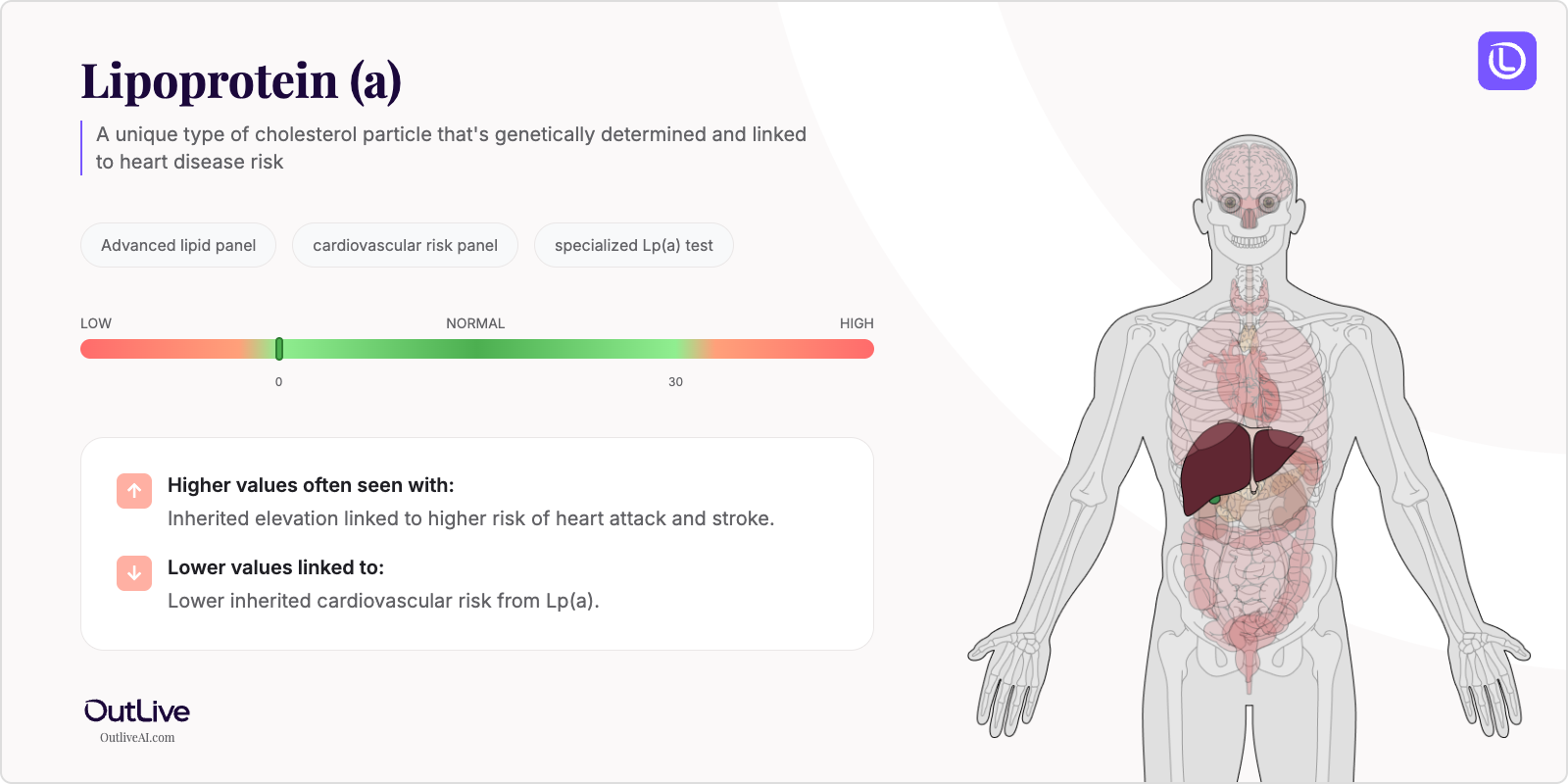
- What it is: A unique type of cholesterol particle that's genetically determined and linked to heart disease risk
- Found in tests: Advanced lipid panel, cardiovascular risk panel, specialized Lp(a) test
- Normal range: Less than 30 mg/dL (or 75 nmol/L) - doesn't vary by sex or age
If you're looking at your lab results and wondering what lipoprotein(a) means, you're in the right place. Think of lipoprotein(a) - often written as Lp(a) - as your body's "sticky cholesterol." Unlike regular cholesterol that can go up and down with diet and exercise, Lp(a) is like your genetic fingerprint for heart disease risk - it's mostly determined by the genes you inherited from your parents. Let's break down what your numbers mean in plain English.
Why Is Lipoprotein(a) Tested?
Your doctor ordered this test because Lp(a) is one of the strongest genetic risk factors for heart disease that we can measure. Unlike your regular cholesterol panel that changes with lifestyle, Lp(a) levels stay relatively constant throughout your life - what you're born with is generally what you keep.
This test is particularly important if you have a family history of early heart disease (before age 55 in men or 65 in women), have had a heart attack or stroke at a young age, or if your regular cholesterol is well-controlled but you still have heart problems. It's also ordered when someone has high cholesterol that doesn't respond well to standard treatments, or when there's unexplained blood clotting issues.
Many experts now recommend that everyone should have their Lp(a) tested at least once in their lifetime, since about 1 in 5 people have elevated levels that significantly increase their cardiovascular risk. Think of it as a one-time genetic test that gives you lifelong information about your heart disease risk.
What Does Lipoprotein(a) Do in Your Body?
Lipoprotein(a) is essentially an LDL (bad cholesterol) particle with an extra protein attached to it called apolipoprotein(a). Imagine regular LDL cholesterol as a tennis ball, and Lp(a) as that same tennis ball with Velcro strips attached. This makes it extra sticky and more likely to build up in your artery walls.
This sticky characteristic means Lp(a) not only contributes to plaque buildup in your arteries like regular cholesterol, but it also promotes blood clotting and inflammation. It's like having a triple threat for heart disease all wrapped up in one particle. Your liver produces Lp(a), and the amount it makes is determined almost entirely by your genes - specifically, the size and number of copies of the apolipoprotein(a) gene you inherited.
The tricky part about Lp(a) is that it doesn't respond to the lifestyle changes that help regular cholesterol. You can eat perfectly, exercise daily, and maintain an ideal weight, but your Lp(a) levels will remain essentially unchanged. This is why knowing your level is so important - it helps you and your doctor understand your true cardiovascular risk beyond what traditional risk factors show.
What Do My Lp(a) Results Mean?
Normal Lp(a) Ranges
| Population | Normal Range | Optimal Range |
|---|---|---|
| Adult Male | <30mg/dL ( <75 nmol/L) | <14 mg/dL ( <35 nmol/L) |
| Adult Female | <30mg/dL ( <75 nmol/L) | <14 mg/dL ( <35 nmol/L) |
| Children | <30mg/dL ( <75 nmol/L) | <14 mg/dL ( <35 nmol/L) |
| Pregnancy | <30mg/dL ( <75 nmol/L) | <14 mg/dL ( <35 nmol/L) |
Note: Reference ranges may vary slightly between laboratories. Always compare your results to the range provided on your specific lab report.
What Does High Lp(a) Mean?
Common Causes:
- Genetic inheritance (the primary cause - you inherited high-producing genes from one or both parents)
- Kidney disease (can cause temporary increases as kidneys help clear Lp(a))
- Hypothyroidism (underactive thyroid can modestly increase levels)
- Growth hormone deficiency (can cause slight elevations)
- Menopause in women (estrogen loss can increase levels by 20-25%)
- Certain medications like growth hormone therapy
- Nephrotic syndrome (a kidney disorder causing protein loss)
Possible Symptoms:
- Usually no direct symptoms from high Lp(a) itself
- Early heart disease symptoms (chest pain, shortness of breath)
- Symptoms of atherosclerosis (leg pain when walking)
- Family members with early heart attacks or strokes
When to Be Concerned: Levels above 30 mg/dL (75 nmol/L) double your heart disease risk, while levels above 50 mg/dL (125 nmol/L) triple it. If your Lp(a) is above 100 mg/dL (250 nmol/L), you're at very high risk and should work closely with a cardiologist. Any elevated level warrants aggressive management of other cardiovascular risk factors.
What Does Low Lp(a) Mean?
Common Causes:
- Genetic inheritance (you inherited low-producing genes - this is actually protective!)
- Liver disease (severe liver dysfunction can reduce production)
- High-dose niacin therapy (one of few treatments that lowers Lp(a))
- Excessive alcohol consumption (can suppress liver production)
- Malnutrition (severe protein deficiency)
- Certain medications like PCSK9 inhibitors
- Hormone replacement therapy in women (estrogen can lower levels)
Possible Symptoms:
- No symptoms - low Lp(a) is actually beneficial for heart health
- If due to liver disease, may have jaundice or fatigue
- If due to malnutrition, may have weakness or weight loss
When to Be Concerned: Low Lp(a) levels are generally not a concern and are actually protective against heart disease. The only time to investigate further is if levels are extremely low and you have symptoms of liver disease or malnutrition.
What Can Affect My Lp(a) Levels?
Factors That May Increase Levels:
- Medications: Growth hormone, androgens, cyclosporine
- Lifestyle: Unfortunately, diet and exercise have minimal impact
- Conditions: Kidney disease, hypothyroidism, menopause
- Supplements: Generally ineffective at raising levels
Factors That May Decrease Levels:
- Medications: Niacin (high doses), PCSK9 inhibitors, estrogen therapy
- Lifestyle: Alcohol (not recommended as treatment!)
- Conditions: Liver disease, hyperthyroidism
- Time of Day: Levels remain stable throughout the day
How Lipoprotein(a) Fits Into Your Health Picture
Think of your standard cholesterol tests (LDL and HDL) as measuring the amount of cholesterol traffic in your bloodstream. The Lipoprotein(a) or Lp(a) test measures a specific type of vehicle on that road—one that is genetically "stickier" and more likely to cause blockages, regardless of how heavy the overall traffic is.
Lp(a) provides a unique piece of information that is interpreted alongside your other heart health markers:
-
An Independent Risk Factor: High Lp(a) is a standalone genetic risk factor for heart disease. It doesn't change much with diet or exercise, so it's often considered a baseline risk you are born with. Your doctor will use this result to understand your overall risk profile more accurately.
-
Part of an Advanced Assessment: While not part of a routine check-up, Lp(a) is a key component of an Advanced Lipid Panel or a Cardiovascular Risk Panel. It is often tested alongside other advanced markers like Apolipoprotein B (ApoB) to get the most complete picture of your lipoprotein health.
-
Guiding Follow-Up Tests: If your Lp(a) level is high, your doctor may be more proactive in managing your other risk factors (like aggressively lowering your LDL cholesterol). They might also recommend imaging tests like a coronary calcium score or a carotid ultrasound to check for any existing plaque buildup in your arteries.
Frequently Asked Questions
How often should Lp(a) be tested? Once in your lifetime is usually sufficient since levels remain stable. Repeat testing may be done after starting specific treatments or if you develop kidney disease.
Can I improve my Lp(a) levels naturally? Unfortunately, no. Diet, exercise, and weight loss don't significantly affect Lp(a). However, maintaining excellent control of other risk factors becomes even more important if your Lp(a) is high.
Should I fast before an Lp(a) test? No fasting is required. Lp(a) levels don't change with meals, making it convenient to test anytime.
How quickly can Lp(a) levels change? They generally don't change significantly over time unless you develop kidney disease, start specific medications, or go through menopause (women may see a 20-25% increase).
Next Steps After Your Lp(a) Test
Questions to Ask Your Doctor:
- What do my Lp(a) results mean for my overall heart disease risk?
- Should my family members be tested since this is genetic?
- Do I need additional cardiac testing given my Lp(a) level?
- How aggressively should we treat my other risk factors?
- Are there any new treatments for high Lp(a) I should know about?
Download our Lipoprotein(a) Doctor Questions Checklist
🔬 Ready to Track Your Lipoprotein(a) Over Time?
Understanding a single Lp(a) result is just the beginning. Our free Lab Analyzer tool helps you:
- Track how your Lipoprotein(a) changes over time
- See how it relates to your other lab values
- Identify patterns your doctor might miss
- Get personalized insights based on your trends
[Upload Your Lab Report for Free Analysis →]