
📋 At a Glance
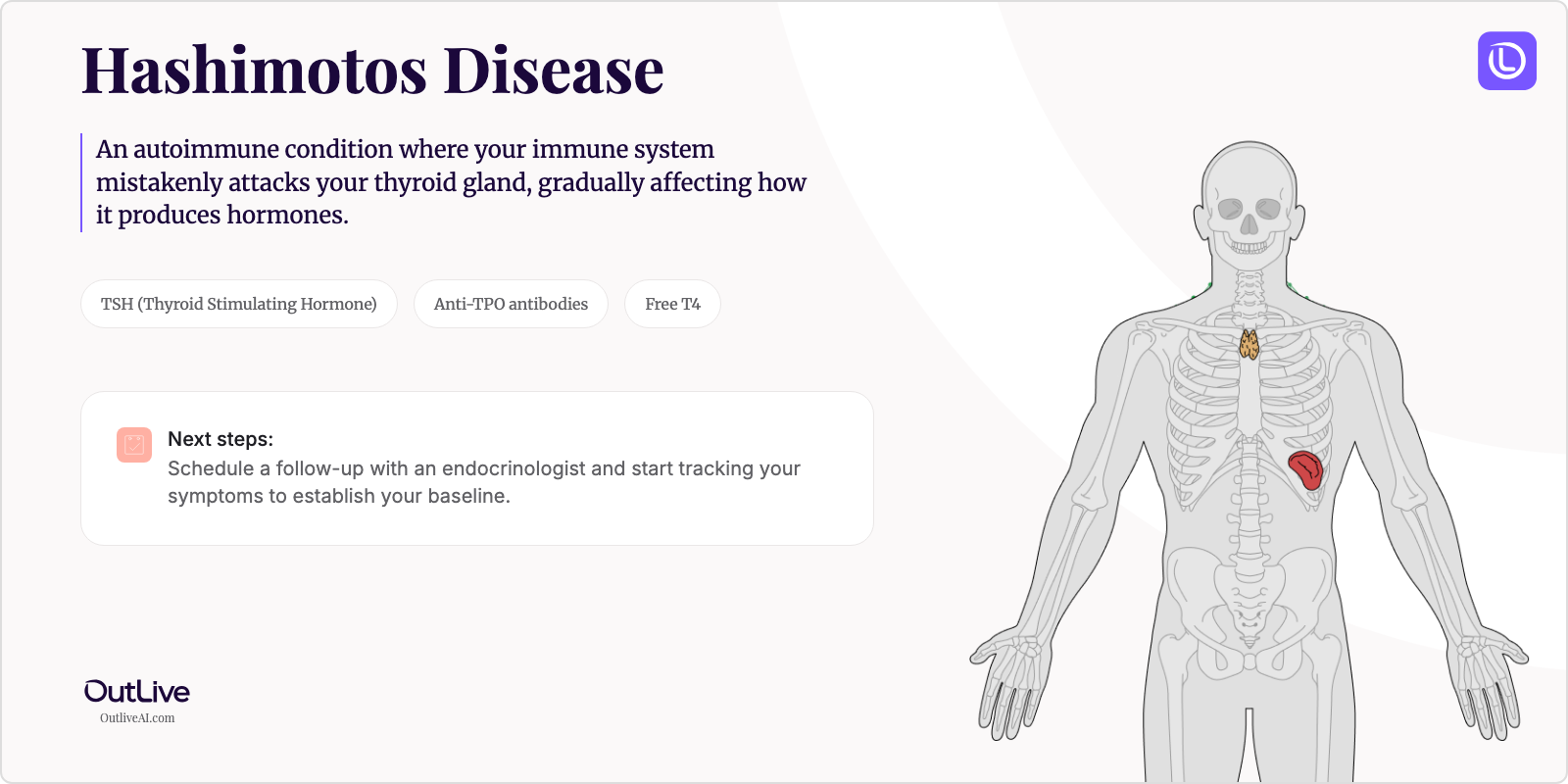
- What it is: An autoimmune condition where your immune system mistakenly attacks your thyroid gland, gradually affecting how it produces hormones.
- Key lab tests: TSH (Thyroid Stimulating Hormone), Anti-TPO antibodies, and Free T4
- Your first goal: Schedule a follow-up with an endocrinologist and start tracking your symptoms to establish your baseline.
Receiving a new diagnosis for Hashimoto's Disease can be overwhelming. You might be feeling anxious, confused, and unsure of what comes next. That's completely normal. This guide is here to help you understand your condition in simple terms, know which lab tests matter most, and feel prepared for your next steps.
First, Take a Breath: What is Hashimoto's Disease in Simple Terms?
Think of your thyroid as your body's thermostat—it controls how fast or slow everything runs, from your heartbeat to your digestion. With Hashimoto's Disease, your immune system (your body's security team) gets confused and starts treating your thyroid like an intruder. Over time, this friendly fire damages your thyroid, making it harder for it to produce the hormones that keep your body running smoothly. The good news? This is one of the most common thyroid conditions, it's very treatable, and millions of people with Hashimoto's live full, healthy lives. You're not alone in this journey, and with the right management, you can feel like yourself again.
Understanding Your Diagnosis: The Key Lab Tests
This is the most important section. These are the lab tests your doctor uses to diagnose and monitor your Hashimoto's Disease. Understanding what each one means will help you feel more in control of your health journey.
Key Tests for Hashimoto's Disease:
- TSH (Thyroid Stimulating Hormone): This is like your thyroid's "boss hormone"—when TSH is high, it means your brain is shouting at your thyroid to work harder because it's not producing enough hormones.
- Anti-TPO Antibodies: These are the "friendly fire" antibodies your immune system creates that attack your thyroid—high levels confirm that your immune system is involved in your thyroid problems.
- Free T4: This measures the actual thyroid hormone available for your body to use—it tells you how well your thyroid is currently functioning despite the immune attack.
- Free T3: This is the active form of thyroid hormone that your cells actually use—some doctors check this to get a complete picture of your thyroid function.
Your First Specialist Appointment: What to Ask
You'll likely be referred to an endocrinologist—a hormone specialist who sees Hashimoto's patients every day. They're your partner in this journey, not just someone who prescribes medication. Don't be shy about asking questions; they expect it and want you to understand your condition.
What to Expect: Your endocrinologist will review your lab results, perform a physical exam of your neck to feel your thyroid, discuss your symptoms in detail, and create a treatment plan tailored to you. The appointment usually lasts 30-45 minutes, and you'll likely leave with a prescription for thyroid hormone replacement if your levels indicate you need it.
Questions to Ask Your Doctor:
- "Based on my antibody levels, how aggressive is my Hashimoto's, and what does that mean for my treatment?"
- "How often should I have my thyroid levels checked, and which specific tests do you recommend monitoring?"
- "What symptoms should I watch for that might indicate my medication needs adjusting?"
- "Are there any lifestyle changes or dietary modifications that could help manage my condition?"
- "Should I be screened for other autoimmune conditions, since having one increases my risk for others?"
Download our [Checklist of Questions to Ask Your Hashimoto's Disease Specialist](# to feel prepared.
How to Track Your Journey
Think of tracking your Hashimoto's journey like keeping a logbook on a ship—it helps you navigate through rough waters and recognize when you're heading in the right direction. Many of my patients tell me they wish they'd started tracking sooner because it helps them see patterns their doctor might miss.
Symptoms to Track:
- Energy levels throughout the day (rate them 1-10)
- Changes in weight without diet changes
- Hair loss or changes in hair texture
- Mood changes, especially depression or anxiety
- Digestive issues like constipation
- Feeling cold when others are comfortable
- Brain fog or difficulty concentrating
Lab Results to Monitor:
- TSH levels - Every 6-8 weeks when starting treatment, then every 6-12 months when stable
- Free T4 - Checked with TSH to ensure proper hormone replacement
- Anti-TPO antibodies - Annually to track disease activity (though levels may not change much)
Why Tracking Matters: Your symptoms often change before your lab results do, giving you and your doctor early warning signs that your medication might need adjusting. Plus, seeing improvement over time—even small victories—can be incredibly motivating when you're dealing with a chronic condition.
Next Steps After Your Diagnosis
Immediate Actions (This Week):
- Schedule your endocrinologist appointment if you haven't already
- Start a symptom diary or download a tracking app
- Gather all your previous lab results in one place
- Join a reputable Hashimoto's support group online for community and tips
Short-term Goals (Next Month):
- Establish a morning routine for taking thyroid medication (same time, empty stomach, 30-60 minutes before food)
- Learn which foods and supplements can interfere with thyroid medication absorption
- Create a list of your baseline symptoms to compare against as treatment progresses
Long-term Management:
- Build a relationship with your endocrinologist for ongoing care
- Consider working with a registered dietitian familiar with autoimmune conditions
- Develop stress management techniques, as stress can worsen autoimmune conditions
Frequently Asked Questions
How quickly can I expect to feel better? Most patients start noticing improvements in energy and brain fog within 2-4 weeks of starting thyroid medication, but it can take 3-6 months to feel fully back to normal. Your body needs time to adjust, and your doctor may need to fine-tune your medication dose based on follow-up lab work.
Will I need to change my diet? While there's no specific "Hashimoto's diet," many patients feel better avoiding highly processed foods and eating anti-inflammatory foods like vegetables, fruits, and omega-3 rich fish. Some find that gluten sensitivity accompanies Hashimoto's, but this isn't universal—work with your doctor or a dietitian to find what works for you.
How often will I need to see my doctor? Initially, you'll have appointments every 6-8 weeks until your thyroid levels stabilize. Once you're on the right medication dose and feeling well, you'll typically see your endocrinologist every 6-12 months for monitoring.
Can I still exercise/work/travel? Absolutely! Once your thyroid levels are properly managed, you can do everything you did before. In fact, regular exercise can help with energy levels and mood. Just be patient with yourself during the adjustment period—your energy may fluctuate as you find the right treatment balance.
When to Seek Immediate Medical Attention
Contact your doctor immediately if you experience:
- Severe fatigue that prevents you from performing daily activities
- Rapid heartbeat or chest pain (could indicate too much thyroid medication)
- Significant swelling in your neck or difficulty swallowing
- Severe depression or thoughts of self-harm
- Confusion or extreme brain fog that affects your safety
🔬 Ready to Organize Your Health Journey?
Understanding your condition is the first step. Our free Lab Analyzer tool helps you:
- Track all your lab results for Hashimoto's Disease in one place
- Spot important trends over time
- Generate personalized questions for your doctor
[Upload Your Lab Report for Free Analysis →]