
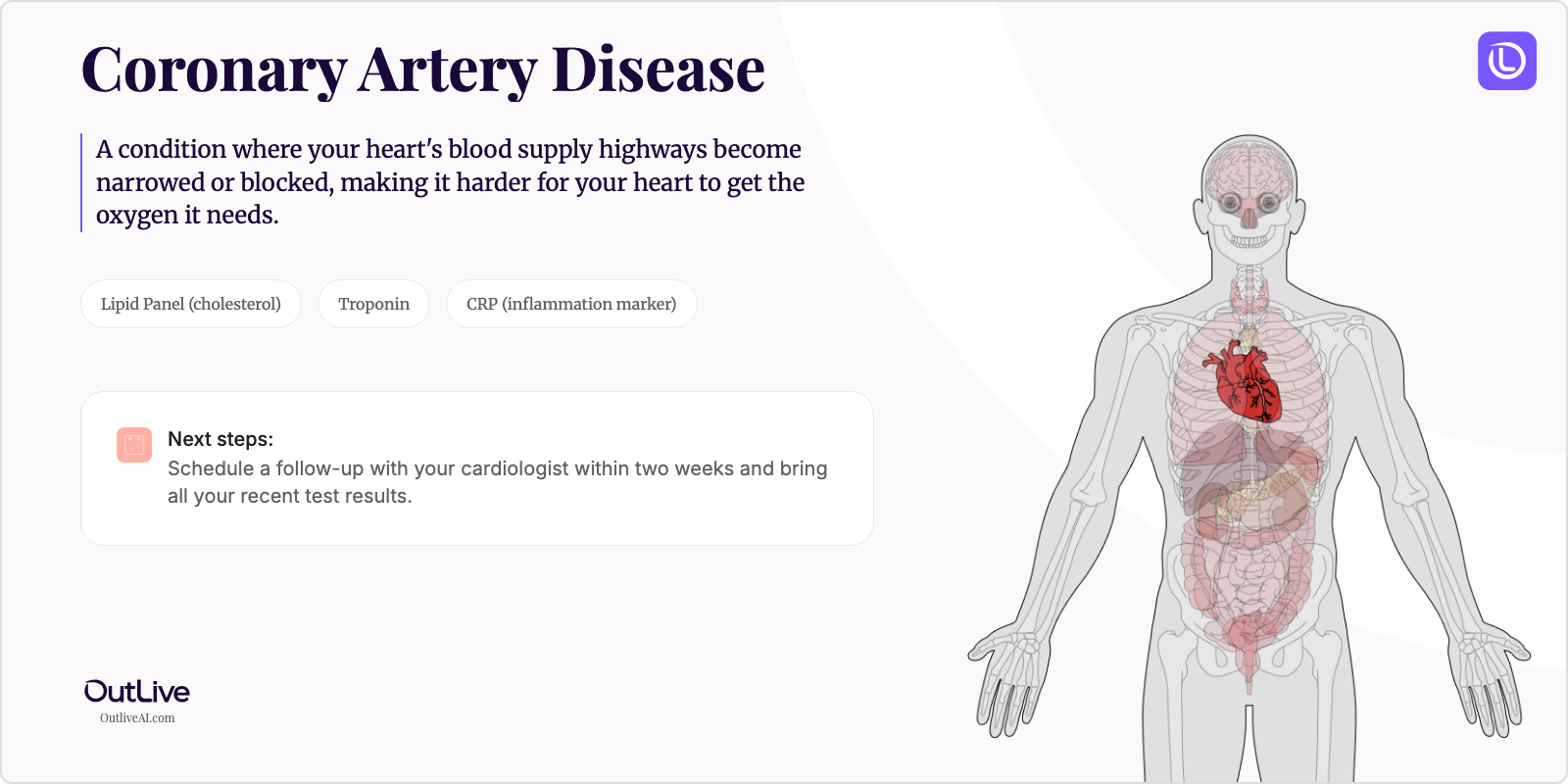
📋 At a Glance
- What it is: A condition where your heart's blood supply highways become narrowed or blocked, making it harder for your heart to get the oxygen it needs.
- Key lab tests: Lipid Panel (cholesterol), Troponin, and CRP (inflammation marker)
- Your first goal: Schedule a follow-up with your cardiologist within two weeks and bring all your recent test results.
Receiving a new diagnosis for Coronary Artery Disease can be overwhelming. You might be feeling anxious, confused, and unsure of what comes next. That's completely normal. This guide is here to help you understand your condition in simple terms, know which lab tests matter most, and feel prepared for your next steps.
First, Take a Breath: What is Coronary Artery Disease in Simple Terms?
Think of your heart as a powerful pump that needs its own fuel supply to keep working. That fuel comes through special highways called coronary arteries. In Coronary Artery Disease (CAD), these highways develop "traffic jams" – buildups of cholesterol and other substances that narrow the roads. When these highways get too narrow, your heart muscle doesn't get enough oxygen-rich blood, especially when it's working harder (like during exercise or stress). This can cause chest pain, shortness of breath, or in severe cases, a heart attack. The good news? With proper treatment and lifestyle changes, many people with CAD live long, active lives. You're not alone in this journey, and understanding your condition is your first powerful step toward taking control.
Understanding Your Diagnosis: The Key Lab Tests
This is the most important section. These are the lab tests your doctor uses to understand your heart health and track your progress:
Key Tests for Coronary Artery Disease:
- Lipid Panel: This test measures your cholesterol levels – think of it as checking how much "traffic-causing material" is floating in your bloodstream that could add to those highway blockages.
- High-Sensitivity C-Reactive Protein (hs-CRP): This inflammation marker helps detect irritation in your blood vessels – like checking if your arteries are "angry" or inflamed, which can worsen blockages.
- Troponin: This test checks for heart muscle damage – it's like a smoke detector that alerts doctors if your heart muscle has been stressed or injured from lack of oxygen.
- Hemoglobin A1C: This measures your average blood sugar over three months – important because diabetes significantly affects your heart health and CAD progression.
Your First Specialist Appointment: What to Ask
What to Expect: You'll likely see a cardiologist – a heart specialist who will become your partner in managing CAD. They'll review your test results, possibly order additional tests like an EKG or stress test, discuss medications, and create a personalized treatment plan. The appointment usually lasts 30-45 minutes, and it's perfectly okay to bring a family member or friend for support.
Questions to Ask Your Doctor:
- "Based on my test results, how severe is my coronary artery disease, and which arteries are affected?"
- "What medications do you recommend, and what are the main benefits and side effects I should know about?"
- "What lifestyle changes will have the biggest impact on my heart health right now?"
- "How often should I have follow-up appointments and blood work done?"
- "What symptoms should prompt me to call you versus going to the emergency room?"
Download our [Checklist of Questions to Ask Your Coronary Artery Disease Specialist](# to feel prepared.
How to Track Your Journey
Tracking your Coronary Artery Disease journey is crucial for understanding how your treatment is working and spotting important trends. Here's what you should monitor:
Symptoms to Track:
- Chest pain or pressure (note when it happens, how long it lasts, and what helps)
- Shortness of breath (during rest or activity)
- Fatigue or unusual tiredness
- Heart palpitations or irregular heartbeat
- Swelling in legs or ankles
Lab Results to Monitor:
- LDL cholesterol ("bad" cholesterol) - Every 3-6 months initially, then annually once stable
- Blood pressure readings - Daily at home, record in a log
- Hemoglobin A1C (if diabetic) - Every 3-6 months
- hs-CRP (inflammation) - Every 6-12 months or as directed
Why Tracking Matters: Tracking helps you and your doctor see patterns – like whether your new medication is lowering your cholesterol effectively or if certain activities trigger symptoms. It's like keeping a diary of your heart's journey, helping you celebrate improvements and catch concerns early. Many patients find that tracking gives them a sense of control and helps them feel more confident during doctor visits.
Next Steps After Your Diagnosis
Immediate Actions (This Week):
- Fill any new prescriptions your doctor prescribed and understand when and how to take them
- Schedule your follow-up cardiology appointment if not already done
- Start a simple symptom diary – even just notes on your phone work great
- Share your diagnosis with close family members who can support you
Short-term Goals (Next Month):
- Meet with a cardiac rehabilitation team or educator if recommended
- Begin making one or two dietary changes (like reducing sodium or saturated fat)
- Start a gentle walking routine if approved by your doctor – even 10 minutes daily helps
- Learn to check your blood pressure at home if recommended
Long-term Management:
- Establish a routine for taking medications and tracking symptoms
- Build a heart-healthy lifestyle that includes regular exercise, stress management, and good sleep
- Create a support network including your healthcare team, family, and possibly a cardiac support group
Frequently Asked Questions
How quickly can I expect to feel better? Many people notice improvements within 2-4 weeks of starting treatment, especially if you had symptoms like chest pain or shortness of breath. Cholesterol medications typically show results in blood work within 6-8 weeks. Remember, some benefits (like reduced heart attack risk) are happening even if you don't feel them immediately.
Will I need to change my diet? Yes, but it doesn't mean giving up everything you love. Focus on a Mediterranean-style diet rich in vegetables, fruits, whole grains, and lean proteins. Limit saturated fats, trans fats, and excess sodium. Many patients find that making gradual changes and finding healthy swaps for favorite foods makes the transition easier.
How often will I need to see my doctor? Initially, expect appointments every 3-6 months to adjust medications and monitor progress. Once your condition is stable and well-controlled, visits may stretch to every 6-12 months. You'll likely have blood work done before each visit to track your cholesterol and other markers.
Can I still exercise/work/travel? Most people with CAD can and should exercise – it's one of the best things for your heart! Start slowly with your doctor's guidance. Most can continue working, though some may need modifications for very physical jobs. Travel is usually fine once your condition is stable, but always carry your medication list and consider travel insurance.
When to Seek Immediate Medical Attention
Contact your doctor immediately if you experience:
- Chest pain or pressure that doesn't go away with rest or nitroglycerin (if prescribed)
- Severe shortness of breath, especially if sudden or worsening
- Fainting or severe dizziness
- Rapid or irregular heartbeat that persists
- Sudden weakness, especially on one side of your body
- Severe nausea with chest discomfort or jaw/arm pain
🔬 Ready to Organize Your Health Journey?
Understanding your condition is the first step. Our free Lab Analyzer tool helps you:
- Track all your lab results for Coronary Artery Disease in one place
- Spot important trends over time
- Generate personalized questions for your doctor
[Upload Your Lab Report for Free Analysis →]