
📋 At a Glance
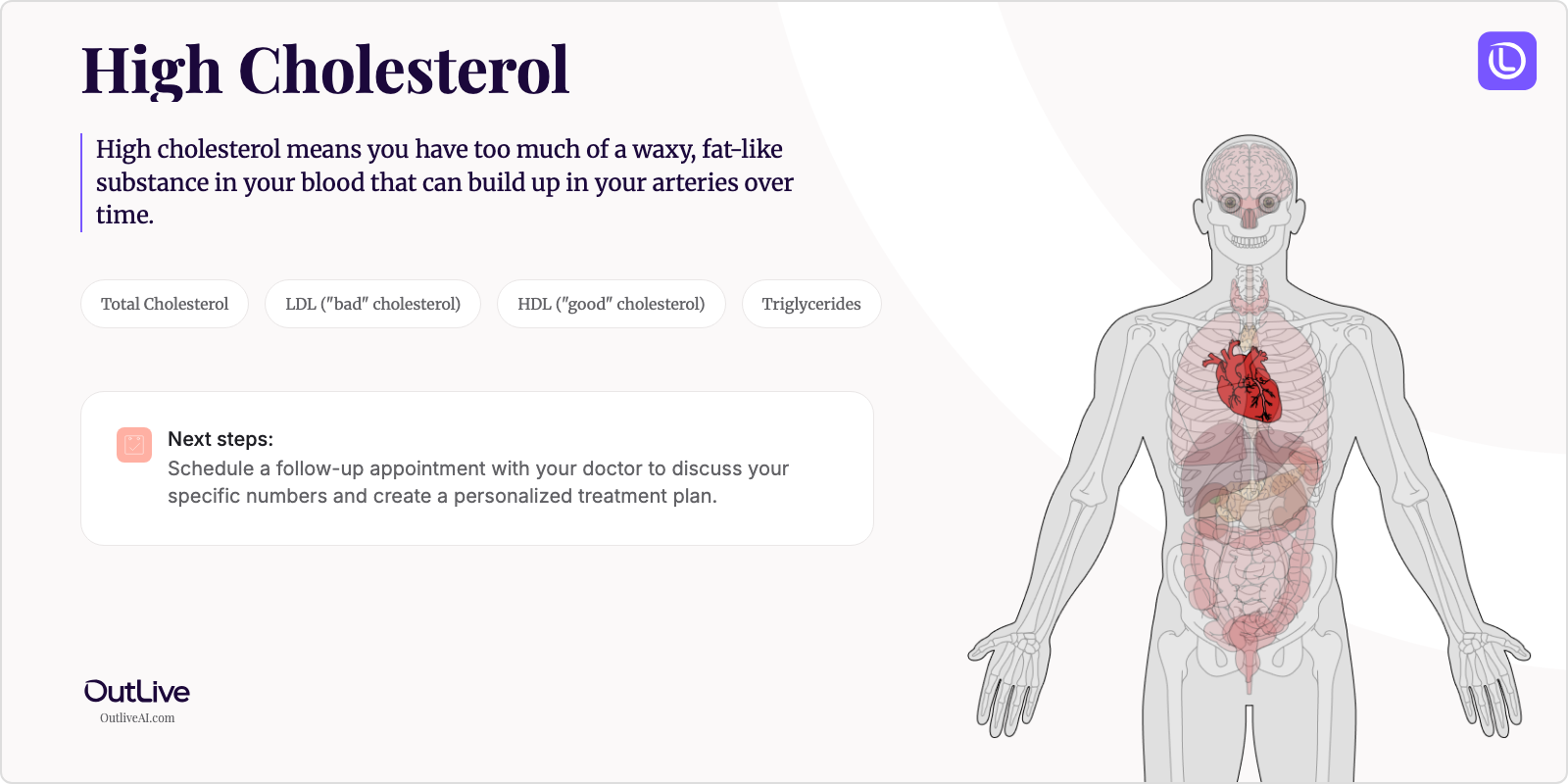
- What it is: High cholesterol means you have too much of a waxy, fat-like substance in your blood that can build up in your arteries over time.
- Key lab tests: Total Cholesterol, LDL ("bad" cholesterol), HDL ("good" cholesterol), and Triglycerides
- Your first goal: Schedule a follow-up appointment with your doctor to discuss your specific numbers and create a personalized treatment plan.
Receiving a new diagnosis for High Cholesterol can be overwhelming. You might be feeling anxious, confused, and unsure of what comes next. That's completely normal. This guide is here to help you understand your condition in simple terms, know which lab tests matter most, and feel prepared for your next steps.
First, Take a Breath: What is High Cholesterol in Simple Terms?
Think of your blood vessels like highways, and cholesterol as cars traveling on those highways. Some cholesterol (HDL) is like a cleanup crew, removing debris and keeping traffic flowing smoothly. But too much of another type (LDL) is like having too many broken-down cars clogging up the roads. Over time, these "broken-down cars" can create traffic jams (plaques) that make it harder for blood to flow to your heart and brain. The good news? With the right approach, you can clear those highways and get traffic moving smoothly again. High cholesterol itself doesn't usually cause symptoms you can feel, which is why those lab tests are so important—they're like traffic cameras showing you what's happening inside.
Understanding Your Diagnosis: The Key Lab Tests
This is the most important section. These are the key numbers your doctor looks at to understand your cholesterol picture:
Key Tests for High Cholesterol:
- Total Cholesterol: This measures all the cholesterol in your blood combined—think of it as your overall cholesterol "score" that should ideally be under 200 mg/dL.
- LDL Cholesterol: Known as "bad" cholesterol, this is the type that can build up in your arteries—your goal is typically under 100 mg/dL (or lower if you have other risk factors).
- HDL Cholesterol: Your "good" cholesterol that helps remove the bad cholesterol from your arteries—higher is better, with 40+ mg/dL for men and 50+ mg/dL for women being the targets.
- Triglycerides: Another type of fat in your blood that can increase heart disease risk—normal is less than 150 mg/dL.
Your First Specialist Appointment: What to Ask
What to Expect: You'll likely continue seeing your primary care doctor for high cholesterol management, though they may refer you to a cardiologist if you have additional heart disease risk factors. During your appointment, your doctor will review your cholesterol numbers in detail, discuss your family history, evaluate other risk factors like blood pressure and diabetes, and create a personalized treatment plan that may include lifestyle changes, medications, or both.
Questions to Ask Your Doctor:
- "Based on my specific numbers and risk factors, what should my cholesterol goals be?"
- "How often should I have my cholesterol checked going forward?"
- "What lifestyle changes would make the biggest impact on my cholesterol levels?"
- "If medication is recommended, what are the benefits and potential side effects?"
- "Do I need any additional heart health tests like a coronary calcium score or stress test?"
Download our [Checklist of Questions to Ask Your High Cholesterol Specialist](# to feel prepared.
How to Track Your Journey
Tracking your High Cholesterol journey is crucial for understanding how your treatment is working and spotting important trends. Here's what you should monitor:
Symptoms to Track:
- Any chest discomfort or pressure during physical activity
- Unusual shortness of breath with normal activities
- Leg pain or cramping when walking that goes away with rest
Lab Results to Monitor:
- Complete lipid panel (Total, LDL, HDL, Triglycerides) - Every 3-6 months initially, then annually once stable
- Liver function tests - If on statin medications, checked periodically
- HbA1c and fasting glucose - Annually to monitor diabetes risk
Why Tracking Matters: Cholesterol levels can fluctuate based on diet, exercise, medications, and even the time of year. By tracking your numbers over time, you and your doctor can see if your treatment plan is working, identify patterns that might need attention, and celebrate improvements. Small changes in your numbers can represent big wins for your heart health!
Next Steps After Your Diagnosis
Immediate Actions (This Week):
- Schedule a follow-up appointment to discuss your treatment plan in detail
- Start a simple food diary to understand your current eating patterns
- Take a 10-minute walk daily—even small amounts of movement help
Short-term Goals (Next Month):
- Meet with a dietitian if possible to create a heart-healthy eating plan
- Establish a regular exercise routine (aim for 150 minutes per week)
- If prescribed medication, set up a system to take it consistently
Long-term Management:
- Regular cholesterol monitoring as recommended by your doctor
- Maintaining lifestyle changes that become healthy habits, not temporary fixes
Frequently Asked Questions
How quickly can I expect to feel better? Since high cholesterol rarely causes symptoms, you might not "feel" different. However, lifestyle changes can improve your energy within weeks, and cholesterol numbers often improve within 6-12 weeks of starting treatment.
Will I need to change my diet? Most people benefit from dietary adjustments like reducing saturated fats, choosing whole grains, and eating more fruits and vegetables. Think of it as adding healthy foods rather than just restricting—you're crowding out the less healthy choices with better ones.
How often will I need to see my doctor? Initially, you'll likely have follow-ups every 3-6 months to monitor your response to treatment. Once your cholesterol is well-controlled, annual visits are typically sufficient unless other health concerns arise.
Can I still exercise/work/travel? Absolutely! In fact, regular physical activity is one of the best things you can do for your cholesterol. High cholesterol alone doesn't limit your activities—it's actually a reason to stay more active.
When to Seek Immediate Medical Attention
Contact your doctor immediately if you experience:
- Chest pain, pressure, or discomfort, especially with exertion
- Sudden severe headache, confusion, or difficulty speaking
- Severe muscle pain or weakness, especially if taking statin medications
🔬 Ready to Organize Your Health Journey?
Understanding your condition is the first step. Our free Lab Analyzer tool helps you:
- Track all your lab results for High Cholesterol in one place
- Spot important trends over time
- Generate personalized questions for your doctor
[Upload Your Lab Report for Free Analysis →]