
📋 At a Glance
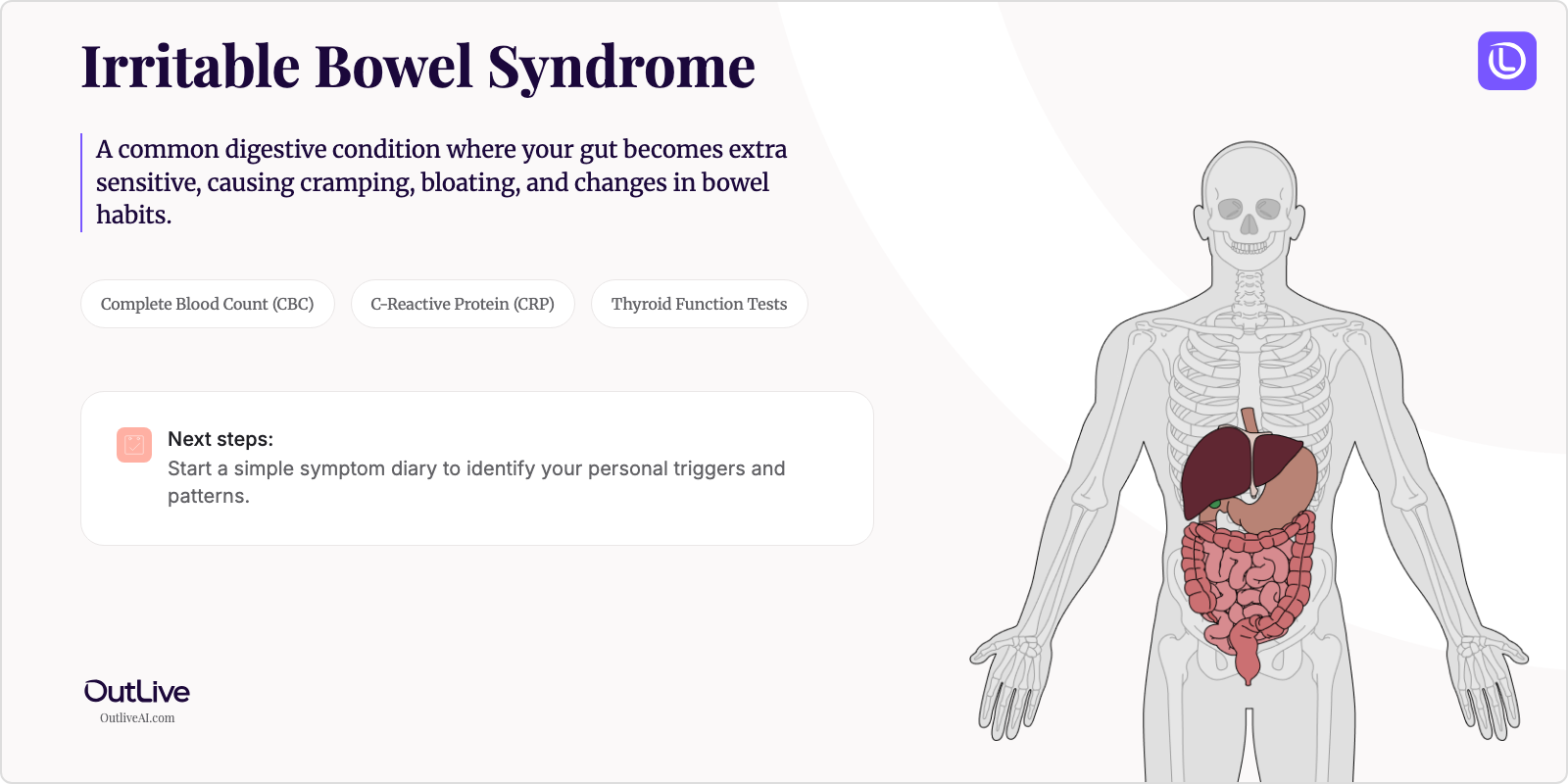
- What it is: A common digestive condition where your gut becomes extra sensitive, causing cramping, bloating, and changes in bowel habits.
- Key lab tests: Complete Blood Count (CBC), C-Reactive Protein (CRP), Thyroid Function Tests
- Your first goal: Start a simple symptom diary to identify your personal triggers and patterns.
Receiving a new diagnosis for Irritable Bowel Syndrome can be overwhelming. You might be feeling anxious, confused, and unsure of what comes next. That's completely normal. This guide is here to help you understand your condition in simple terms, know which lab tests matter most, and feel prepared for your next steps.
First, Take a Breath: What is Irritable Bowel Syndrome in Simple Terms?
Think of your digestive system like a sensitive alarm system in your home. In IBS, this alarm system has become overly sensitive – it goes off when it shouldn't, responds too strongly to normal triggers, or sometimes doesn't respond when it should. Your gut and brain are miscommunicating, like having a faulty phone connection where messages get scrambled. This doesn't mean there's damage to your intestines – they look perfectly normal – but the way they function has gone a bit haywire. The good news? While IBS is chronic, it's manageable, doesn't cause permanent damage, and many people find significant relief with the right approach.
Understanding Your Diagnosis: The Key Lab Tests
This is the most important section. IBS is actually diagnosed by ruling out other conditions – there's no single test that says "you have IBS." Instead, your doctor uses these tests to make sure nothing else is causing your symptoms:
Key Tests for Irritable Bowel Syndrome:
- Complete Blood Count (CBC): This test checks for anemia and signs of infection or inflammation that might indicate a different digestive condition like inflammatory bowel disease.
- C-Reactive Protein (CRP): This measures inflammation in your body – if it's normal, it helps confirm IBS rather than inflammatory conditions like Crohn's disease.
- Thyroid Stimulating Hormone (TSH): Your thyroid can affect digestion, so this test rules out thyroid problems that might mimic IBS symptoms.
- Celiac Panel: This blood test checks for celiac disease, which can cause similar symptoms but requires a completely different treatment approach.
Your First Specialist Appointment: What to Ask
What to Expect: You'll likely see a gastroenterologist – a doctor who specializes in digestive health. They'll review your symptoms in detail, discuss your medical history, and may perform a physical exam. Don't be embarrassed to discuss bowel habits – they talk about this all day! The appointment typically lasts 30-45 minutes, and they may order additional tests or start you on a treatment plan right away.
Questions to Ask Your Doctor:
- "What specific type of IBS do I have – diarrhea-predominant, constipation-predominant, or mixed?"
- "Should I try the low-FODMAP diet, and can you refer me to a dietitian who specializes in IBS?"
- "What medications might help my specific symptoms, and what are the side effects?"
- "How do we know when my IBS is just IBS versus when something else might be wrong?"
- "What stress management techniques have you seen work best for your IBS patients?"
Download our [Checklist of Questions to Ask Your Irritable Bowel Syndrome Specialist](# to feel prepared.
How to Track Your Journey
Tracking your Irritable Bowel Syndrome journey is crucial for understanding how your treatment is working and spotting important trends. Here's what you should monitor:
Symptoms to Track:
- Bowel movement frequency and consistency (using the Bristol Stool Chart)
- Pain location, intensity (1-10 scale), and timing
- Bloating and gas patterns
- Food triggers and meal timing
- Stress levels and sleep quality
Lab Results to Monitor:
- Complete Blood Count (CBC) - Annually or if symptoms change
- Inflammatory markers (CRP, Calprotectin) - If symptoms worsen
- Vitamin levels (B12, D, Iron) - Every 6-12 months if you have diarrhea-predominant IBS
Why Tracking Matters: Your symptom patterns are like a roadmap to managing your IBS. By tracking, you'll discover your personal triggers (maybe it's dairy, or stress, or lack of sleep), see which treatments actually work, and have concrete data to share with your doctor instead of trying to remember everything from memory.
Next Steps After Your Diagnosis
Immediate Actions (This Week):
- Start a simple symptom diary using a notebook or smartphone app
- Schedule your follow-up appointment with your gastroenterologist
- Join a reputable IBS support group online or locally for emotional support
Short-term Goals (Next Month):
- Meet with a registered dietitian to discuss dietary modifications
- Begin stress-reduction practices like deep breathing or gentle yoga
- Establish a regular eating schedule with smaller, more frequent meals
Long-term Management:
- Develop a personalized management plan combining diet, stress reduction, and medications as needed
- Build a healthcare team including your primary doctor, gastroenterologist, and possibly a therapist familiar with gut-brain connections
- Create an emergency kit with medications and safe foods for flare-ups
Frequently Asked Questions
How quickly can I expect to feel better? Most people see some improvement within 2-4 weeks of starting treatment, but finding your optimal management plan can take 3-6 months. Be patient with yourself – this is a marathon, not a sprint.
Will I need to change my diet? Most likely, yes. Many people with IBS benefit from identifying trigger foods. The low-FODMAP diet helps about 75% of IBS patients, but it's temporary and should be done with professional guidance.
How often will I need to see my doctor? Initially, you'll likely have follow-ups every 2-3 months until your symptoms stabilize. After that, annual check-ups are usually sufficient unless symptoms change.
Can I still exercise/work/travel? Absolutely! Exercise often helps IBS symptoms. You may need to plan ahead for travel (knowing bathroom locations, packing safe foods), but IBS shouldn't stop you from living your life.
When to Seek Immediate Medical Attention
Contact your doctor immediately if you experience:
- Blood in your stool or black, tarry stools
- Unexplained weight loss (more than 10 pounds without trying)
- Severe abdominal pain that doesn't improve with bowel movements
- Persistent fever or night sweats
- New symptoms after age 50 or significant change in your usual IBS pattern
🔬 Ready to Organize Your Health Journey?
Understanding your condition is the first step. Our free Lab Analyzer tool helps you:
- Track all your lab results for Irritable Bowel Syndrome in one place
- Spot important trends over time
- Generate personalized questions for your doctor
[Upload Your Lab Report for Free Analysis →]