
📋 At a Glance
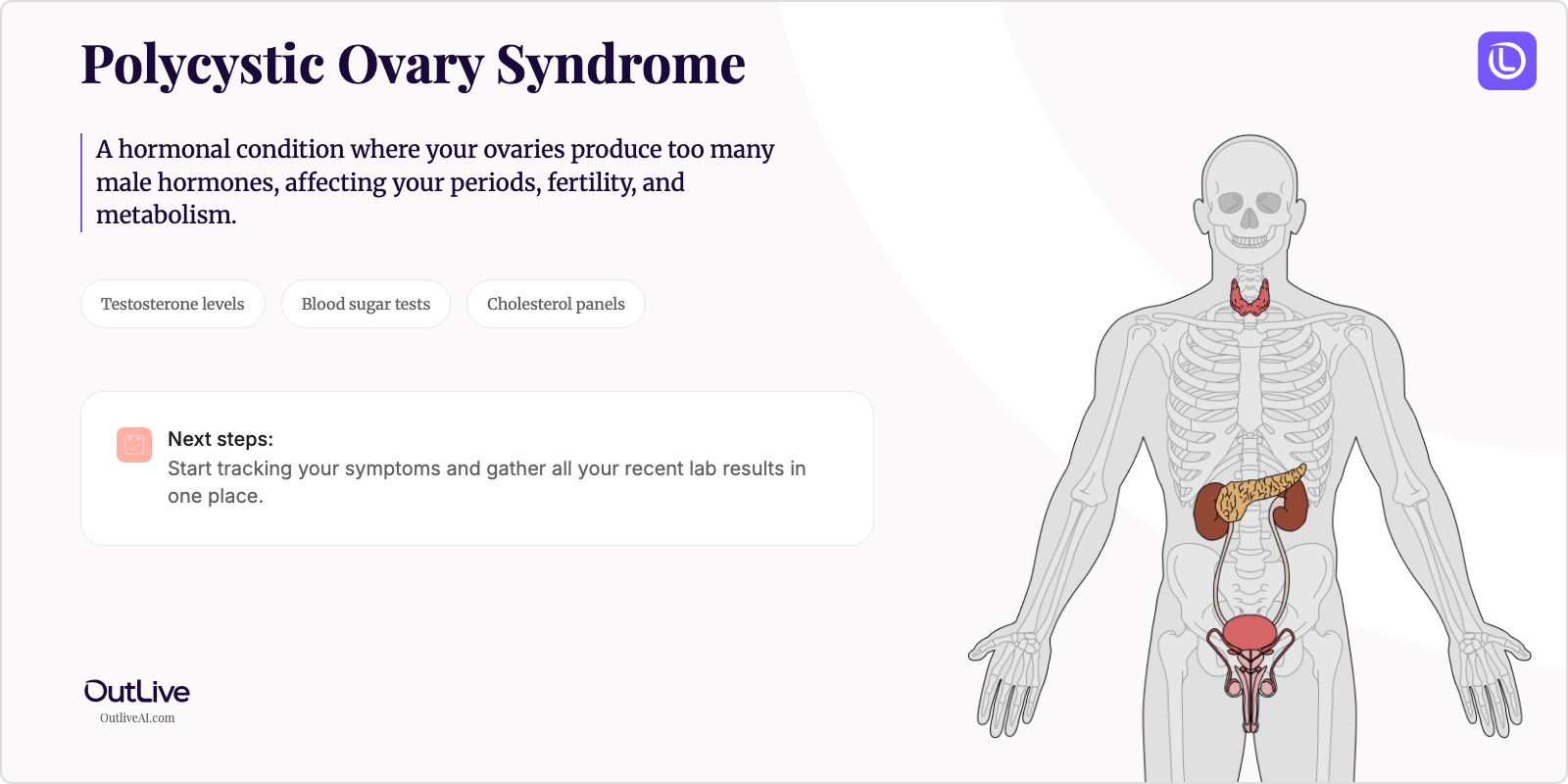
- What it is: A hormonal condition where your ovaries produce too many male hormones, affecting your periods, fertility, and metabolism.
- Key lab tests: Testosterone levels, blood sugar tests, and cholesterol panels
- Your first goal: Start tracking your symptoms and gather all your recent lab results in one place.
Receiving a new diagnosis for Polycystic Ovary Syndrome can be overwhelming. You might be feeling anxious, confused, and unsure of what comes next. That's completely normal. This guide is here to help you understand your condition in simple terms, know which lab tests matter most, and feel prepared for your next steps.
First, Take a Breath: What is Polycystic Ovary Syndrome in Simple Terms?
Think of your ovaries as a factory that produces hormones—the chemical messengers that regulate many functions in your body. With PCOS, this factory has gotten its production lines mixed up. Instead of producing the right balance of female and male hormones (yes, women need small amounts of male hormones too!), your ovaries are producing too many male hormones called androgens. This hormonal traffic jam creates a domino effect throughout your body, affecting everything from your menstrual cycle to how your body processes sugar. The good news? Once you understand what's happening, you and your doctor can work together to restore balance.
Understanding Your Diagnosis: The Key Lab Tests
This is the most important section. These are the tests your doctor uses to diagnose and monitor PCOS. Understanding what each one means puts you in control of your health journey.
Key Tests for Polycystic Ovary Syndrome:
- Testosterone: This male hormone is often elevated in PCOS and can cause symptoms like excess hair growth, acne, and irregular periods.
- Fasting Glucose: Many women with PCOS have insulin resistance, meaning their bodies don't use insulin effectively, which this test helps detect.
- LH/FSH Ratio: These reproductive hormones are often imbalanced in PCOS, with LH being higher than normal compared to FSH.
- Lipid Panel: PCOS increases your risk for high cholesterol and triglycerides, making this test crucial for monitoring your heart health.
Your First Specialist Appointment: What to Ask
What to Expect: You'll likely see an endocrinologist (hormone specialist) or a gynecologist who specializes in PCOS. They'll review your symptoms, discuss your lab results in detail, and create a personalized treatment plan. The appointment typically lasts 30-45 minutes, and they may order additional tests or an ultrasound to look at your ovaries.
Questions to Ask Your Doctor:
- "Based on my lab results, how severe is my PCOS, and what's my biggest health priority right now?"
- "Should I be concerned about insulin resistance or diabetes, and how often should I monitor my blood sugar?"
- "What lifestyle changes will have the biggest impact on my symptoms?"
- "If I want to have children in the future, how might PCOS affect my fertility, and what can I do now to prepare?"
- "How often should I have my hormone levels and other labs checked to monitor my condition?"
Download our [Checklist of Questions to Ask Your Polycystic Ovary Syndrome Specialist](# to feel prepared.
How to Track Your Journey
Tracking your PCOS journey is crucial for understanding how your treatment is working and spotting important trends. Here's what you should monitor:
Symptoms to Track:
- Menstrual cycle patterns (dates, flow, and any missed periods)
- Hair growth changes (new growth on face, chest, or back)
- Weight fluctuations and where you're gaining weight
- Mood changes, energy levels, and sleep quality
- Skin changes (acne, dark patches, or skin tags)
Lab Results to Monitor:
- Testosterone and other androgens - Every 3-6 months initially
- Fasting glucose and HbA1c - Every 3-6 months if you have insulin resistance
- Lipid panel - Annually, or more often if abnormal
- Thyroid function - Annually, as thyroid issues often accompany PCOS
Why Tracking Matters: PCOS symptoms can be subtle and change gradually. By tracking consistently, you'll notice patterns—like how certain foods affect your energy or how stress impacts your cycle. This information is gold for your doctor, helping them fine-tune your treatment and catch any concerning changes early.
Next Steps After Your Diagnosis
Immediate Actions (This Week):
- Gather all your recent lab results and medical records in one place
- Start a symptom diary using a notebook or app to track your periods and symptoms
- Schedule follow-up appointments with your primary doctor and specialist
Short-term Goals (Next Month):
- Meet with a registered dietitian familiar with PCOS to discuss nutrition strategies
- Begin gentle, regular exercise like walking 30 minutes daily
- Join a PCOS support group online or in your community for emotional support
Long-term Management:
- Establish a routine for regular lab monitoring and doctor visits
- Develop sustainable lifestyle habits that support hormone balance
- Create a healthcare team including your gynecologist, endocrinologist, and possibly a mental health professional
Frequently Asked Questions
How quickly can I expect to feel better? Many women notice improvements in energy and mood within 4-6 weeks of starting treatment and making lifestyle changes. Hormonal symptoms like irregular periods or excess hair growth may take 3-6 months to improve significantly. Remember, PCOS is a marathon, not a sprint—be patient with your body.
Will I need to change my diet? Most women with PCOS benefit from eating patterns that help manage insulin resistance. This doesn't mean a restrictive diet, but rather focusing on whole foods, lean proteins, and complex carbohydrates while limiting processed foods and added sugars. Many find success with a Mediterranean-style diet or working with a dietitian to create a personalized plan.
How often will I need to see my doctor? Initially, you'll likely see your specialist every 3-4 months to monitor your response to treatment. Once your symptoms are well-controlled, visits may decrease to every 6-12 months. You'll still need regular lab work to monitor your metabolic health and hormone levels.
Can I still exercise/work/travel? Absolutely! In fact, regular physical activity is one of the best treatments for PCOS. It helps improve insulin sensitivity, manage weight, and reduce stress. Start with activities you enjoy and gradually increase intensity. There are no restrictions on work or travel, though maintaining healthy habits while traveling requires some planning.
When to Seek Immediate Medical Attention
Contact your doctor immediately if you experience:
- Severe pelvic pain that doesn't improve with over-the-counter pain medication
- Heavy vaginal bleeding (soaking through a pad or tampon every hour)
- Signs of severe depression or thoughts of self-harm
- Symptoms of diabetes like extreme thirst, frequent urination, or blurred vision
- Chest pain or difficulty breathing (PCOS increases cardiovascular risk)
🔬 Ready to Organize Your Health Journey?
Understanding your condition is the first step. Our free Lab Analyzer tool helps you:
- Track all your lab results for Polycystic Ovary Syndrome in one place
- Spot important trends over time
- Generate personalized questions for your doctor
[Upload Your Lab Report for Free Analysis →]